Wall Tiles vs Floor Tiles – Differences You Must Know Before Tiling Your Home
When planning a home construction or renovation project, one of the most common mistakes homeowners make is treating all tiles as the same. Walk into any tile showroom and you will be surrounded by hundreds of beautiful options — glossy finishes, matte textures, large formats, and intricate patterns. But here is something most people do not realise until it is too late: wall tiles and floor tiles are fundamentally different products, engineered for completely different purposes. Using the wrong tile in the wrong place does not just look out of place — it can lead to cracked surfaces, safety hazards, and costly repairs. At GK Home Construction, we always guide our clients to make informed decisions before the first tile goes up. So let us break down everything you need to know about the differences between wall tiles and floor tiles.
What Are Wall Tiles?
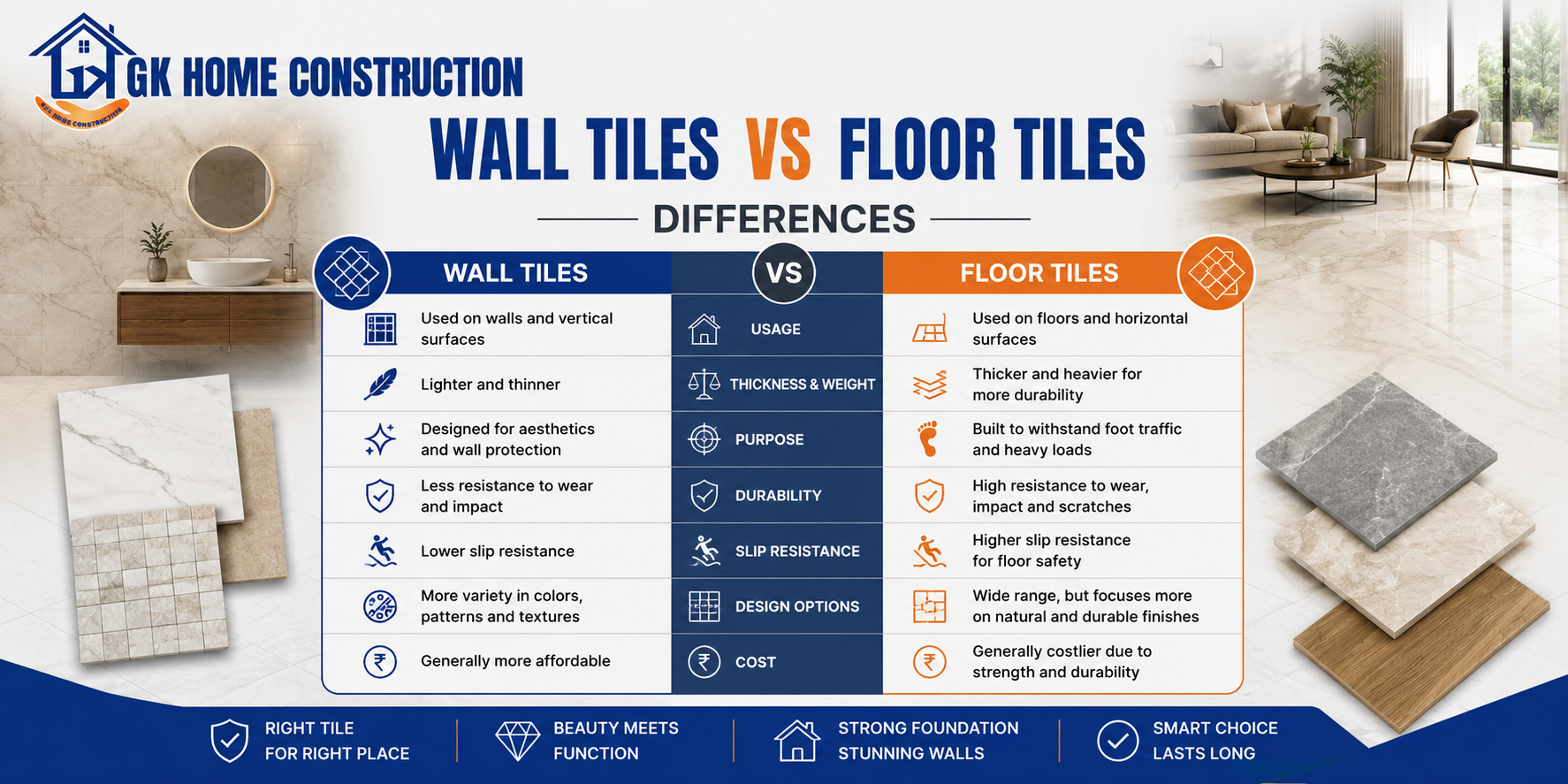
Wall tiles are specifically manufactured to be applied on vertical surfaces — bathroom walls, kitchen backsplashes, living room accent walls, and exterior façades. They are designed to be lightweight, visually appealing, and resistant to moisture and stains on vertical planes. Because they do not need to bear any weight or foot traffic, wall tiles are typically thinner in construction, ranging from about 6mm to 10mm in thickness. This makes them easier to handle, cut, and install on walls without excessive adhesive load. Wall tiles often come in glossy or semi-glossy finishes that reflect light beautifully, making interiors appear brighter and more spacious. However, this very glossy quality makes them dangerously slippery when placed on floors, which is why they should never be used as flooring material.
What Are Floor Tiles?
Floor tiles, on the other hand, are engineered to withstand constant foot traffic, furniture load, dropped objects, and even heavy equipment in some commercial settings. They are thicker — commonly ranging from 10mm to 15mm or more — and are manufactured with a much denser body to handle structural pressure without cracking. Floor tiles go through rigorous testing for slip resistance, abrasion resistance, and load-bearing capacity before they reach the market. They typically carry a PEI (Porcelain Enamel Institute) rating, which measures how well a tile surface withstands wear from foot traffic. A tile rated PEI 1 is only suitable for walls, while tiles rated PEI 3, 4, or 5 can handle medium to heavy foot traffic areas. The surface texture of floor tiles is intentionally rougher or matte to provide the grip needed to prevent slipping, especially in wet areas like bathrooms and kitchens.
Key Structural Differences
The most important difference between wall tiles and floor tiles lies in their physical structure. Wall tiles are lighter and thinner because they only need to adhere to a surface and resist moisture — they carry no load at all. Floor tiles are heavier, denser, and built with a much stronger body to distribute the weight that lands on them every single day. Another structural difference is the tile's water absorption rate. Wall tiles can have a slightly higher water absorption capacity since they are not in direct contact with standing water or constant moisture from below. Floor tiles, especially in wet zones, need a very low absorption rate to prevent water from seeping through and weakening the subfloor beneath.
Surface Finish and Slip Resistance
If you have ever noticed that bathroom wall tiles look shinier and more reflective than the floor tiles in the same room, there is a very deliberate reason for that. Wall tiles are manufactured with a high-gloss finish that enhances the visual appeal of the space. This glossy surface is easy to wipe clean and reflects light to make the area feel more open. Floor tiles, however, prioritise safety over aesthetics. They feature textured, matte, or anti-skid finishes that provide traction underfoot, which is absolutely essential in spaces that get wet. Using a wall tile on a floor, especially in a bathroom or kitchen, creates a serious slip hazard. This is one of the most critical warnings GK Home Construction gives to every client during the planning stage.
Size and Weight Considerations
Wall tiles are usually available in smaller to medium sizes because larger, heavier tiles are difficult to adhere to vertical surfaces without risk of slipping or falling during the curing process. Common wall tile sizes include 30x60 cm, 25x40 cm, and 20x30 cm formats. Floor tiles, however, come in a much wider range of sizes, including large-format tiles like 60x120 cm and even 80x160 cm, which are increasingly popular in modern home interiors. These large formats require a properly levelled and strong subfloor to support them without cracking over time. Because floor tiles are denser and thicker, they also weigh significantly more per square metre, which is an important factor when calculating structural load, especially in multi-storey buildings.
Can You Use Floor Tiles on Walls?
Yes, in most cases, floor tiles can be used on walls — but there are practical limitations. Because floor tiles are heavier and thicker, installing them on walls requires stronger adhesive and more careful installation techniques. Very large floor tiles on walls can be risky without proper wall support. That said, many homeowners and interior designers choose to use the same floor tile on adjacent walls to create a seamless, unified look — a popular trend in modern bathrooms and open-plan living spaces. The key is to work with an experienced contractor who understands load management and tile adhesion requirements, which is exactly the kind of expertise GK Home Construction brings to every project.
Can You Use Wall Tiles on Floors?
This is where the answer becomes a firm no. Wall tiles should never be used on floors. They are not built to handle foot traffic, lack the required slip resistance, and their thinner body makes them prone to cracking under load. Even if a wall tile looks identical to a floor tile visually, its internal structure and surface treatment are simply not suitable for flooring applications. Using wall tiles on floors voids most manufacturer warranties and can also create safety and compliance issues if building inspectors are involved.
Making the Right Choice for Your Home
Understanding the difference between wall tiles and floor tiles is not just technical knowledge — it is practical wisdom that protects your investment and ensures the safety and longevity of your home. Always check the tile specifications before purchasing. Look for PEI ratings, slip resistance coefficients, water absorption rates, and thickness. When in doubt, consult with professionals who can guide you based on the specific conditions of your space. At GK Home Construction, our team helps homeowners and builders choose the right tile for every surface — walls, floors, wet areas, and beyond. Making the right decision at the planning stage saves you significant time, money, and rework down the line.