Independent House Construction in Bangalore – Step-by-Step Process
Building your own independent house in Bangalore is one of the most rewarding decisions you can make for your family's future. Unlike purchasing a ready-made apartment, constructing an independent house gives you full control over the design, materials, layout, and every detail that shapes your living experience. However, the journey from an empty plot to a finished home involves multiple stages, each requiring careful planning and the right expertise. This guide walks you through the complete step-by-step process of independent house construction in Bangalore, so you know exactly what to expect before you begin.
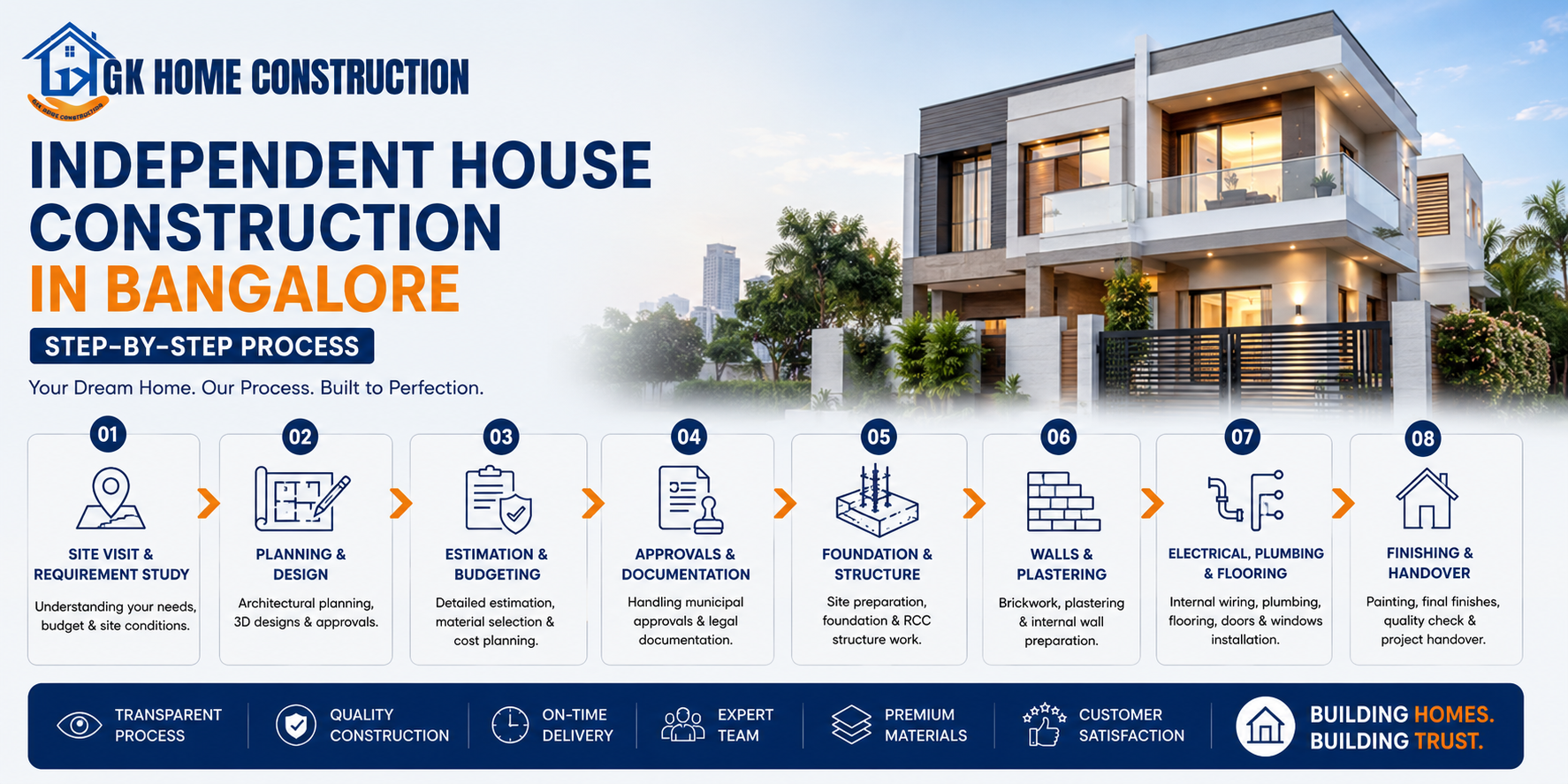
Step 1: Land Acquisition and Site Verification
The foundation of any construction project begins with the land itself. Before purchasing a plot in Bangalore, it is essential to verify the legal status of the property. You must check documents such as the Sale Deed, Khata Certificate, Encumbrance Certificate (EC), and the RTC (Record of Rights, Tenancy and Crops) if the land has agricultural history. Ensure the plot has been converted for residential use and is approved by the BBMP (Bruhat Bengaluru Mahanagara Palike), BDA (Bangalore Development Authority), or the relevant local authority depending on the area. Skipping this verification step can lead to serious legal complications later. Always engage a reliable property lawyer or a trusted construction company to assist with due diligence before signing any agreement.
Step 2: Finalising the Budget and Getting Cost Estimates
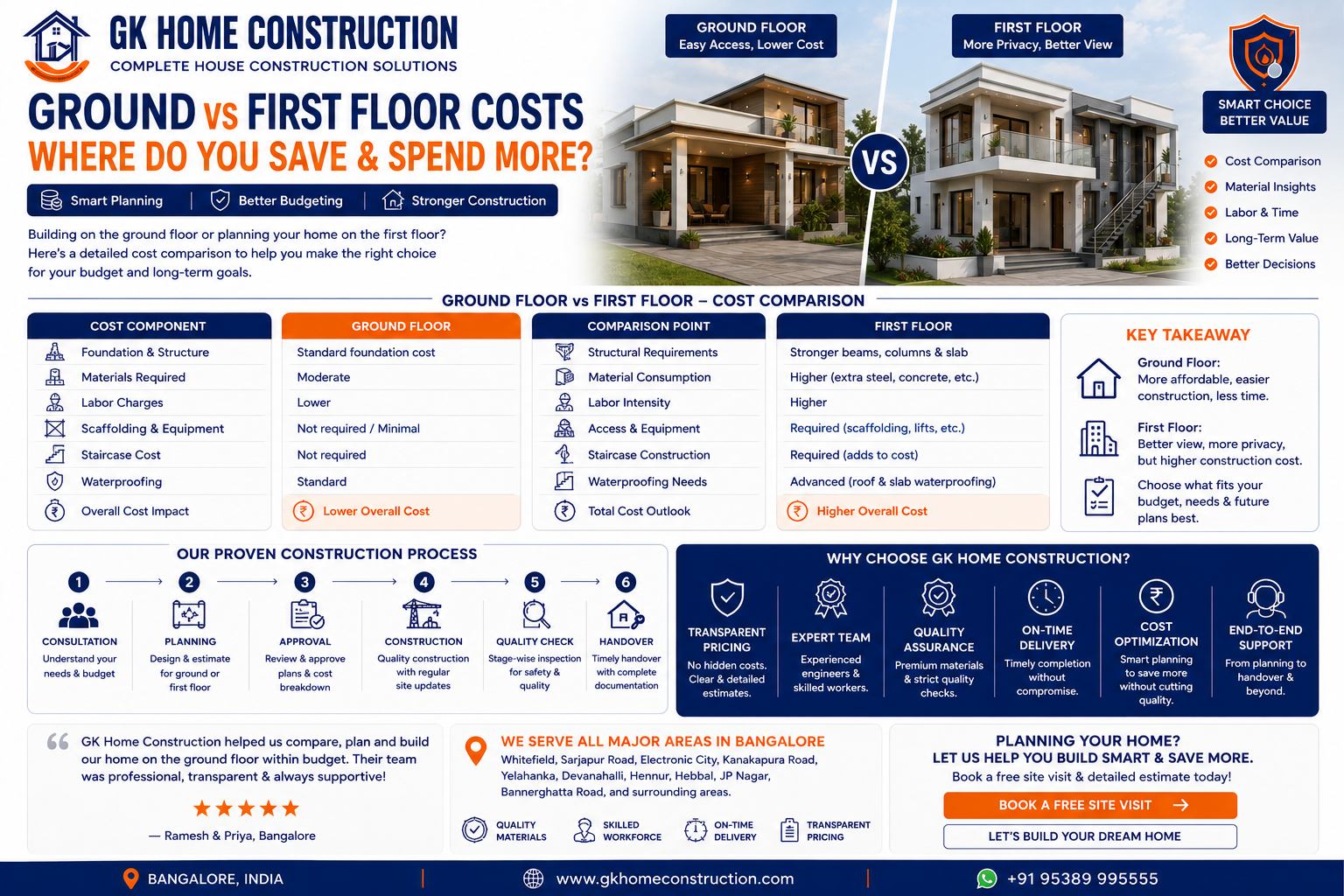
Once your plot is secured, the next step is defining a realistic budget. Independent house construction costs in Bangalore vary depending on the type of structure, quality of materials, and design complexity. As of recent market rates, construction typically ranges from ₹1,800 to ₹3,500 per square foot for standard to premium finishes. Your overall budget should account for not just the civil construction, but also interior work, electrical fittings, plumbing, landscaping, and government approval fees. It is always advisable to keep a contingency buffer of 10 to 15 percent above your estimated cost to handle any unexpected expenses that arise during construction.
Step 3: Hiring an Architect and Designing Your Home
A well-crafted architectural plan is the blueprint of your dream home. In Bangalore, you are legally required to submit building plans approved by a licensed architect before commencing construction. During this stage, your architect will design the floor plan based on your plot dimensions, family requirements, local building bye-laws, and setback rules. Key elements like room sizes, ceiling height, staircase placement, ventilation, natural lighting, and future expansion possibilities are all considered during this phase. Take time to communicate your vision clearly — whether you prefer a contemporary design, a traditional South Indian style, or a Vastu-compliant layout. A good design will not only reflect your personality but also maximise the use of every square foot of your plot.
Step 4: Obtaining Building Plan Approvals
Before any brick is laid, you must obtain the necessary approvals from the relevant authority. In Bangalore, this typically involves submitting your architectural drawings to the BBMP, BDA, or BMRDA (Bangalore Metropolitan Region Development Authority), depending on the jurisdiction of your plot. The approval process includes verification of setbacks, Floor Area Ratio (FAR), building height restrictions, and compliance with zoning regulations. Additional approvals may be required from the Karnataka Electricity Supply Company (BESCOM) for electrical connections and BWSSB (Bangalore Water Supply and Sewerage Board) for water and drainage. While this process can take time, it is non-negotiable and protects you from future legal issues or demolition notices.
Step 5: Site Preparation and Foundation Work
With approvals in hand, actual construction begins with site preparation. This involves clearing the plot, levelling the ground, and marking the foundation layout as per the approved plan. The foundation is the most critical structural element of your home — it bears the entire load of the building and transfers it safely to the soil. In Bangalore, soil conditions vary across areas like Whitefield, Sarjapur, Yelahanka, and Kanakapura Road, so a soil test is strongly recommended to determine the right type of foundation. Most independent houses in Bangalore use either an Isolated Footing Foundation or a Raft Foundation depending on soil bearing capacity and number of floors. The quality of this stage directly impacts the long-term durability of your home.
Step 6: Structural Construction – Columns, Beams, and Slabs
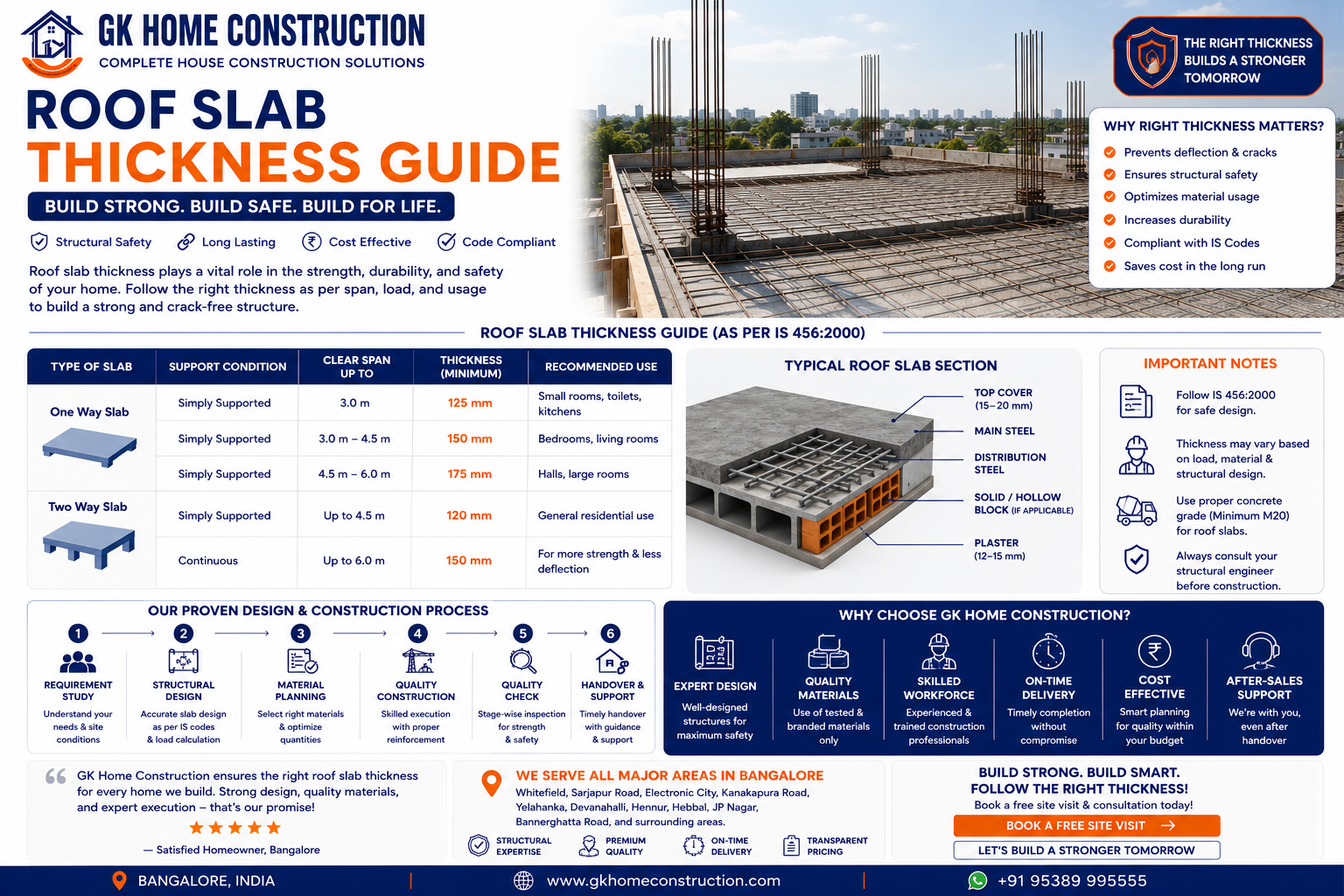
This is the most visible phase of construction, where your home begins to take physical shape. The structural framework consists of reinforced concrete columns, beams, and slabs built floor by floor. In Bangalore, most independent houses follow the RCC (Reinforced Cement Concrete) framed structure method, which offers excellent strength against seismic activity — an important consideration given that Bangalore falls in Seismic Zone II. The quality of concrete mix, the grade of steel used, and the curing process all play a vital role in structural integrity. During this phase, plumbing conduits and electrical channels are also embedded within the walls and slabs before plastering begins, making coordination between different teams extremely important.
Step 7: Brickwork, Plastering, and Waterproofing
Once the structure is complete, the focus shifts to brickwork for internal and external walls, followed by plastering to create smooth surface finishes. Waterproofing is a critical step often underestimated by many homeowners. Bangalore receives heavy rainfall during the monsoon season, and without proper waterproofing on terraces, bathrooms, and basements, moisture seepage can damage walls and weaken the structure over time. High-quality waterproofing compounds and membranes applied at the right stages will save you from expensive repairs in the future.
Step 8: Flooring, Electrical, Plumbing, and Finishing
The final phase transforms your structure into a liveable, beautiful home. This includes flooring installation (vitrified tiles, granite, or hardwood depending on your budget), complete electrical wiring and fixture installation, plumbing connections, painting, door and window fittings, kitchen platform work, and bathroom fittings. This is also the stage where your design choices — the colour palette, tile patterns, lighting design, and cabinetry — come together to create the interior ambience you envisioned.
Why Choosing the Right Construction Partner Matters
Navigating all these stages successfully requires a construction partner who understands Bangalore's local regulations, terrain, and material market. At GK Home Construction, we manage every step of your independent house construction — from plan approvals and foundation work to the final coat of paint — with complete transparency and craftsmanship you can trust. Building your home is a once-in-a-lifetime investment, and we are here to make sure it is done right.
Ready to start your Home Construction Journey in Bangalore? Contact GK Home Construction today for a free consultation and cost estimate.
Contact GK Home Construction
If you are planning to build or renovate a home and are searching for reliable house builders in Bangalore, GK Home Construction offers a straightforward and accountable construction process.
Their team provides clear guidance, realistic timelines, and quality-focused execution from planning to handover. Contact GK Home Construction to discuss your requirements and take the next step toward building a home with confidence.
Phone:+91 9538999535
Website:https://gkhomeconstruction.com/
Location:340, GPR Royale Layout, Huskur Road, Electronic City PH 2, Near fruit market, Bengaluru, Karnataka 560100.