Plumbing for Rainwater Harvesting Systems: A Complete Guide for Homeowners
Water is one of the most valuable resources we have, and as the world faces growing concerns around water scarcity, more homeowners are turning to smarter, sustainable solutions. Rainwater harvesting is no longer just a rural practice — it has become an intelligent investment for modern homes. At GK Home Construction, we believe that building a home goes beyond walls and rooftops. It includes thoughtful systems that serve your family for decades. One of the most critical components of any rainwater harvesting setup is its plumbing — and getting it right makes all the difference.
What Is Rainwater Harvesting and Why Does Plumbing Matter?
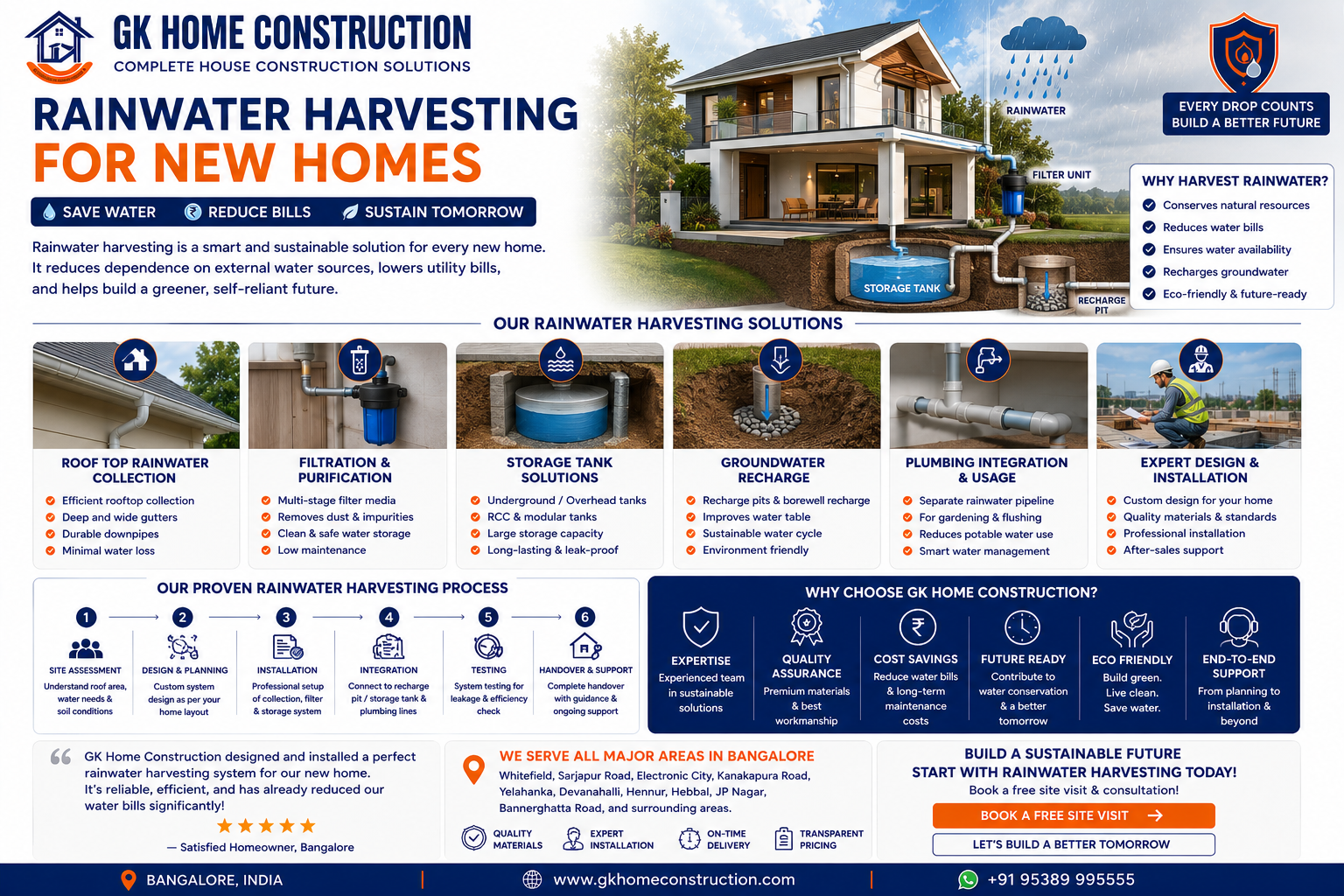
Rainwater harvesting is the process of collecting, storing, and using rainwater that falls on your roof or other surfaces. While the concept sounds simple, the plumbing infrastructure behind it is what determines whether the system works efficiently, safely, and for the long term. Poor plumbing choices lead to leaks, contamination, water loss, and costly repairs. Properly designed plumbing, on the other hand, ensures that every drop collected is directed, filtered, stored, and distributed without waste or risk.
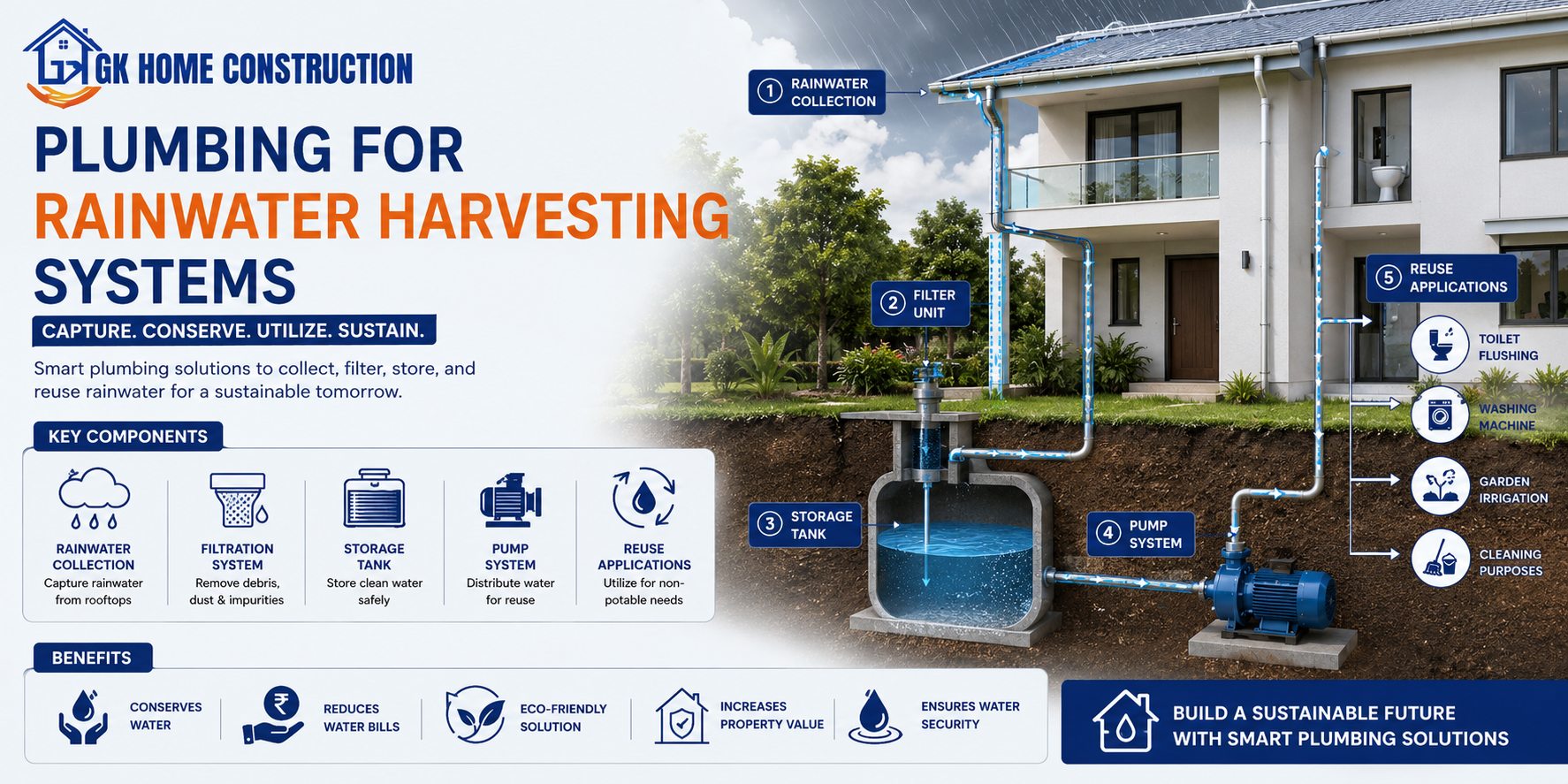
The plumbing network in a rainwater harvesting system connects the collection surface — usually your roof — to storage tanks, filtration units, and eventually to the end-use points in your home. Each segment of this network requires specific materials, sizing, and installation techniques to function correctly. Understanding this is the first step toward building a system that truly pays off.
The Core Components of a Rainwater Harvesting Plumbing System
Every well-designed rainwater harvesting system is built around a few key plumbing components that work together. The first is the catchment area, typically the roof, which is connected to gutters and downspouts. These gutters channel rainwater away from the roof edges and direct it toward collection points. The material of your gutters matters significantly — aluminum and UPVC gutters are preferred because they do not corrode and do not leach harmful chemicals into the collected water.
From the downspouts, the water travels through a first-flush diverter, which is one of the most important plumbing elements in the entire system. This device automatically discards the first flow of rainwater from each rainfall event, which typically carries the most dust, bird droppings, and rooftop pollutants. Once the initial flush is diverted, cleaner water continues into the storage tank. Without this component, your stored water carries contaminants from the very beginning.
The conveyance pipes that carry water from the roof to the storage tank must be adequately sized to handle peak rainfall flow without overflow. Undersized pipes cause waterlogging around the foundation, while oversized pipes lead to unnecessary costs. Most residential systems in India use 75mm to 110mm diameter UPVC pipes for conveyance, depending on the roof area and regional rainfall intensity.
Choosing the Right Pipes and Fittings
Material selection is a decision that affects the quality of your harvested water and the durability of your entire plumbing system. For rainwater harvesting, UPVC and CPVC pipes are the most commonly recommended materials. They are non-reactive, resistant to UV exposure, lightweight, and do not promote bacterial growth inside the pipe walls. Unlike galvanized iron pipes, they do not rust over time, which means your water stays clean and your pipes last longer.
All joints and fittings must be watertight. Even a minor leak in the underground conveyance line can result in significant water loss over a monsoon season. Solvent-welded joints on UPVC pipes provide a strong, permanent seal that can handle both pressure and temperature variation. For above-ground portions of the system, all connections should be accessible for inspection and maintenance.
It is also important to include isolation valves at strategic points in the plumbing layout. These allow you to shut off sections of the system for repair or cleaning without disrupting the entire network. A well-planned valve arrangement is a mark of quality installation that saves a tremendous amount of trouble in the future.
Overflow and Drainage Planning
A frequently overlooked aspect of rainwater harvesting plumbing is overflow management. Storage tanks have a finite capacity, and during heavy monsoon periods, your tank will fill faster than water is consumed. Without a proper overflow pipe, excess water can flood your property, damage your foundation, or backflow into the collection system.
Every storage tank must have an overflow outlet positioned near the top, fitted with a screened outlet to prevent insects from entering. The overflow pipe should discharge to a safe drainage point — ideally a recharge pit or a garden bed where the excess water can be used beneficially rather than wasted. This approach reflects responsible water management and adds another layer of sustainability to your home.
Filtration Plumbing and Water Quality
Between the collection point and the storage tank, a series of filtration stages must be incorporated into the plumbing layout. A mesh screen at the gutter level catches leaves and large debris. A sand-gravel filter or cartridge pre-filter further removes sediment before water enters the tank. For homes using harvested rainwater for drinking or cooking, an additional inline filtration and disinfection stage — often UV treatment or activated carbon filtration — is integrated into the distribution plumbing.
The plumbing layout must account for these filtration units with proper bypass options so that maintenance does not halt the entire system. Pressure-rated connections at the filter housing ensure no leakage under operation, and easy-access housing designs make filter cartridge replacement a straightforward task rather than a plumbing project.
Distribution Plumbing: Getting Water Where It Needs to Go
Once the rainwater is stored and filtered, the distribution plumbing carries it to various end-use points. For non-potable uses such as toilet flushing, garden irrigation, car washing, and floor cleaning, a separate dedicated plumbing line is run parallel to the main municipal water supply. This dual-plumbing approach is recognized as a best practice and ensures that harvested water is never accidentally mixed with your drinking water supply.
Pressure in the distribution line can be maintained through a header tank placed at a height above the usage points, using gravity, or through a small booster pump for ground-level storage tanks. Pressure regulation valves help maintain consistent flow across all outlets connected to the system.
Why Professional Plumbing Installation Is Non-Negotiable
Rainwater harvesting plumbing is not a DIY project. The system involves underground piping, waterproofing around tank connections, precise gradient calculations for gravity flow, and compliance with local building regulations. A system that is improperly installed may look complete on the surface while losing water silently underground or allowing contaminants to bypass filtration.
At GK Home Construction, our team designs and installs rainwater harvesting plumbing systems that are built to last, engineered for efficiency, and tailored to the specific needs of your home. From the first gutter bracket to the final distribution valve, every element is handled with the precision that your investment deserves. A well-plumbed rainwater harvesting system is not just an addition to your home — it is a long-term commitment to sustainability, water independence, and responsible living.