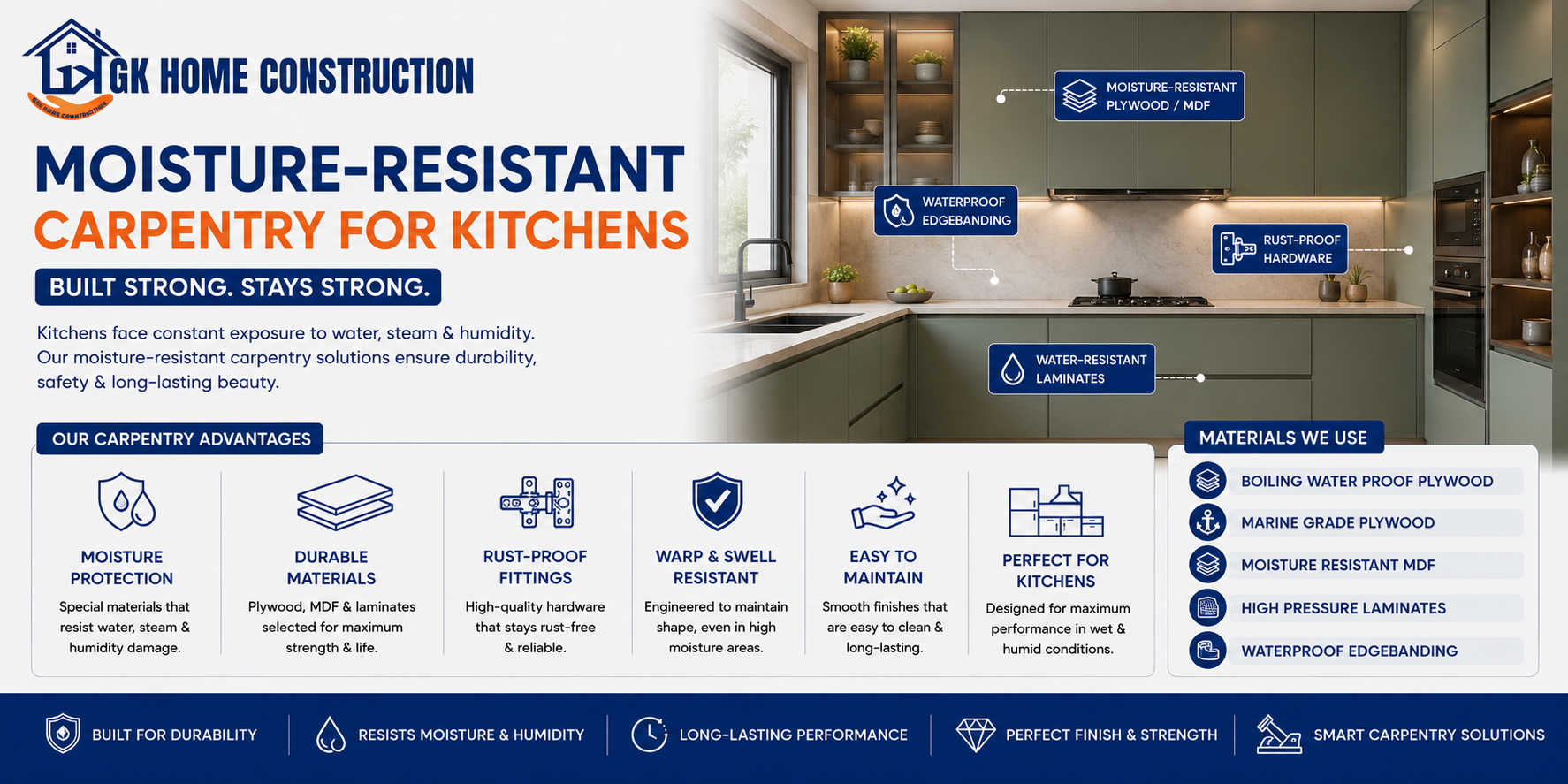
Moisture Resistant Carpentry For Kitchens
The kitchen is one of the most moisture-prone areas in any home. Daily cooking, water splashes, steam, sink leakage, cleaning activities, and humidity can gradually damage kitchen cabinets, shutters, shelves, and wooden furniture. Choosing the right carpentry materials and construction techniques is essential to maintaining a durable, functional, and attractive kitchen.
Moisture-resistant carpentry focuses on using suitable boards, protective finishes, waterproofing measures, and proper installation methods to reduce moisture-related damage. For homeowners planning a new kitchen or renovation, understanding moisture-resistant carpentry can help prevent swelling, peeling, mould growth, and expensive repairs.
1. Choosing the Right Materials for Kitchen Carpentry
Material selection is the foundation of moisture-resistant kitchen furniture. Different boards offer different levels of protection against humidity and water exposure.
BWP plywood (Boiling Waterproof): Suitable for sink cabinets, base units, and areas exposed to frequent water splashes. It provides good strength and screw-holding capacity.
BWR plywood (Boiling Water Resistant): A practical option for kitchen cabinets exposed to humidity and occasional moisture, especially in relatively dry storage zones.
HDHMR boards: High-density moisture-resistant boards are useful for cabinet shutters, panels, and selected cabinet structures. They offer a smooth surface for laminates, acrylic, and painted finishes.
PVC and WPC boards: These materials are suitable for selected moisture-prone applications, particularly under-sink cabinets. Their load capacity, fastening performance, and quality should be considered before use.
2. Protecting Cabinet Edges and Joints
Cabinet edges and joints are among the most vulnerable areas in kitchen carpentry. Water can enter through unfinished board edges, poorly sealed corners, and openings created during plumbing or hardware installation.
Professional carpentry should include:
PVC edge banding on exposed board edges.
Sealing cut edges and drilled holes near water connections.
Proper adhesive application on laminates.
Silicone sealing around countertop and backsplash connections.
Moisture-resistant treatment for cabinet bottoms and plinths.
Edge banding helps prevent moisture penetration and improves the overall finish of the kitchen. Proper sealing is particularly important around sink cut-outs, water purifier connections, plumbing access points, and dishwasher installations.
3. Moisture-Resistant Finishes and Laminates
Kitchen cabinet finishes provide an additional layer of protection against moisture, stains, and everyday wear. Choosing the right finish helps maintain the appearance of cabinets while reducing maintenance requirements.
Common finishing options include:
High-pressure laminates (HPL): Durable, easy to clean, and available in a wide range of colours and textures.
Acrylic finishes: Provide a glossy modern appearance and are relatively easy to maintain.
PU finishes: Offer a premium painted appearance with appropriate surface preparation and application.
Melamine finishes: Suitable for selected cabinet surfaces and dry storage areas.
The finish should be selected according to the cabinet material, location, exposure to moisture, and cleaning requirements.
4. Proper Kitchen Ventilation and Moisture Control
Moisture-resistant carpentry alone cannot solve every kitchen moisture problem. Proper ventilation is equally important to reduce steam, condensation, and humidity.
Installing an efficient chimney above the cooking area, providing adequate ventilation, and using suitable windows can help control moisture. Kitchen layouts should also allow airflow around appliances and cabinets wherever practical.
Avoid placing wooden cabinets directly against damp walls. If the wall has seepage, leakage, or rising dampness, the source should be identified and repaired before installing new carpentry. Otherwise, moisture may damage the cabinet structure from behind.
5. Waterproofing the Sink and Plumbing Areas
The sink cabinet is one of the most vulnerable parts of kitchen furniture because it houses water supply pipes, drainage connections, and sometimes water purifier equipment.
To protect this area:
Use BWP plywood or suitable moisture-resistant materials.
Install a protective tray beneath the sink and plumbing connections.
Seal pipe openings and cabinet joints carefully.
Keep plumbing connections accessible for inspection and maintenance.
Repair leaking taps, drainage pipes, and flexible hoses immediately.
These preventive measures reduce the risk of water damage, unpleasant odours, mould growth, and premature cabinet deterioration.
6. Professional Carpentry Installation and Maintenance
Even high-quality materials can fail when installation is poor. Professional carpentry involves accurate measurements, suitable hardware, proper cabinet alignment, secure fixing, and careful finishing.
Homeowners should periodically inspect kitchen cabinets for swelling, loose hinges, peeling laminates, damaged edge bands, and signs of moisture. Cleaning cabinets with a soft cloth and avoiding excessive water during cleaning can help extend their lifespan.
Avoid allowing water to remain on cabinet surfaces, particularly near sink units and floor-level storage.
7. Benefits of Moisture-Resistant Kitchen Carpentry
Investing in moisture-resistant kitchen carpentry offers several long-term advantages:
Longer furniture lifespan: Reduces swelling, delamination, and deterioration.
Lower maintenance costs: Helps avoid frequent cabinet repairs and replacements.
Improved hygiene: Reduces the chances of mould growth and dampness-related odours.
Better appearance: Maintains cabinet finishes, edges, and surfaces for longer.
Enhanced functionality: Keeps drawers, shutters, and storage units working smoothly.
Better investment value: Improves the durability and quality of kitchen interiors.
Conclusion
Moisture-resistant carpentry is an essential part of modern kitchen design, particularly in Indian homes where humidity, cooking steam, plumbing leaks, and frequent cleaning can affect furniture durability. Selecting BWP plywood for wet zones, HDHMR for suitable applications, quality laminates, sealed edges, reliable hardware, and proper ventilation can significantly improve kitchen performance.Karnataka 560100.
At GK Home Construction, we focus on practical carpentry solutions, kitchen planning, quality materials, and professional workmanship to create functional and durable interiors. Whether you are constructing a new home or renovating your existing kitchen, moisture-resistant carpentry helps protect your investment and ensures a kitchen that remains beautiful and functional for years.