The way we design and build our homes has always reflected what we value as a society. Today, with environmental awareness at the forefront of every industry, sustainable interior architecture has moved far beyond a trend — it has become a genuine commitment to smarter, healthier, and more responsible living. For homeowners who are thinking about renovation, new construction, or even minor upgrades, understanding the materials that form the backbone of sustainable interiors is the first and most impactful step toward making a difference — both inside your home and beyond it.
What Makes a Material Truly Sustainable?
Before diving into specific materials, it is important to understand what sustainability actually means in the context of interior architecture. A sustainable material is one that is sourced responsibly, manufactured with minimal environmental impact, durable enough to last without frequent replacement, and safe for the people living inside the home. It should ideally come from renewable or recycled sources, have a low carbon footprint during production, and be recyclable or biodegradable at the end of its life. When a material checks most of these boxes, it earns its place in a sustainable home design. At GK Home Construction, these principles guide every material recommendation we offer our clients.
Reclaimed Wood: Character With a Conscience
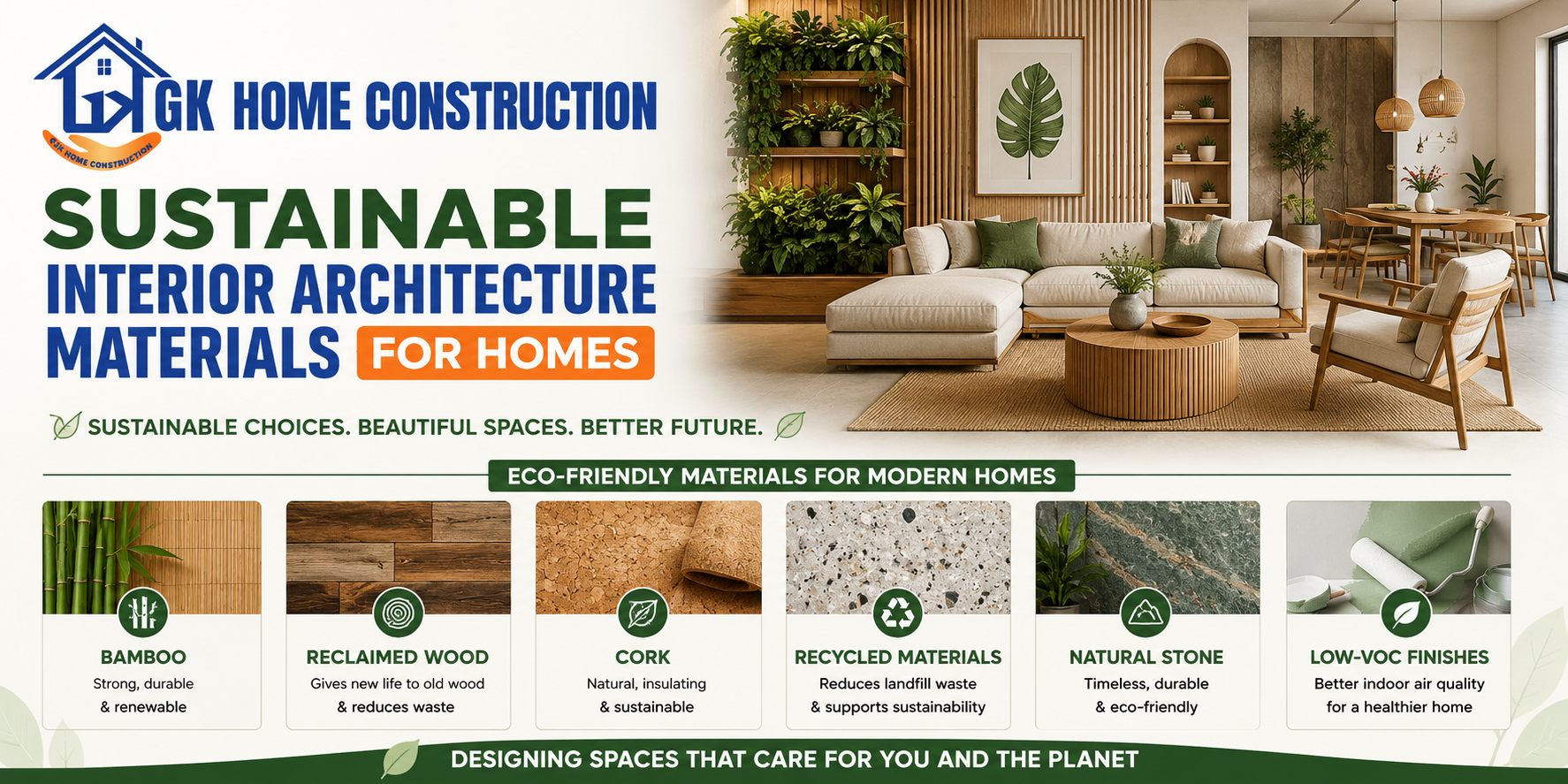
One of the most widely recognized and loved sustainable materials in interior architecture is reclaimed wood. Unlike freshly cut timber, reclaimed wood is sourced from old barns, demolished buildings, warehouses, and retired structural frameworks. This process eliminates the need to harvest new trees, directly reducing deforestation. Beyond the environmental benefit, reclaimed wood brings a visual richness that new wood simply cannot replicate. The weathering, grain patterns, and natural imperfections tell a story that adds genuine character to any interior — whether used as flooring, wall panels, ceiling beams, or furniture.
Reclaimed wood is also exceptionally durable. Older-growth timber tends to be denser and harder than modern plantation wood, meaning it holds up better under daily wear. When properly treated and sealed, it requires very little maintenance over decades. For homeowners who want warmth, authenticity, and sustainability in one material, reclaimed wood is a timeless choice.
Bamboo: The Rapidly Renewable Wonder
Bamboo has earned an extraordinary reputation in sustainable design, and for very good reason. It is technically a grass rather than a tree, and it grows at a pace that wood simply cannot match — some species mature fully within three to five years, compared to decades for hardwood trees. This rapid renewal makes bamboo one of the most reliably sustainable building materials available today.
Inside the home, bamboo is incredibly versatile. It performs beautifully as flooring, offering a hardness comparable to many traditional hardwoods. It is also used in wall cladding, cabinetry, furniture, and even structural elements. Bamboo naturally resists moisture and pests to a reasonable degree, and it requires fewer chemicals during processing than many other engineered materials. Its clean, linear aesthetic fits effortlessly into both modern minimalist and warm, nature-inspired interiors, making it a practical and elegant choice for sustainable homes.
Recycled Metal: Strength Reimagined
Steel and aluminium are among the most energy-intensive materials to produce from raw ore. However, when sourced in their recycled form, both materials dramatically reduce their environmental footprint — recycled aluminium, for instance, requires roughly 95% less energy to produce than virgin aluminium. This makes recycled metal an excellent material for interior architectural elements where strength and longevity are required.
In modern home design, recycled metal appears in stair railings, door and window frames, kitchen fixtures, countertop edges, and decorative ceiling features. Its industrial yet refined quality pairs well with natural materials like wood and stone, creating interiors that feel both grounded and contemporary. Because metal is infinitely recyclable without losing quality, choosing recycled metal today also contributes to the material's future sustainability cycle.
Natural Stone: Lasting Beauty From the Earth
Natural stone — including granite, slate, limestone, and sandstone — is one of the most inherently sustainable materials available when sourced locally and used thoughtfully. Stone requires no chemical processing, emits no toxins, and is extraordinarily durable. A well-installed stone floor or countertop can last the entire lifetime of a home without needing replacement, which dramatically reduces material consumption over time.
The key to making stone a genuinely sustainable choice lies in its sourcing. Locally quarried stone eliminates the large carbon footprint associated with long-distance transportation, and responsibly managed quarries minimize landscape disruption. In interiors, stone is most commonly used for flooring, bathroom surfaces, kitchen countertops, feature walls, and fireplace surrounds. Its thermal mass also makes it a passive energy tool — stone absorbs heat during the day and slowly releases it, helping to regulate indoor temperatures naturally.
Low-VOC Paints and Natural Plasters
Walls cover the largest surface area in any home, which means the materials applied to them have an outsized impact on indoor air quality. Conventional paints often contain volatile organic compounds (VOCs) — chemicals that off-gas into the air for months or even years after application, contributing to respiratory issues, headaches, and long-term health concerns. Sustainable interior design prioritizes low-VOC or zero-VOC paints, which significantly reduce these harmful emissions without compromising on colour range or finish quality.
Natural plasters made from lime, clay, or gypsum are another outstanding option for sustainable wall finishes. These materials are derived directly from the earth, breathe naturally to regulate humidity, and are completely non-toxic. Lime plaster, in particular, has been used for centuries and develops a subtle, living texture that becomes more beautiful with age. Clay plasters offer warm, earthy tones and excellent acoustic properties, while remaining fully biodegradable at the end of their life.
Cork: The Underrated Sustainable Performer
Cork is harvested from the bark of cork oak trees without cutting the tree down — the bark regenerates naturally over approximately nine years, making cork one of the most renewable materials in existence. In home interiors, cork is most commonly used for flooring and wall tiles, where it provides excellent thermal insulation, sound absorption, and a naturally soft underfoot feel that makes it particularly comfortable in bedrooms and living areas.
Cork is also naturally resistant to mould, mildew, and insects, reducing the need for chemical treatments. It is hypoallergenic and easy to maintain, making it a highly practical choice for families and allergy-sensitive households.
Making the Right Choice for Your Home
Sustainable interior architecture is not about sacrificing beauty or comfort — it is about making informed choices that serve your home, your health, and the environment all at once. At GK Home Construction, we believe that every material decision is an opportunity to build something better. Whether you are drawn to the warmth of reclaimed wood, the clean lines of bamboo, or the timeless solidity of natural stone, there is a sustainable material that fits your vision perfectly. The future of home design is thoughtful, responsible, and genuinely beautiful — and it starts with the materials you choose.