Introduction
Designing the interior architecture of a home is one of the most exciting yet challenging experiences a homeowner can go through. Every decision — from the placement of walls to the height of ceilings — creates a lasting impact on how a space feels and functions for years to come. However, even with the best intentions, many homeowners and first-time builders fall into predictable traps that cost them time, money, and comfort in the long run. At GK Home Construction, we have worked with hundreds of families across residential and commercial projects, and we have seen the same interior architecture mistakes repeat themselves time and again. Understanding these mistakes before you begin your project can save you from costly redesigns and help you build a space that truly works for your lifestyle.
Ignoring the Flow of Natural Light
One of the most common and most impactful interior architecture mistakes is failing to plan for natural light from the very beginning. Homeowners often focus so heavily on furniture placement and wall colors that they overlook how sunlight will move through the space at different times of day. When windows are positioned without considering the orientation of the home — whether it faces north, south, east, or west — rooms can end up either overwhelmingly bright in the afternoons or permanently dark and gloomy. Natural light is not just an aesthetic choice; it directly affects the mood, energy efficiency, and perceived size of every room. A well-designed home accounts for window sizes, glazing directions, and the use of skylights or light wells to ensure that every space receives a healthy and balanced amount of daylight throughout the year.
Poor Space Planning and Traffic Flow
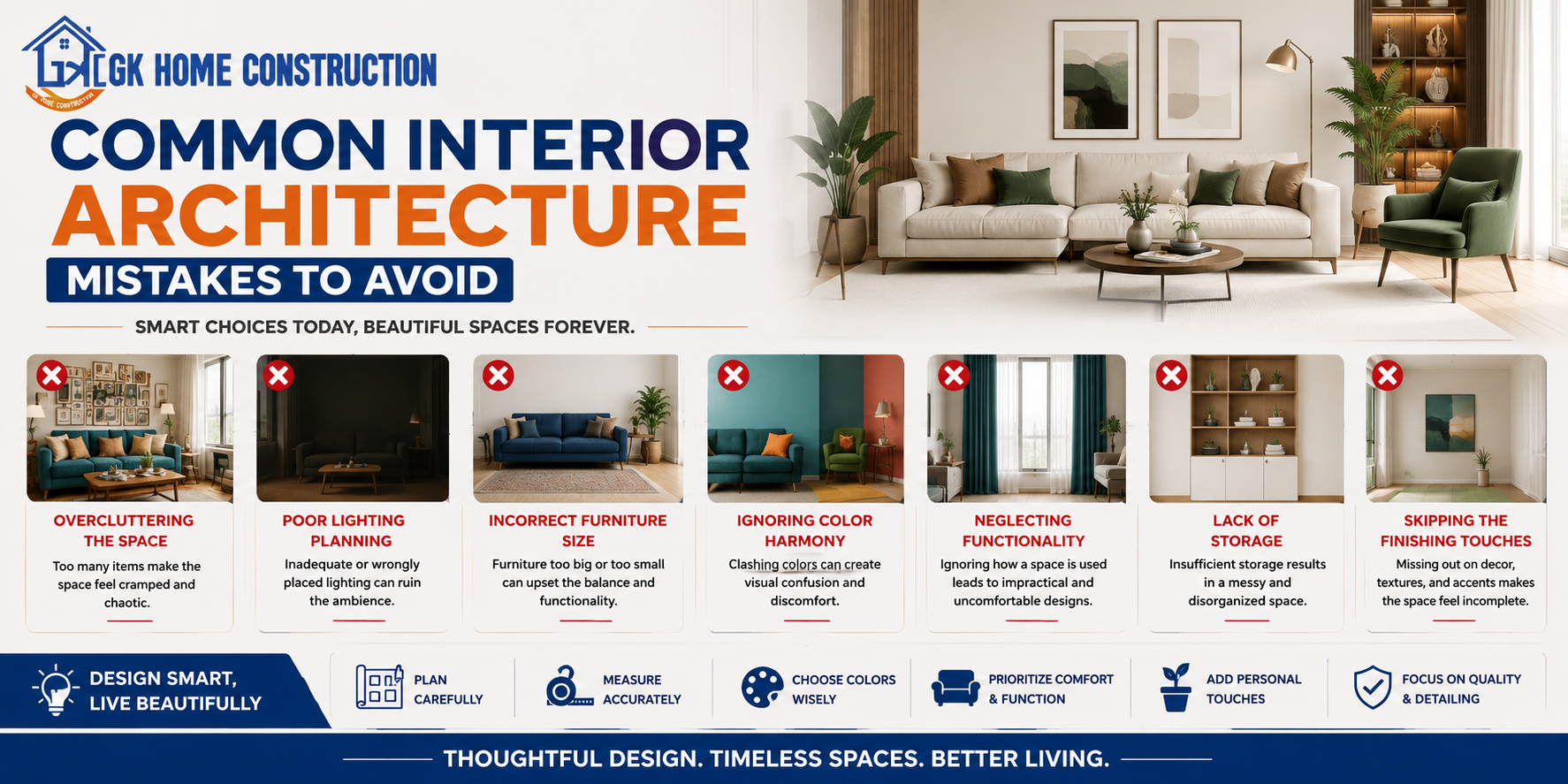
Another widespread mistake is neglecting proper space planning, which results in rooms that feel cramped, awkward, or difficult to navigate. Interior architecture is not just about making a space look beautiful — it is about making it livable. When walls, doorways, and room layouts are not planned with human movement in mind, everyday activities like walking from the kitchen to the dining area or opening a door without it hitting furniture become frustrating obstacles. Traffic flow must be considered during the early design stage, ensuring that pathways are clear, rooms connect logically to one another, and open-plan areas do not become chaotic or dysfunctional. A good rule of thumb is to allow at least 36 to 42 inches of clearance in high-traffic corridors to keep the home comfortable for everyone, including guests and family members of all ages.
Overlooking Ceiling Heights and Vertical Space
Most homeowners spend a great deal of time thinking about floor plans, but very few give serious thought to ceiling heights. Low ceilings can make even a well-decorated room feel suffocating and small, while ceiling heights that are inconsistent across rooms can create a jarring visual experience as you move through the home. Interior architecture should treat vertical space as an asset. Taller ceilings in living areas and communal spaces create a sense of grandeur and openness, while slightly lower ceilings in bedrooms or reading nooks can actually feel cozier and more intimate when done intentionally. The mistake lies in applying a single standard ceiling height throughout the entire home without any deliberate variation or purpose. Incorporating coffered ceilings, exposed beams, or raised portions in strategic areas adds character and depth that flat uniform ceilings simply cannot achieve.
Underestimating Storage Requirements
A beautifully designed home that lacks adequate storage will quickly become cluttered and stressful to live in. This is one of the most regretted interior architecture mistakes we encounter during home renovation consultations. Homeowners often prioritize open spaces and visual aesthetics during the design phase, only to realize after moving in that there is nowhere to store everyday items like shoes, linens, cleaning supplies, or seasonal belongings. Smart interior architecture integrates storage solutions directly into the structural design of the home — think built-in cabinetry along hallways, recessed shelving within walls, under-stair storage rooms, and dedicated utility spaces that are both functional and architecturally pleasing. Planning for storage does not mean compromising on style; in fact, well-designed built-in storage can become one of the most beautiful and distinctive features of a home.
Mismatching Scale and Proportion
Scale and proportion are the invisible framework behind every great interior space, and when they are wrong, the entire room feels off — even if you cannot immediately identify why. Using furniture that is too large for a room makes the space feel overwhelmed and chaotic, while undersized furniture in a large room makes it feel cold and uninviting. The same principle applies to architectural elements like windows, doors, fireplaces, and staircases. A massive double-height window might look stunning in a magazine but could feel completely out of proportion in a modest family home. Interior architecture must carefully balance the dimensions of every element against the overall size of the room and the scale of adjacent features. Taking time during the planning phase to visualize proportions — either through detailed drawings or 3D rendering — prevents expensive mistakes that are difficult to reverse once construction is complete.
Neglecting Acoustics and Sound Planning
Acoustics is perhaps the most overlooked aspect of interior architecture, particularly in modern open-plan homes. Hard surfaces like polished concrete floors, glass walls, and high ceilings may look stunning, but they reflect sound and create echo-heavy environments that become exhausting to live in over time. Conversely, spaces that are over-insulated with soft furnishings and heavy drapes can feel dead and muffled. Sound travels through walls, floors, and ceilings in ways that must be considered during the architectural planning stage — especially for bedrooms adjacent to entertainment areas, home offices near children's play zones, or bathrooms placed directly above living rooms. Incorporating acoustic insulation within walls, using double-glazed windows, and thoughtfully placing soft materials throughout the design helps create a home that is not only beautiful but genuinely peaceful.
Conclusion
Great interior architecture is the result of careful planning, deliberate decision-making, and a deep understanding of how people actually live inside their homes. Avoiding these common mistakes is not just about creating a visually impressive space — it is about building a home that supports your comfort, well-being, and daily routines for decades to come. At GK Home Construction, our team works closely with every client from the concept stage to final handover, ensuring that every design decision serves both form and function. If you are planning a new build or renovation and want expert guidance, reach out to us today and let us help you build something truly exceptional.