Carpentry Quality Checklist for Homeowners: What to Inspect Before You Approve Any Work
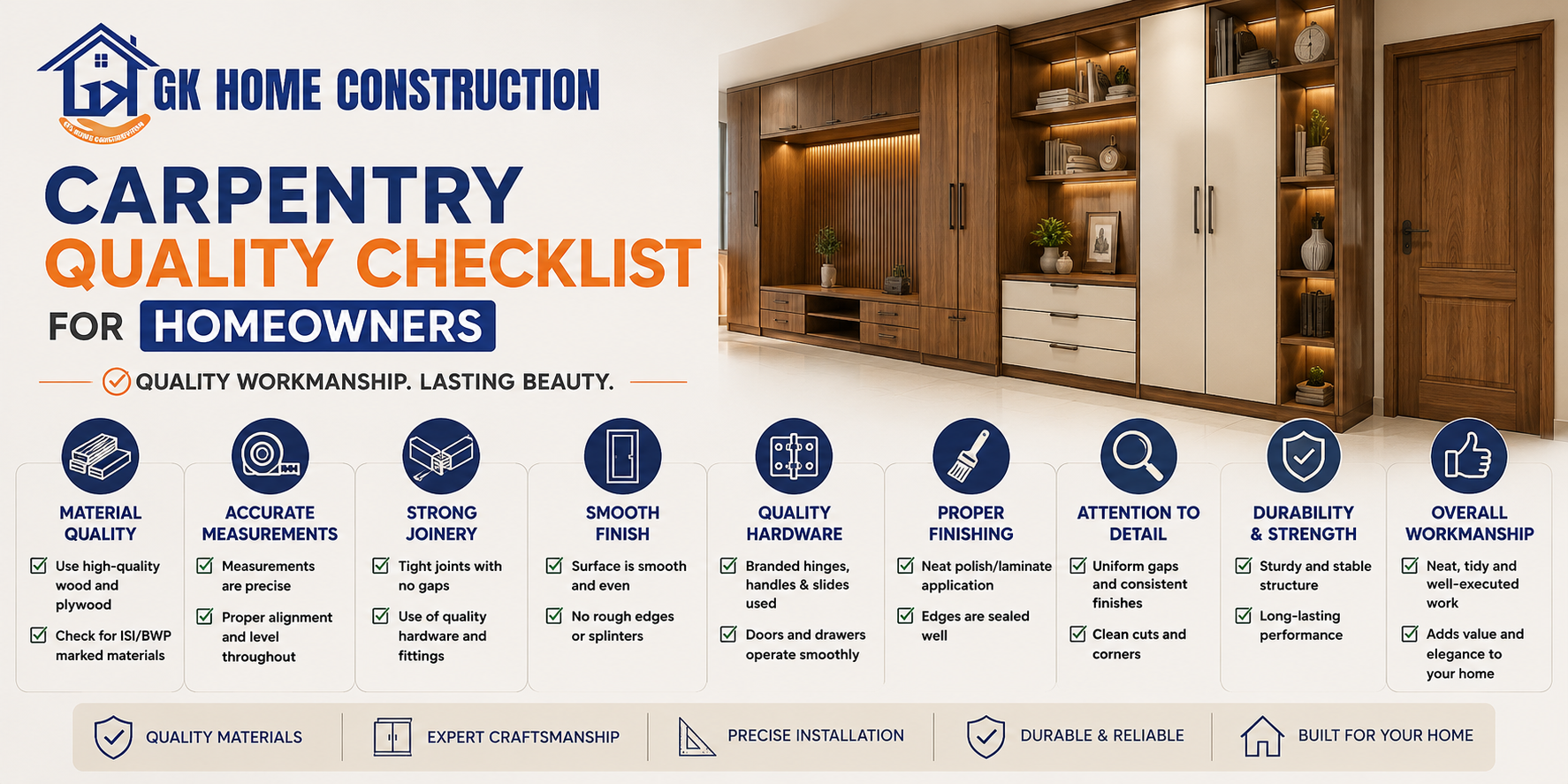
When you invest in carpentry work for your home, whether it is a new door frame, custom cabinetry, wooden flooring, or a complete interior fit-out, the quality of the craftsmanship directly impacts both the beauty and the longevity of your space. Many homeowners make the mistake of approving work simply because it looks good at first glance. However, true carpentry quality goes much deeper than the surface. This comprehensive checklist will help you inspect carpentry work like a professional, so you know exactly what to look for before giving your final approval.
Start with the Wood: Material Quality Matters
Before any carpentry work begins, the quality of the wood itself sets the foundation for everything that follows. Inspect the timber or engineered wood panels being used on your project. Good quality wood should be free from excessive knots, warping, or visible cracks. If you are using solid wood, check that it has been properly seasoned or kiln-dried, because unseasoned wood tends to shrink, split, or warp after installation once it adjusts to indoor temperature and humidity. For a deeper understanding of which wood types perform best under these conditions, see our guide on types of wood used in carpentry.
Ask your carpenter about the wood grade being used and ensure it matches what was quoted and agreed upon. In cities like Bengaluru, where humidity levels can fluctuate significantly across seasons, using moisture-resistant or treated wood for kitchens and bathrooms is absolutely essential to prevent swelling and fungal damage over time. Learn more about this in our guide on moisture-resistant carpentry for kitchens.
Joints and Connections: The Heart of Carpentry Strength
One of the most critical areas to inspect in any carpentry job is how pieces are joined together. A visually appealing finish can easily hide poor joinery underneath. Check that joints are tight, clean, and gap-free. Whether it is a dovetail joint in a drawer, a mortise-and-tenon connection in furniture framing, or a simple butt joint in cabinetry, there should be no visible gaps or misalignment. Gently push and pull on joined sections to test for wobbling or looseness. Properly constructed joints should feel solid and immovable. If nails or screws are used as fasteners, they should be countersunk and concealed with wood filler rather than left exposed or unfinished. Exposed hardware is a common sign of rushed or low-quality work.
Surface Finishing: Smoothness, Edges, and Paint Readiness
Run your hand across all wooden surfaces that are part of the finished work. Surfaces should feel uniformly smooth without any rough patches, raised grain, or sanding marks. Pay particular attention to edges and corners, which are often neglected. Sharp or uneven edges not only look unprofessional but can also be a safety concern, especially in homes with children. All edges should be either rounded, beveled, or cleanly finished according to the design specification. If the woodwork is meant to be painted or polished, inspect whether primer has been applied evenly and whether the surface is truly ready for the final coat. Any gaps between wood and walls, ceilings, or floors should be filled with the appropriate wood filler or caulk before finishing begins.
Alignment and Levelness: Precision You Can Measure
Every door, window frame, cabinet, shelf, and panel in your home must be perfectly level and aligned. Use a spirit level or a digital level app to check horizontal and vertical alignment on all major installations. Doors should swing open and close smoothly without sticking, dragging on the floor, or leaving uneven gaps around the frame. Drawers should slide in and out effortlessly on both sides. Cabinet doors should align perfectly with each other and maintain consistent gap spacing. Even a small misalignment of a few millimeters can cause doors to warp over time or result in visible gaps that collect dust and look untidy. Levelness is not just about appearance—it affects the long-term functionality of every piece of carpentry in your home.
Hardware Installation: Handles, Hinges, and Fixings
The quality of hardware installation is often an overlooked detail that significantly affects day-to-day usability. All hinges must be flush with the wood surface and secured with the correct size screws. If a hinge is recessed too deep or sits proud of the surface, the door or shutter will not close properly and may even crack the wood over time. Handles and knobs should be firmly attached with no wobble. Check that all screws are driven straight and fully tightened without stripping the wood around them. For kitchen and wardrobe cabinets, soft-close mechanisms should engage smoothly and consistently on every door and drawer. If you're planning custom cabinetry, our wardrobe design guide covers hardware and finish choices in more detail. These small details reflect the overall standard of workmanship and should never be ignored during your inspection.
Fit Against Walls and Floors: Gaps and Sealing
One of the most telling signs of quality carpentry is how well the work fits against your existing walls, floors, and ceiling. There should be no large, uneven gaps between woodwork and adjacent surfaces. Skirting boards, door frames, and built-in furniture should sit flush against walls with consistent contact throughout their length. Where small gaps do exist due to wall irregularities, they must be sealed with appropriate caulk or beading rather than left open. Open gaps not only look unfinished but also allow moisture, insects, and dust to accumulate behind woodwork, leading to long-term damage that is costly to repair. This is especially important in kitchens — see our guide on kitchen carpentry materials to choose materials that resist this kind of damage from the start.
Final Walkthrough: Your Approval Should Be Earned
Never feel pressured to approve carpentry work in a hurry. Take your time doing a slow, methodical walkthrough of every piece of work completed. Open and close every door, drawer, and shutter multiple times. Check every surface under direct light at an angle, which reveals surface imperfections that are invisible under flat lighting. Review the work against the original design drawings or scope of work to ensure nothing has been missed or substituted without your knowledge. A quality carpenter will welcome your inspection and be confident enough to address any concerns on the spot. At GK Home Construction, every carpentry project is delivered with the intention that your inspection reveals nothing but the finest craftsmanship, because your home deserves nothing less. Explore our carpentry services to see how we ensure every project meets this standard from day one.