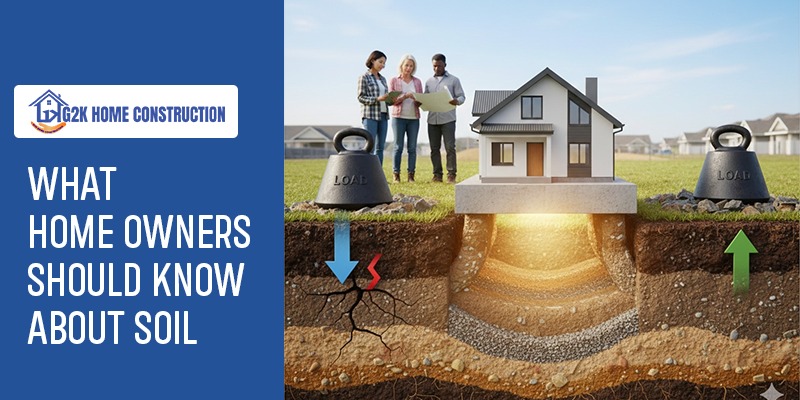
What Homeowners Should Know About Soil Bearing Capacity
If you are planning to build your dream home, you may hear engineers talk about “soil bearing capacity.” It may sound technical, but understanding this concept is very important for homeowners before starting any construction.
Your house stands on its foundation — and your foundation stands on soil. If the soil cannot handle the weight of your home, serious structural problems can occur. That’s why knowing about soil bearing capacity helps you make smart and safe decisions.
Let’s break it down in simple words.
What is Soil Bearing Capacity?
Soil bearing capacity is the maximum load the ground can safely support without sinking, shifting, or failing.
In simple terms, it tells us:
1. How much weight your soil can carry2. Whether it is strong enough for your house3. What type of foundation is required
Every soil type has a different bearing capacity. For example:
Rocky soil → Very high bearing capacity
Gravel soil → Good bearing capacity
Sandy soil → Moderate strength
Clay soil → Low bearing capacity
This is the reason why soil testing is done before construction begins.
Why Should Homeowners Care About Soil Bearing Capacity?
Many homeowners focus on design, interiors, tiles, and paint — but the real safety of the house depends on what is under the ground.
Here’s why it matters to you:
1. Prevents Future Cracks
If the soil is weak and the foundation is not designed properly, walls may develop cracks within a few years.
2. Avoids Uneven Settlement
Sometimes one part of the house sinks slightly more than the other. This happens when soil bearing capacity is not properly calculated.
3. Ensures Long-Term Stability
A properly designed foundation based on soil strength keeps your house stable for decades.
4. Protects Your Investment
your property is one among the biggest investments to your lifestyles. A strong foundation ensures that your property value remains high.
What Happens If Soil Bearing Capacity is Ignored?
Skipping proper evaluation can lead to:
Foundation damage
Sloping floors
Wall and ceiling cracks
Water seepage issues
Expensive repair costs
Reduced building lifespan
In extreme cases, structural safety can even be compromised.
Fixing foundation problems later is far more expensive than doing proper planning in the beginning.
How is Soil Bearing Capacity Checked?
Before starting construction, engineers conduct soil testing to determine:
Type of soil
Depth of hard strata
Groundwater level
Safe load-bearing capacity
Common tests like the Standard Penetration Test (SPT) help measure soil strength.
Based on the results, the structural engineer decides:
Foundation depth
Footing size
Type of foundation (isolated, raft, pile, etc.)
This ensures your home is designed according to the soil conditions — not assumptions.
Different Soil Conditions and Foundation Choices
Here’s how soil strength affects foundation decisions:
Strong Soil: Simple isolated footings may be enough.
Moderate Soil: Larger or combined footings may be required.
Weak Soil: Raft or pile foundation may be necessary for safety.
This is why professional guidance is important before starting construction.
Why Choose Experienced Professionals Like GK Home Construction?
At GK Home Construction, we guide homeowners at every stage — starting from soil testing and bearing capacity analysis to complete construction.
We don’t believe in shortcuts. Every project begins with proper evaluation of soil conditions to ensure:
✔ Safe and strong foundation ✔ Accurate structural design ✔ Long-term durability ✔ Reduced future repair risks
Our goal is not just to build houses — but to build safe homes that stand strong for generations.
Final Thoughts for Homeowners
Understanding soil bearing capacity may seem technical, but it directly affects the safety of your home. A stunning residence is nothing without a sturdy foundation.
Before starting your construction, make sure proper soil testing and bearing capacity analysis are done. It is a small step that protects your entire investment.
If you are planning to build your dream home, consult professionals like GK Home Construction who prioritize structural safety from the ground up.