Waterproofing is one of the most important aspects of building a durable and long-lasting home. Many homeowners focus heavily on design, interiors, and aesthetics, but often overlook the importance of proper waterproofing. In reality, water leakage is one of the most common problems faced in residential buildings, especially in cities with heavy rainfall and changing climate conditions like Bangalore. Whether it is terrace leakage, bathroom seepage, or damp walls, water intrusion can cause serious structural and aesthetic damage if not addressed properly.
One of the most common questions homeowners ask is whether waterproofing should be done during the construction stage or after the construction is completed. While both methods aim to prevent water penetration, the timing of waterproofing plays a major role in its effectiveness, durability, and cost. Understanding the difference between waterproofing during construction and after construction can help homeowners make better decisions and avoid costly repairs in the future.
Waterproofing During Construction
Waterproofing during construction refers to the process of applying waterproofing systems and protective layers while the building is being constructed. This approach is considered the most effective way to protect a structure from water damage because it integrates waterproofing into the core building process.
When waterproofing is done during construction, it is applied at critical areas such as the foundation, basement, terraces, bathrooms, balconies, and external walls. Since these areas are still accessible during construction, waterproofing materials can be properly applied and integrated with the structure. For example, waterproof membranes can be installed below flooring in bathrooms and terraces before tiles are laid, ensuring that water does not penetrate the slab.
Another advantage of waterproofing during construction is that it allows the use of layered protection systems. These may include chemical waterproof coatings, membranes, protective screeds, and proper drainage planning. When these layers work together, they create a strong barrier that prevents water from entering the structure.
Cost efficiency is another major benefit. Applying waterproofing during construction is generally more affordable than fixing leakage problems later. Since the building is still under construction, there is no need to remove tiles, plaster, or paint to apply waterproofing materials. This saves both labor costs and material expenses.
In addition, waterproofing during construction significantly increases the lifespan of the building. When the structure is protected from water infiltration from the beginning, issues such as damp walls, peeling paint, mold growth, and structural cracks are minimized. This results in lower maintenance costs and a healthier living environment for the residents.
Waterproofing After Construction
Waterproofing after construction is typically done when a building already exists and leakage problems start appearing. This method is usually considered a corrective solution rather than a preventive one. In many cases, homeowners realize the need for waterproofing only after they notice issues such as water stains, damp patches, or dripping ceilings.
While post-construction waterproofing can still be effective, it is often more complex and expensive compared to waterproofing during construction. The main challenge is that many parts of the building are already covered with tiles, plaster, paint, or other finishes. To apply waterproofing materials properly, contractors may need to remove these finished surfaces first.
For example, if a bathroom begins to leak, the tiles may need to be removed to apply a waterproof membrane underneath. Similarly, terrace waterproofing may require removing existing flooring or damaged coatings before installing a new waterproofing system. These additional steps increase the overall cost and extend the repair timeline.
However, modern waterproofing technologies have made post-construction waterproofing more effective than before. Techniques such as injection grouting, liquid waterproof coatings, and crack sealing can help repair leaks without extensive demolition in some cases. These solutions are useful for addressing specific leakage problems in older buildings or homes where waterproofing was not done properly during construction.
Despite these improvements, post-construction waterproofing often provides localized solutions rather than complete protection. It fixes existing problems but may not always address underlying structural vulnerabilities. Therefore, it is generally considered a reactive approach rather than a proactive one.
Key Differences Between the Two Approaches
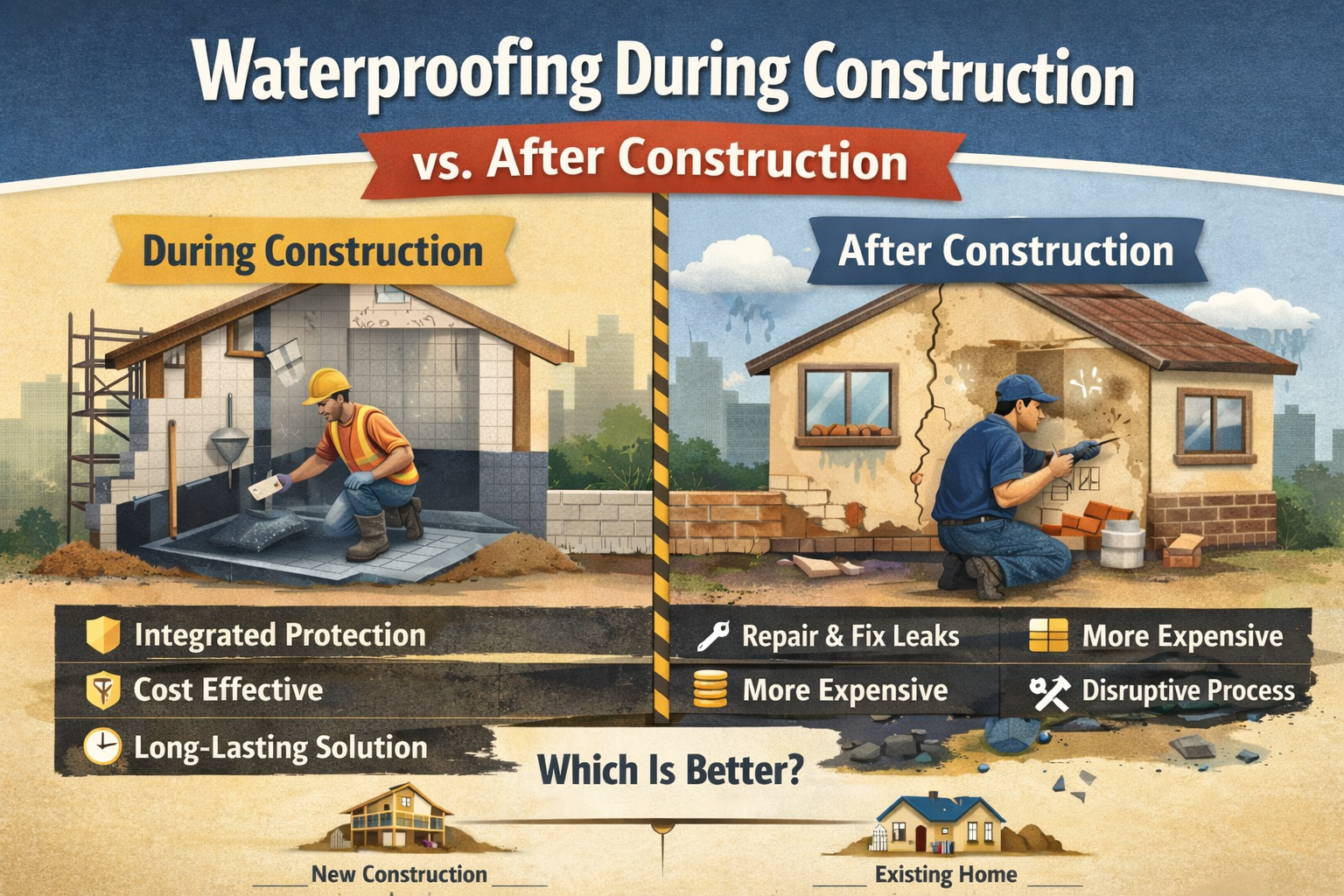
The primary difference between waterproofing during construction and after construction lies in timing and accessibility. During construction, the structure is still open and accessible, making it easier to apply waterproofing materials thoroughly and correctly. After construction, the building is already finished, which limits access to certain structural areas.
Another important difference is cost. Preventive waterproofing during construction is usually more economical because it is integrated into the building process. In contrast, repairing leaks after construction often involves removing existing materials, which increases labor and repair expenses.
Durability is also a major factor. Waterproofing systems installed during construction tend to last longer because they are applied as part of the structural design. Post-construction solutions may solve the immediate issue but may require periodic maintenance or repeated applications.
Common Areas That Require Waterproofing
Regardless of when waterproofing is applied, certain areas of a house require special attention. Terraces are one of the most common sources of water leakage because they are directly exposed to rain and sunlight. Proper terrace waterproofing ensures that rainwater does not seep into the roof slab and cause ceiling damage inside the home.
Bathrooms are another critical area where waterproofing is essential. Continuous exposure to water can lead to seepage into adjacent walls and floors if proper waterproofing layers are not installed. Similarly, balconies and external walls require protective coatings to prevent rainwater from penetrating the building envelope.
Foundations and basements also require waterproofing to prevent groundwater infiltration, which can weaken the structural stability of the building over time.
Which Option Is Better for Homeowners?
For homeowners planning to build a new house, waterproofing during construction is always the better option. It provides long-term protection, reduces future maintenance costs, and ensures that the building remains structurally strong for many years. Preventive waterproofing is an investment that protects the overall quality and value of the property.
However, for existing homes that are already experiencing leakage issues, post-construction waterproofing becomes necessary. In such cases, hiring experienced waterproofing professionals is important to correctly identify the source of the leakage and apply the most suitable repair solution.
Ultimately, the goal of waterproofing is to protect the building from water damage and extend its lifespan. Whether done during construction or after construction, the effectiveness of waterproofing depends largely on proper planning, quality materials, and skilled workmanship.
Conclusion
Waterproofing plays a crucial role in maintaining the durability, safety, and comfort of any home. While both waterproofing during construction and after construction serve the purpose of preventing water intrusion, the preventive approach during construction offers significant advantages in terms of cost, durability, and overall protection.
Homeowners who prioritize waterproofing early in the construction process can avoid many common problems such as leakage, damp walls, mold growth, and structural deterioration. On the other hand, corrective waterproofing after construction can help resolve existing issues but may involve higher costs and more complex repairs.
For anyone building a new home, integrating a proper waterproofing plan into the construction process is one of the smartest decisions. It ensures that the house remains strong, dry, and comfortable for years to come while minimizing the need for future repairs and maintenance.