Tile fixing plays a crucial role in the durability, appearance, and overall quality of any construction project. Whether it is for floors, walls, kitchens, or bathrooms, even a small mistake during tile installation can lead to long-term issues like cracks, water leakage, uneven surfaces, and costly repairs. Many homeowners and even some contractors tend to overlook key technical aspects, which eventually impacts the final outcome. Understanding the common tile fixing mistakes and avoiding them can save time, money, and ensure a professional finish.
Choosing the Wrong Type of Tiles
One of the most common mistakes is selecting tiles without considering the purpose and location. Not all tiles are suitable for every space. For example, glossy tiles may look attractive but are not ideal for bathroom floors due to their slippery nature. Similarly, using indoor tiles for outdoor areas can lead to damage due to weather exposure. It is important to choose tiles based on factors like load-bearing capacity, moisture resistance, and surface texture. Proper tile selection ensures safety, durability, and long-lasting performance.
Improper Surface Preparation
Surface preparation is often neglected, but it is one of the most critical steps in tile fixing. Installing tiles on an uneven, dusty, or weak surface can lead to poor bonding and eventual tile detachment. The base surface must be clean, level, and structurally strong before laying tiles. Any cracks, moisture, or debris should be addressed beforehand. Skipping this step may save time initially but can result in serious issues later, including tile lifting and hollow sounds.
Using Incorrect Adhesive or Mortar Mix
Another major mistake is using the wrong adhesive or improper mixing of mortar. Different tiles require different types of adhesives depending on their size, material, and application area. For example, large-format tiles need stronger adhesives compared to smaller tiles. Additionally, incorrect water-to-cement ratio in mortar can weaken the bonding strength. Too much water makes the mixture weak, while too little water makes it difficult to spread evenly. Using the right adhesive and maintaining proper consistency is essential for strong and durable tile fixing.
Lack of Proper Tile Spacing
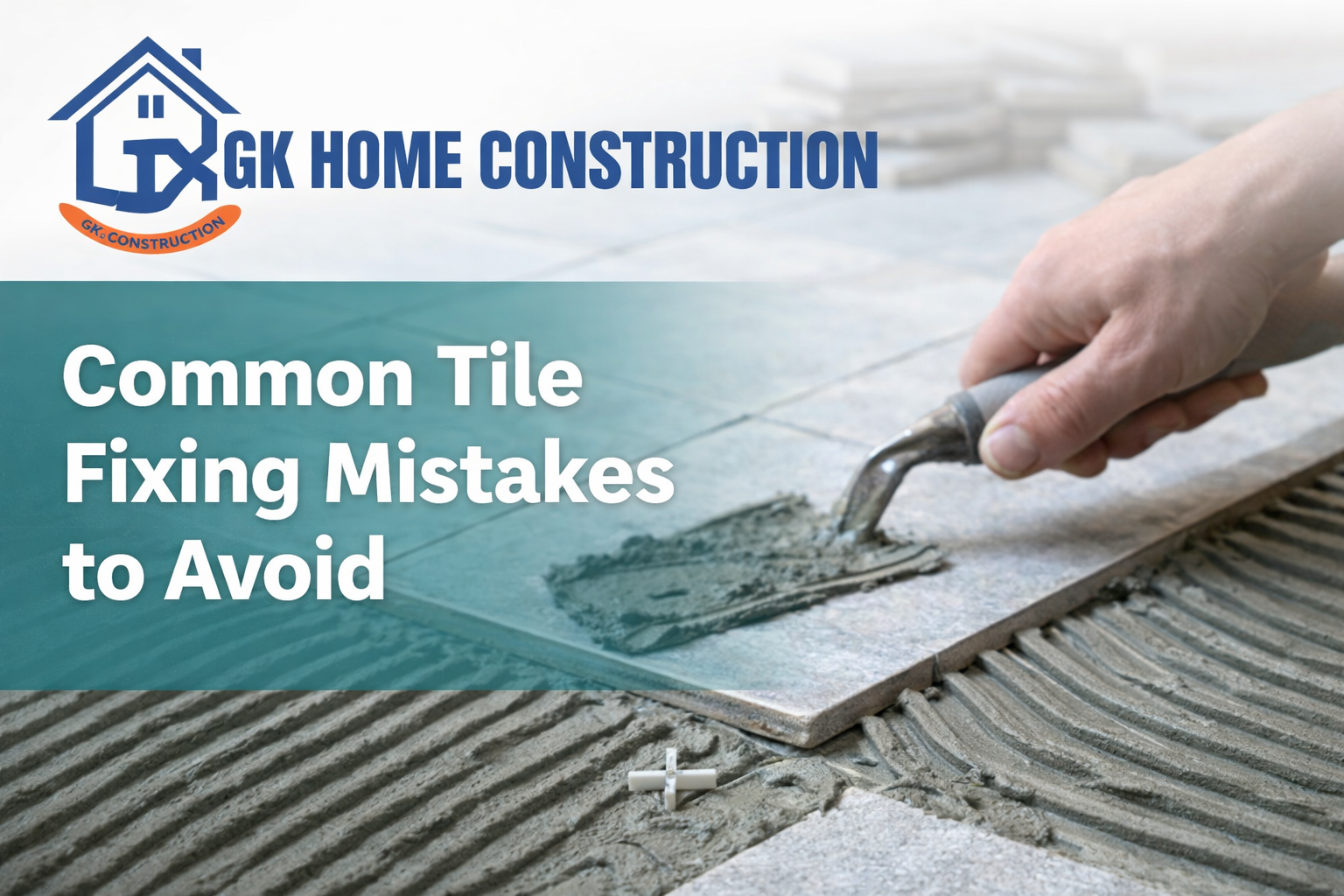
Many installers ignore the importance of maintaining uniform spacing between tiles. Tiles expand and contract due to temperature changes, and without proper spacing, they can crack or push against each other. Tile spacers help maintain consistent gaps and ensure alignment. These gaps are later filled with grout, which not only enhances the appearance but also adds flexibility to accommodate movement. Skipping spacing leads to uneven layouts and potential damage over time.
Poor Alignment and Leveling
Improper alignment is a visible mistake that directly affects the aesthetics of the space. Uneven tiles, inconsistent patterns, and improper leveling can ruin the overall look, even if high-quality tiles are used. It is essential to use leveling tools and follow a proper layout plan before starting the installation. Starting without marking guidelines can result in mismatched joints and crooked lines. Professional tile fixing always involves careful planning and precision to achieve a clean and symmetrical finish.
Ignoring Grouting Quality
Grouting is not just a finishing touch; it plays a vital role in protecting tiles and enhancing their lifespan. Using low-quality grout or improper application can lead to cracks, water seepage, and mold growth. In areas like bathrooms and kitchens, waterproof grout is highly recommended. Additionally, grout should be applied evenly and cleaned properly after application to avoid stains on tile surfaces. Neglecting grouting quality can compromise both appearance and functionality.
Not Allowing Proper Curing Time
Curing is a critical step that many people rush through. After fixing tiles, sufficient time must be given for the adhesive or mortar to set properly. Walking on tiles or applying load too early can disturb the alignment and weaken the bonding. Proper curing ensures that tiles are firmly fixed and reduces the risk of future loosening. Depending on the materials used, curing time may vary, but it should never be ignored.
Overlooking Waterproofing in Wet Areas
In areas like bathrooms, balconies, and kitchens, waterproofing is essential before tile installation. Skipping waterproofing can lead to water leakage, damp walls, and structural damage over time. Tiles alone do not prevent water seepage; a proper waterproofing layer beneath them is necessary. This is especially important in regions with high moisture exposure. Investing in good waterproofing ensures long-term protection and avoids expensive repairs.
Incorrect Tile Cutting Techniques
Tile cutting requires precision and the right tools. Poor cutting techniques can result in chipped edges, uneven shapes, and wastage of materials. This becomes more noticeable around corners, edges, and fittings like switches and pipes. Using proper cutting machines and measuring accurately before cutting ensures a neat and professional finish. Rushed or inaccurate cutting not only affects appearance but also increases material costs.
Skipping Professional Expertise
Many people attempt tile fixing without proper knowledge or hire unskilled labor to save costs. However, tile installation requires technical expertise, proper tools, and experience. Mistakes made during installation can lead to higher repair costs in the future. Hiring experienced professionals ensures that all steps, from surface preparation to final finishing, are handled correctly. Quality workmanship always delivers better durability and visual appeal.
Poor Planning and Layout Design
Lack of planning is another mistake that affects the final outcome. Starting tile installation without a clear layout plan can result in uneven cuts, mismatched patterns, and wastage. Proper planning includes deciding the starting point, tile direction, and alignment with room dimensions. A well-planned layout enhances the overall design and minimizes errors during execution.
Conclusion
Tile fixing is more than just placing tiles on a surface; it is a detailed process that requires careful planning, the right materials, and skilled execution. Avoiding common mistakes such as improper surface preparation, wrong adhesive usage, poor alignment, and lack of waterproofing can significantly improve the quality and durability of your project. Paying attention to each step ensures a flawless finish that not only looks good but also stands the test of time. For homeowners and builders alike, understanding these common tile fixing mistakes is the key to achieving professional and long-lasting results.