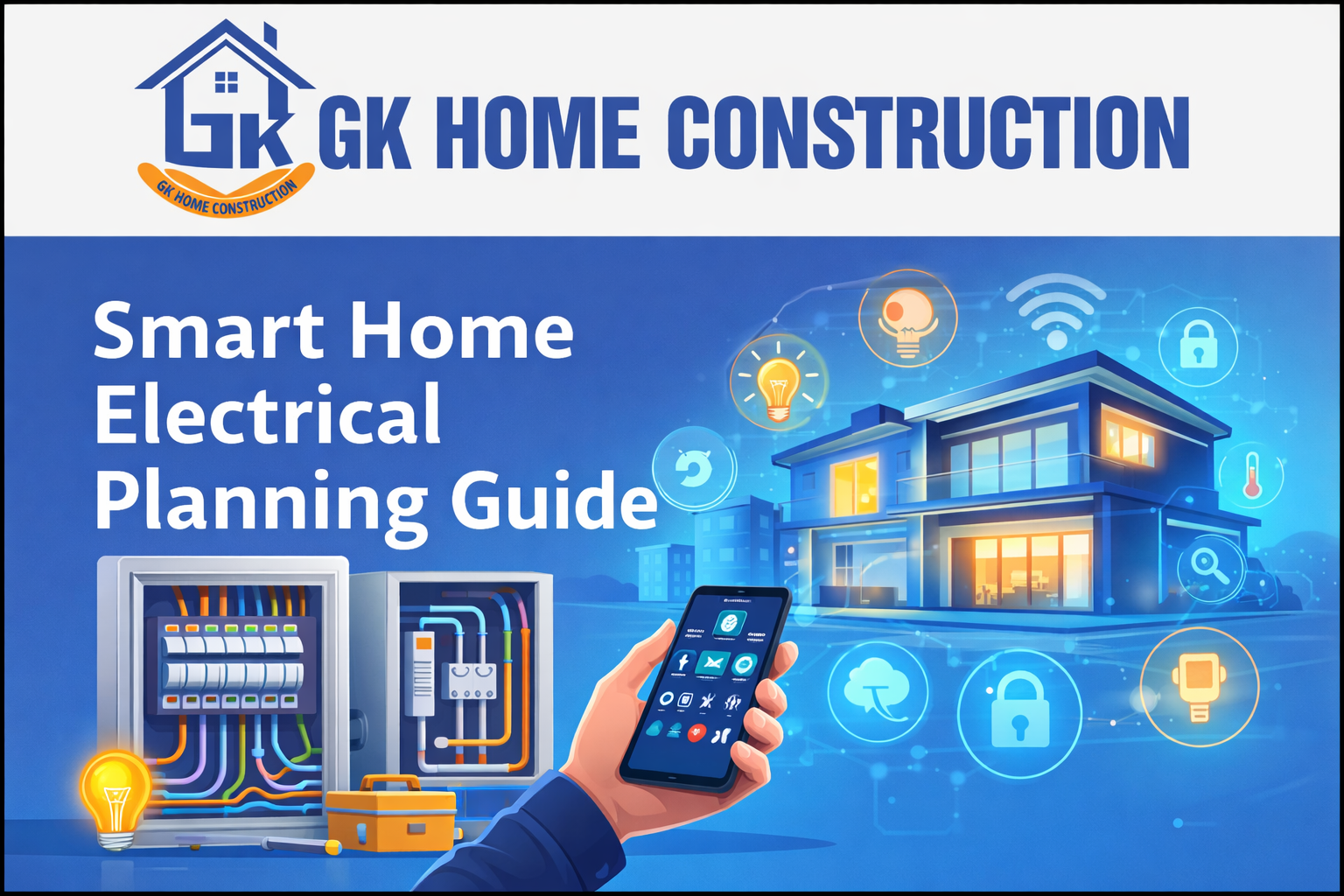
In today’s rapidly evolving construction landscape, smart homes are no longer a luxury—they are becoming a standard expectation among homeowners. With the rise of automation, energy efficiency, and connected living, electrical planning plays a crucial role in ensuring that a home is not only functional but also future-ready. A well-designed smart home electrical system enhances convenience, improves safety, and adds long-term value to the property. However, achieving this requires careful planning from the early stages of construction rather than making adjustments later, which can be costly and inefficient.
Understanding Smart Home Electrical Planning
Smart home electrical planning refers to the strategic design of wiring, devices, and control systems that enable automation and remote management of various electrical components within a home. This includes lighting, fans, air conditioning, security systems, entertainment units, and even appliances like geysers and refrigerators. Unlike traditional electrical systems, smart homes rely on interconnected devices that communicate through Wi-Fi, Bluetooth, or wired networks. Therefore, planning must consider both electrical load requirements and network connectivity to ensure seamless performance.
The key to successful smart planning is integration. Instead of treating each electrical component separately, the system should be designed as a unified network. For example, lighting can be linked with motion sensors, security cameras can be integrated with mobile apps, and climate control systems can be automated based on occupancy patterns. This level of integration not only improves user experience but also optimizes energy usage.
Importance of Early Planning in Construction
One of the most common mistakes homeowners make is thinking about smart home features after the construction is completed. Retrofitting smart systems can lead to unnecessary expenses, visible wiring, and limited functionality. Planning during the construction phase allows for concealed wiring, proper switchboard placements, and the inclusion of additional conduits for future upgrades.
Early planning also helps in determining the right capacity for electrical panels and distribution boards. Smart homes often require additional circuits to support automation hubs, surveillance systems, and high-end appliances. Without proper planning, the system may become overloaded, leading to frequent tripping or even safety hazards. Therefore, involving electrical consultants and automation experts at the design stage is highly recommended.
Key Components of a Smart Electrical System
A smart home electrical system consists of several interconnected components that work together to deliver automation and control. The foundation lies in high-quality wiring and structured cabling. Using durable wires with proper insulation ensures safety and long-term reliability. Alongside this, installing ample conduits allows for easy addition of new cables in the future without breaking walls.
Switchboards and control panels are another critical element. In smart homes, traditional switches are often replaced or supplemented with touch panels or app-controlled systems. However, it is always advisable to maintain a combination of both manual and smart controls to ensure usability during network failures.
Lighting automation is one of the most popular features in smart homes. By incorporating dimmers, timers, and motion sensors, homeowners can control lighting based on their preferences and routines. Similarly, smart power outlets enable remote operation of appliances, adding convenience and improving energy efficiency.
Load Calculation and Power Distribution
Proper load calculation is essential in smart home planning to prevent overloading and ensure efficient power distribution. Each room and appliance should be evaluated for its power requirements, including future additions. Smart devices, although energy-efficient, still contribute to the overall load, especially when multiple systems are running simultaneously.
Distribution boards should be designed with adequate circuit breakers and safety mechanisms such as RCCB (Residual Current Circuit Breaker) and MCB (Miniature Circuit Breaker). These components protect the home from electrical faults, short circuits, and leakage currents. In smart homes, it is also beneficial to allocate separate circuits for automation systems and high-power appliances to avoid interference and ensure stable performance.
Role of Internet Connectivity and Networking
A smart home is only as effective as its network connectivity. Since most automation systems rely on internet access, planning for strong and consistent Wi-Fi coverage is crucial. This involves strategically placing routers or using mesh network systems to eliminate dead zones.
In addition to wireless connectivity, structured LAN cabling can provide a more stable and secure connection for critical devices such as security cameras and automation hubs. Planning for network racks or dedicated spaces for routers and switches can help in organizing the system and maintaining easy access for maintenance.
Safety Considerations in Smart Electrical Planning
Safety should always be a top priority in any electrical design, especially in smart homes where multiple devices are interconnected. Proper earthing is essential to protect both equipment and occupants from electrical shocks. Surge protection devices should also be installed to safeguard sensitive electronics from voltage fluctuations, which are common in many regions.
Fire safety is another critical aspect. Using flame-retardant wires, avoiding overloading circuits, and ensuring proper ventilation around electrical panels can significantly reduce risks. Regular inspection and maintenance of the system further enhance safety and longevity.
Future-Proofing Your Smart Home
Technology is constantly evolving, and a smart home built today should be adaptable to future advancements. This can be achieved by installing additional conduits, leaving space in distribution boards for extra circuits, and choosing scalable automation systems that can be upgraded over time.
Homeowners should also consider compatibility when selecting smart devices. Opting for systems that support widely used protocols ensures that new devices can be easily integrated without replacing the entire setup. Future-proofing not only saves costs in the long run but also keeps the home aligned with modern living standards.
Cost vs Value: Making the Right Investment
While smart home electrical planning may involve higher initial costs compared to traditional systems, the long-term benefits often outweigh the investment. Energy savings, increased property value, and enhanced lifestyle convenience make it a worthwhile choice. Moreover, proper planning prevents expensive modifications in the future, making it a cost-effective solution in the long run.
It is important to strike a balance between budget and functionality. Not every feature needs to be implemented at once. A phased approach can be adopted, where essential systems are installed initially, and additional features are added over time as needed.
Conclusion
Smart home electrical planning is a critical aspect of modern construction that requires careful thought, technical expertise, and a forward-looking approach. By integrating automation, ensuring proper load management, and prioritizing safety, homeowners can create a living space that is not only efficient but also comfortable and secure. The key lies in early planning, quality execution, and choosing the right technologies that align with future needs. For construction companies like GK Home Construction, offering smart electrical solutions can significantly enhance customer satisfaction and position the brand as a leader in innovative and modern home building.