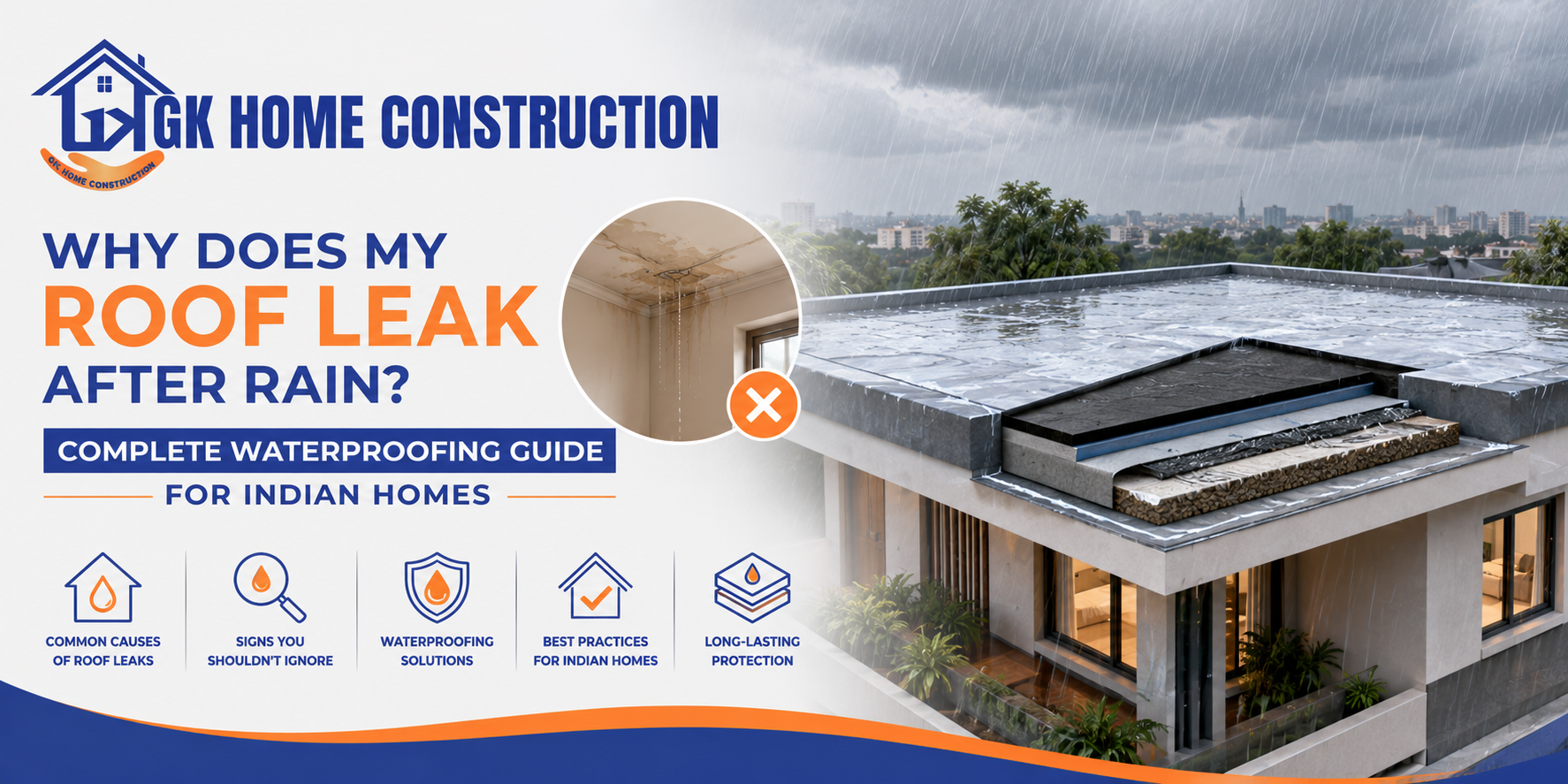
Every monsoon season in Bengaluru brings the same dreaded moment — you hear the pitter-patter of rain on your roof, and within minutes, you spot a damp patch spreading across your ceiling. For thousands of homeowners across Karnataka, roof leakage after rain is not just an inconvenience; it is a recurring nightmare that silently destroys the structure they worked a lifetime to build.
Understanding Why Roof Leaks Happen After Rain
Roof leakage after rain is one of the most common complaints that homeowners share with construction professionals, yet the root cause is frequently misunderstood. Most people assume that a leak means the roof is old or poorly built, but the reality is far more layered. In Indian homes, particularly in cities like Bengaluru that receive intense South west monsoon rainfall, roofs are under enormous stress for nearly four to five months every year. The volume of water, the force of rain, and the temperature fluctuations between dry summers and wet monsoons together create the perfect conditions for water infiltration.
The primary reason roofs leak is the gradual breakdown of the waterproofing membrane or sealant layer that sits on top of the concrete slab. Over time, thermal expansion and contraction cause microscopic cracks to develop in the concrete. These cracks may be invisible to the naked eye during dry weather, but the moment monsoon rains arrive, water finds its way through every hairline fracture. This is why so many homeowners are puzzled when their roof appears perfectly dry during inspection but starts leaking the moment it rains.
Common Causes of Roof Leakage in Indian Homes
One of the biggest culprits behind roof leakage after rain is poor construction joints. When a roof slab is poured in sections, the junction between old and new concrete creates a natural weak point. If these joints are not treated with flexible waterproofing compounds during construction, they become the first point of water entry. Similarly, the junction between the parapet wall and the roof slab — a commonly overlooked area — is extremely vulnerable to seepage.
Clogged or improperly designed drainage is another frequent cause of roof leaks. Many Indian homes, especially older constructions, were built with minimal slope on the roof surface. When rainwater has nowhere to drain efficiently, it pools and sits on the roof for extended periods. Standing water dramatically accelerates concrete degradation and forces water through even the smallest imperfections in the surface. Additionally, pipes and ducts that pass through the roof slab create penetration points that, if not properly sealed, allow water to travel directly into the structure.
Faulty or degraded waterproofing treatment is perhaps the most straightforward cause. Even homes that were properly waterproofed at the time of construction begin to experience issues after seven to ten years, as the chemical compounds used in traditional waterproofing break down due to UV exposure, temperature cycles, and the sheer weight of accumulated rainwater over the years.
How to Identify the Exact Source of a Roof Leak
Before any waterproofing solution can be applied, identifying the precise source of the leak is essential. Many homeowners make the mistake of treating the visible damp patch on the ceiling as the point of origin, but water has a tendency to travel horizontally through the slab before dripping down. This means the actual entry point could be several feet away from where the leak appears inside the room.
A proper inspection involves examining the roof surface during daylight for visible cracks, checking parapet wall junctions and drain outlets, and looking for efflorescence — the white powdery deposits that form on concrete where water repeatedly seeps through and evaporates. Professional waterproofing contractors also perform flood tests, where the roof is flooded with water for several hours to precisely locate entry points before treatment begins.
Complete Waterproofing Solutions for Indian Homes
The right approach to waterproofing for roof leakage after rain depends on the severity of the damage and the type of construction. For flat concrete roofs, which are the standard across most of urban India including Bengaluru, a multi-layer waterproofing system is recommended for long-lasting results.
The most effective method currently used by experienced contractors involves cleaning and preparing the concrete surface thoroughly, filling all visible cracks with a cement-based crack filler, and then applying a liquid-applied waterproofing membrane in two to three coats. Products based on polymer-modified bitumen or acrylic elastomeric compounds are well-suited to Indian climatic conditions because they remain flexible across a wide temperature range. This flexibility is critical — rigid waterproofing coatings tend to crack when the concrete expands and contracts with changing temperatures.
For parapet walls and penetration joints, a bond breaker and flexible polyurethane sealant must be used before the membrane is applied. Ignoring these transition zones is one of the most common reasons waterproofing treatments fail prematurely. Once the membrane layer is complete, a protective screed or tile topping is often applied over it to shield the waterproofing from foot traffic and direct sunlight, both of which reduce the lifespan of the membrane considerably.
When to Call a Professional Waterproofing Expert
While minor surface sealing can be handled as a DIY project using ready-mix products available in the market, persistent roof leakage after rain almost always requires professional intervention. If damp patches have been growing over multiple monsoon seasons, if there is visible structural cracking in the slab or beams, or if the leakage has led to corrosion of internal reinforcement steel, a qualified waterproofing specialist must assess the situation before any surface treatment is applied.
At GK Home Construction, we conduct detailed roof inspections to evaluate the depth and spread of water damage before recommending any treatment plan. Surface-level repairs applied over structurally compromised concrete only delay the problem without solving it.
Preventive Waterproofing: The Smartest Investment for Your Home
The most cost-effective approach to managing roof leakage is prevention rather than repair. New constructions in Bengaluru and across India should incorporate integral waterproofing additives into the concrete mix itself, ensure proper roof drainage slopes of at least one in fifty during the design stage, and apply a high-quality external waterproofing membrane before the building is handed over. Homes that have already been built benefit enormously from a pre-monsoon waterproofing inspection every two to three years, which allows minor issues to be addressed before they evolve into major structural problems.
Protecting your roof is protecting everything beneath it — your walls, your furniture, your family's health, and ultimately your home's long-term market value. With the right waterproofing strategy in place, the monsoon season can return to being what it should be: a welcome relief from the summer heat, not a source of annual stress.