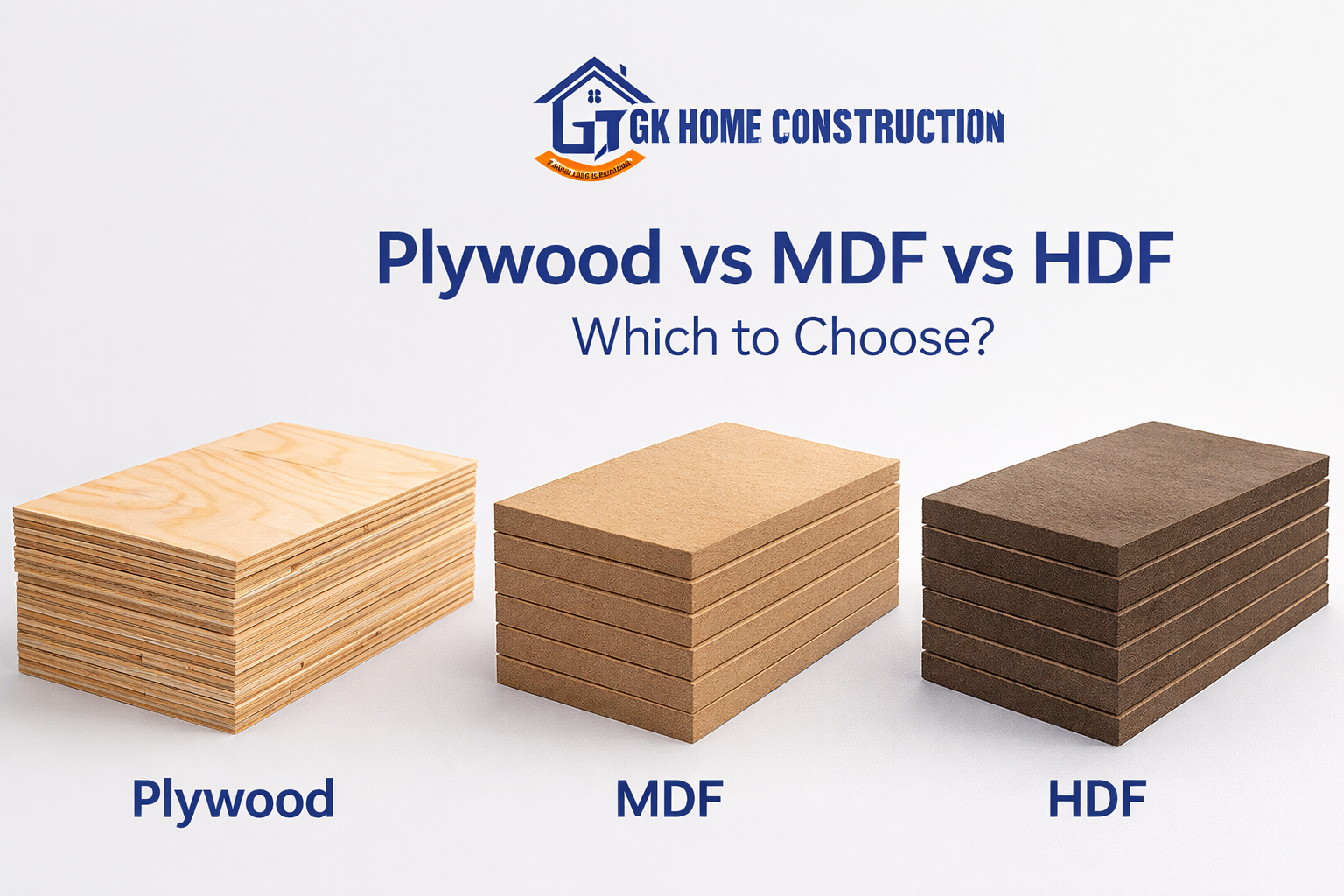
When it comes to interior construction and furniture design, choosing the right material plays a crucial role in durability, aesthetics, and long-term performance. Among the most commonly used engineered wood products are Plywood, MDF (Medium Density Fiberboard), and HDF (High Density Fiberboard). Each of these materials has its own strengths, limitations, and ideal applications. Understanding the difference between them can help homeowners and builders make informed decisions, especially in a city like Bangalore where climate conditions and usage patterns matter significantly.
Understanding Plywood
Plywood is a highly durable and widely used material made by bonding thin layers (plies) of wood veneer together. These layers are arranged in a cross-grain pattern, which enhances strength and prevents warping or cracking. Because of its structural integrity, plywood is often considered one of the most reliable materials for both residential and commercial construction.
One of the biggest advantages of plywood is its resistance to moisture, especially when marine-grade or BWP (Boiling Water Proof) plywood is used. This makes it an excellent choice for kitchens, bathrooms, and areas prone to humidity. In addition, plywood has good load-bearing capacity, which makes it suitable for wardrobes, cabinets, and structural furniture.
However, plywood is relatively more expensive compared to MDF and HDF. The surface finish may also require additional laminates or veneers to achieve a polished look. Despite this, its long lifespan and strength often justify the investment for homeowners looking for durability.
What is MDF (Medium Density Fiberboard)?
MDF, or Medium Density Fiberboard, is an engineered wood product made from wood fibers combined with resin and compressed under high pressure. It is known for its smooth and uniform surface, making it ideal for painting and decorative finishes.
One of the key benefits of MDF is its affordability. It is significantly cheaper than plywood and offers a refined appearance, especially when painted or laminated. MDF is also easy to cut and shape, which makes it a popular choice for intricate designs, CNC cutting, and decorative panels.
However, MDF is not as strong as plywood and does not perform well in moisture-prone environments. Exposure to water can cause swelling and damage over time. Therefore, MDF is best suited for indoor applications such as wall panels, TV units, and decorative furniture where water exposure is minimal.
Understanding HDF (High Density Fiberboard)
HDF, or High Density Fiberboard, is similar to MDF but manufactured with higher pressure, resulting in a denser and more durable board. It has a smoother surface and higher strength compared to MDF, making it suitable for applications that require better resistance and durability.
HDF is commonly used in laminate flooring, door skins, and high-quality furniture backing. Its dense structure makes it resistant to impact and wear, which is why it is often preferred in areas with higher usage.
Despite its advantages, HDF is heavier and slightly more expensive than MDF. Like MDF, it is not highly resistant to water unless specially treated. Therefore, its use is generally limited to interior applications with controlled environmental conditions.
Key Differences Between Plywood, MDF, and HDF
Choosing between plywood, MDF, and HDF depends on multiple factors such as budget, application, durability, and exposure to moisture. Plywood stands out for its strength and water resistance, making it ideal for structural and heavy-duty applications. MDF, on the other hand, is best for aesthetic and decorative purposes due to its smooth finish and cost-effectiveness. HDF offers a balance between the two, providing better density and strength than MDF while maintaining a fine finish.
Another important factor is workability. MDF and HDF are easier to machine and cut, which makes them suitable for customized designs. Plywood, while strong, may require more effort during cutting and finishing. In terms of longevity, plywood generally lasts longer, especially in Indian climatic conditions where humidity can impact material performance.
Where to Use Each Material in Your Home
In practical applications, plywood is best used for kitchen cabinets, wardrobes, and furniture that needs to bear weight or resist moisture. For example, in Bangalore homes where kitchens often face humidity, marine plywood is a safer and more durable option.
MDF is ideal for decorative elements such as wall paneling, false ceilings, and painted furniture. It provides a premium look at a lower cost, making it popular for modern interiors. However, it should be avoided in wet areas like bathrooms or utility spaces.
HDF is commonly used for flooring, door panels, and furniture backing. Its density makes it suitable for surfaces that experience frequent usage, such as laminate flooring in living rooms or bedrooms.
Cost vs Performance: What Should You Prioritize?
Budget plays a significant role in material selection. MDF is the most economical option, followed by HDF, while plywood is generally the most expensive. However, focusing only on cost can lead to higher maintenance or replacement expenses in the future.
For long-term value, it is important to consider performance and durability. Investing in plywood for critical areas like kitchens and wardrobes can prevent issues like swelling, bending, or structural failure. MDF and HDF can be used strategically in low-risk areas to optimize costs without compromising on aesthetics.
Final Thoughts: Making the Right Choice
Selecting between plywood, MDF, and HDF is not about choosing one over the other, but about using each material wisely based on its strengths. A well-planned home construction or interior project often involves a combination of all three materials to achieve the best balance of cost, durability, and design.
For homeowners working with professional builders like GK Home Construction, expert guidance can ensure the right materials are used in the right places. This not only enhances the quality of construction but also ensures long-term satisfaction and reduced maintenance costs.
In conclusion, if durability and moisture resistance are your top priorities, plywood is the best choice. If you are looking for affordability and a smooth finish for decorative purposes, MDF works well. And if you need a denser and slightly more durable option for specific interior uses, HDF is a reliable alternative. Making an informed decision today can save significant time, money, and effort in the future, ensuring your home remains strong, stylish, and functional for years to come.