Plumbing is one of the most important systems in any residential or commercial building. During construction, proper plumbing planning and installation ensure that water supply, drainage, and sanitation systems work efficiently for many years. However, many construction projects face plumbing issues due to poor planning, improper installation, or the use of low-quality materials. These mistakes may not always be visible immediately, but over time they can lead to leaks, water damage, foul odors, and expensive repairs. Understanding the most common plumbing mistakes during construction can help homeowners, builders, and contractors avoid long-term problems and ensure a durable and efficient plumbing system.
Poor Plumbing Planning in the Initial Stage
One of the most common mistakes during construction is the lack of proper plumbing planning at the early stages of the project. Plumbing should always be designed before structural work begins so that pipes, drainage systems, and fixtures are positioned correctly. When plumbing layouts are planned late or without proper coordination with architects and engineers, it often results in inefficient pipe routes, unnecessary bends, and improper slope for drainage lines. Poor planning can also lead to pipes running through structural elements, which weakens the building structure and makes maintenance difficult. A well-planned plumbing layout ensures smooth water flow, proper drainage, and easy access for future repairs.
Incorrect Pipe Slope for Drainage Systems
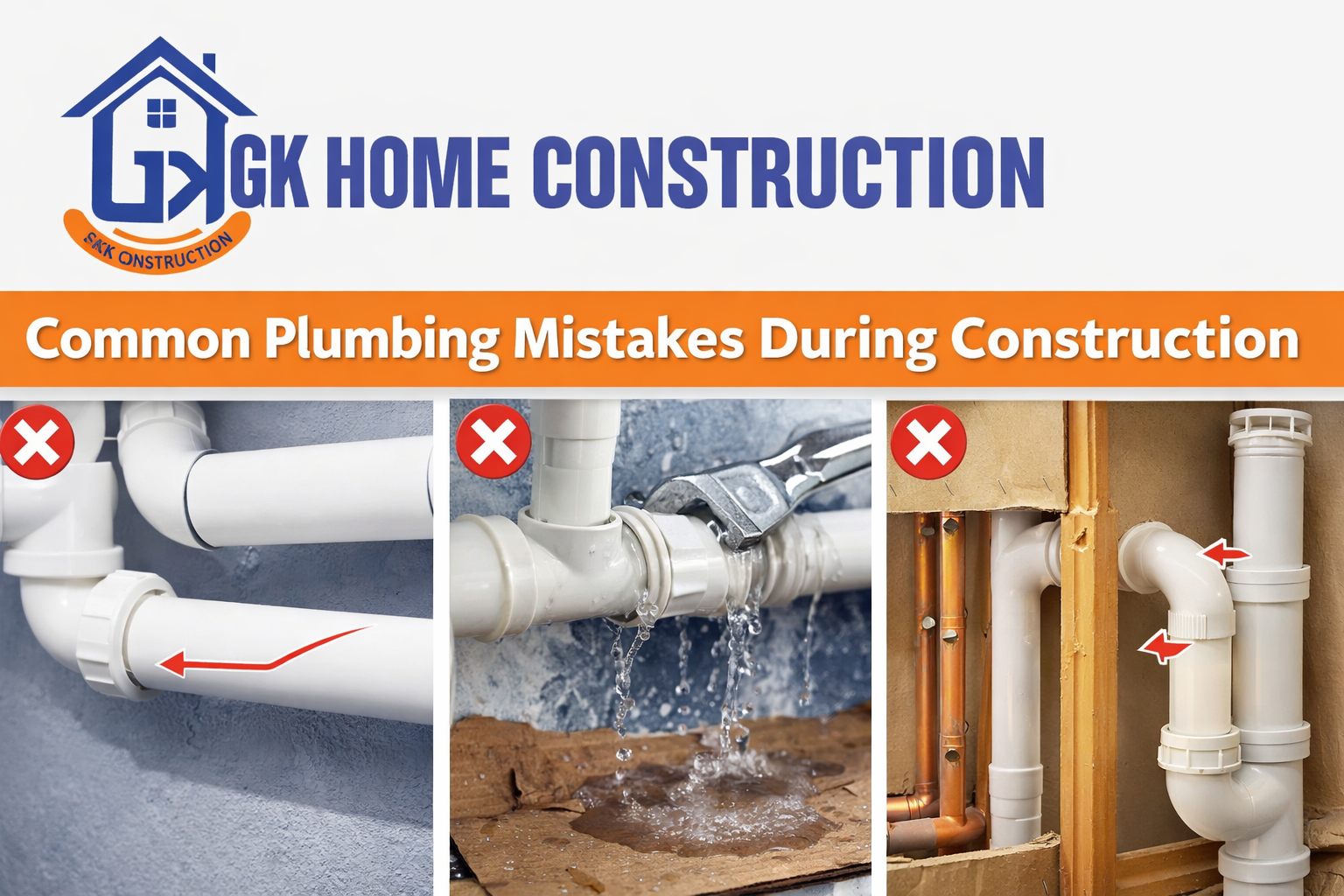
Drainage pipes require a specific slope so that wastewater flows smoothly toward the sewer line or septic system. One major mistake during construction is installing pipes either too flat or too steep. If the pipe slope is too flat, wastewater may move slowly, leading to blockages and accumulation of waste inside the pipes. On the other hand, if the slope is too steep, water may flow too quickly and leave solid waste behind, which can also cause clogs. Proper pipe slope is essential to maintain an efficient drainage system and prevent recurring plumbing issues in the future.
Using Low-Quality Plumbing Materials
Many construction projects try to reduce costs by choosing cheaper plumbing materials. While this may save money initially, it often leads to bigger expenses later. Low-quality pipes, fittings, and fixtures are more prone to corrosion, leaks, and breakage. Over time, these materials may deteriorate due to constant water pressure and temperature changes. High-quality materials such as durable PVC, CPVC, or PPR pipes are designed to withstand long-term use and provide better reliability. Investing in quality plumbing materials during construction ensures that the system remains strong and leak-free for many years.
Improper Pipe Connections and Joints
Another frequent plumbing mistake is poor pipe joint installation. Pipes must be connected properly using the correct techniques and fittings to ensure a watertight seal. If connections are loose or poorly sealed, small leaks may develop over time. These leaks can damage walls, ceilings, and floors before they become noticeable. In some cases, improper pipe connections can also cause water pressure issues within the plumbing system. Skilled plumbers ensure that pipe joints are correctly aligned, properly sealed, and pressure-tested before completing the installation.
Lack of Proper Ventilation in Plumbing Systems
Plumbing ventilation is an essential part of any drainage system, yet it is often overlooked during construction. Vent pipes allow air to enter the drainage system, which helps maintain proper pressure and allows wastewater to flow smoothly. Without proper ventilation, negative pressure can build up inside pipes, causing slow drainage and unpleasant odors inside the building. In severe cases, poorly ventilated plumbing systems may cause water seals in traps to break, allowing sewer gases to enter living spaces. Proper vent pipe installation helps maintain healthy indoor air quality and efficient drainage performance.
Incorrect Placement of Plumbing Fixtures
Another common mistake is improper placement of plumbing fixtures such as sinks, toilets, showers, and washing machines. Fixtures must be positioned carefully to ensure easy water supply connections and proper drainage flow. When fixtures are placed too far from main pipelines, it may require longer pipe runs with multiple bends. This increases the risk of pressure loss and drainage problems. Additionally, poorly positioned fixtures can make maintenance and repairs difficult in the future. Proper planning ensures that fixtures are installed in practical locations that support efficient plumbing operation.
Ignoring Water Pressure Management
Water pressure plays a critical role in plumbing performance. Many buildings face plumbing problems because water pressure is not properly regulated during construction. Excessively high water pressure can damage pipes, joints, and plumbing fixtures, leading to leaks or burst pipes. On the other hand, very low water pressure can result in weak water flow in taps and showers. Installing pressure-regulating valves and designing the plumbing system correctly helps maintain balanced water pressure throughout the building.
Inadequate Waterproofing Around Plumbing Areas
Areas such as bathrooms, kitchens, and balconies require proper waterproofing to prevent water leakage into walls and floors. During construction, plumbing installations often pass through slabs and walls. If these openings are not sealed properly, water may seep through and cause structural damage or mold growth. Waterproofing membranes and sealants should always be applied around pipe penetrations to ensure long-term protection against leaks. This step is often overlooked, but it plays a crucial role in preventing costly repairs later.
Lack of Plumbing System Testing
Many plumbing issues arise because the system is not properly tested before the construction project is completed. Pressure testing and leakage testing should be conducted to identify any weak joints or faulty installations. Skipping these tests may result in hidden leaks that only become visible after the building is occupied. Proper testing ensures that the plumbing system is functioning correctly and that all pipes and connections are secure.
Final Thoughts
Avoiding plumbing mistakes during construction is essential for building a safe, efficient, and long-lasting plumbing system. Proper planning, high-quality materials, skilled installation, and thorough testing all play a vital role in preventing common plumbing problems. Builders and homeowners should never underestimate the importance of professional plumbing design and execution. By paying attention to these factors during the construction phase, it is possible to prevent costly repairs, water damage, and inconvenience in the future. A well-installed plumbing system not only improves daily comfort but also increases the long-term value and durability of the property.