Introduction
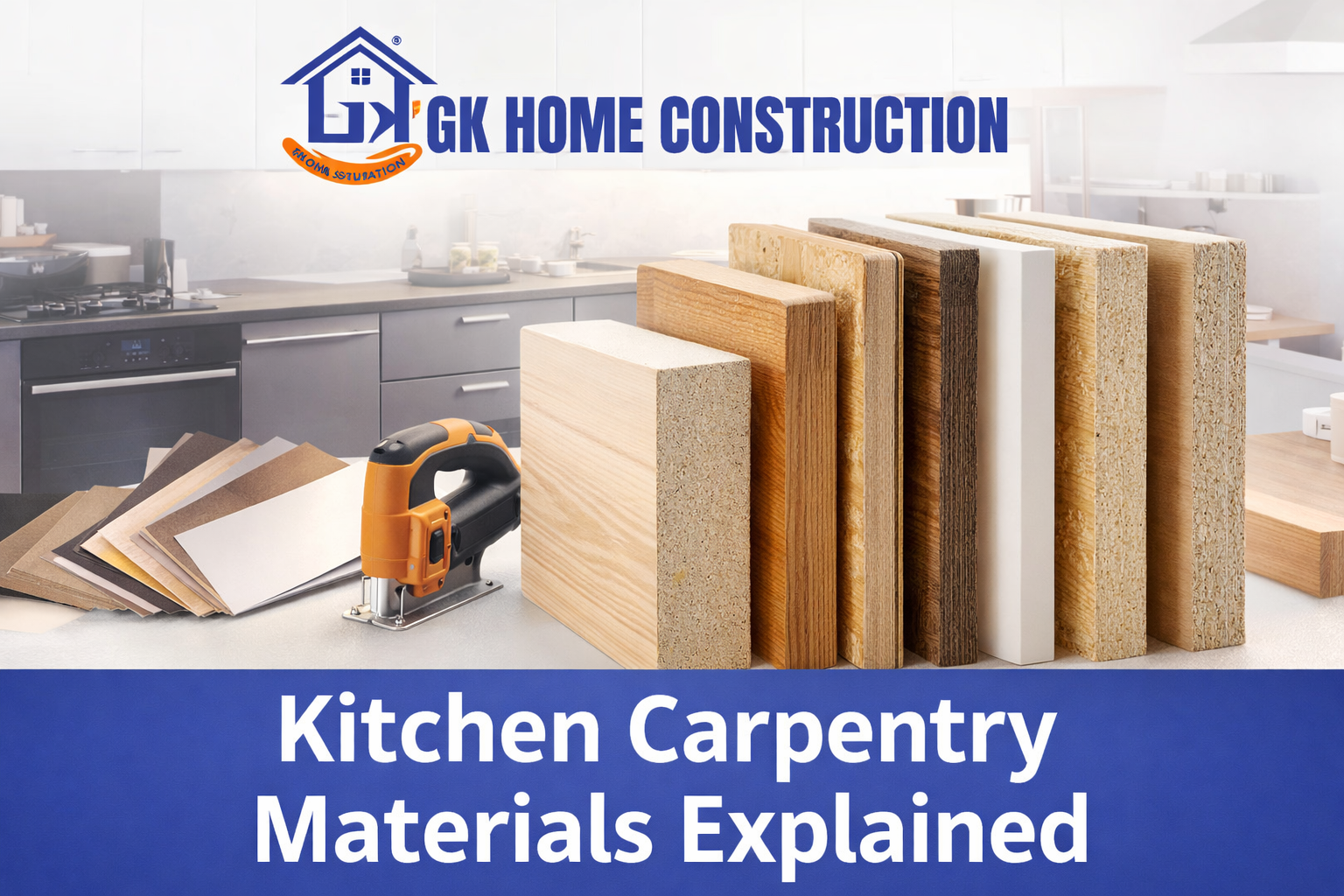
The kitchen is one of the most frequently used spaces in any home, which means the materials used for kitchen carpentry must be durable, moisture-resistant, and long-lasting. From cabinets and drawers to shelves and countertops, the quality of carpentry materials directly impacts the lifespan, functionality, and appearance of your kitchen. Choosing the right carpentry material is especially important in modern homes where kitchens are designed to be both practical and stylish.
Many homeowners planning a kitchen renovation often feel confused by the variety of materials available in the market. Materials like plywood, MDF, particle board, and block board are commonly used in kitchen carpentry, but each has its own advantages, limitations, and ideal applications. Understanding these materials helps homeowners make informed decisions and ensures that the kitchen furniture remains strong and visually appealing for many years.
This guide explains the most commonly used kitchen carpentry materials and helps you understand which option works best for different kitchen components.
Why Choosing the Right Kitchen Carpentry Material Matters
Kitchen spaces are exposed to constant heat, humidity, water splashes, and daily wear and tear. Because of this, the materials used in kitchen carpentry must be capable of handling moisture and maintaining structural strength over time. Selecting the wrong material may lead to problems such as swelling, warping, or damage to cabinets and shelves.
Another important factor is durability. Kitchen cabinets are opened and closed several times every day, and the materials must be strong enough to withstand continuous use. In addition to strength, aesthetics also play a key role. Modern kitchens are designed to look elegant and organized, so carpentry materials must also support attractive finishes like laminates, acrylic panels, or veneers.
By choosing the right materials during construction or renovation, homeowners can avoid frequent repairs and ensure that the kitchen remains functional and visually appealing for years.
Plywood: The Most Reliable Kitchen Carpentry Material
Plywood is one of the most widely used materials in kitchen carpentry due to its excellent strength and durability. It is manufactured by bonding multiple layers of wood veneer together under high pressure, which creates a strong and stable board. Because of its layered construction, plywood is less likely to crack or warp compared to other engineered wood products.
One of the biggest advantages of plywood is its moisture resistance, especially when marine-grade plywood is used. This makes it highly suitable for kitchen cabinets, shelves, and base units where exposure to water and humidity is common. Plywood also holds screws and fittings very well, which ensures that cabinet hinges and drawer channels remain secure for a long time.
Although plywood may cost slightly more than some other materials, it is considered a long-term investment because of its durability and reliability. Many professional carpenters and interior designers prefer plywood for kitchen structures due to its consistent performance.
MDF (Medium Density Fiberboard)
Medium Density Fiberboard, commonly known as MDF, is another material frequently used in kitchen carpentry. It is manufactured by compressing wood fibers with resin under high pressure to form a smooth and dense board. One of the main advantages of MDF is its smooth surface, which makes it ideal for painted finishes, decorative panels, and stylish cabinet doors.
Because of its uniform texture, MDF allows precise cutting and shaping, making it suitable for intricate designs and decorative kitchen elements. Many modular kitchen designs use MDF for cabinet shutters because it provides a polished and modern look.
However, MDF is generally less resistant to moisture compared to plywood. If exposed to excessive water, it may swell or lose its strength. For this reason, MDF is often used in areas that are less exposed to moisture, such as upper cabinets or decorative panels.
Despite this limitation, MDF remains a popular option due to its affordability and attractive finish.
Particle Board
Particle board is a budget-friendly material that is widely used in modular furniture and low-cost kitchen cabinets. It is made from compressed wood particles mixed with adhesive resin and pressed into boards. Because of its manufacturing process, particle board is lighter and less expensive than plywood or MDF.
This material is often used in pre-fabricated kitchen cabinets because it is easy to manufacture and shape. Many laminate-finished cabinets in modular kitchens use particle board as the base material.
However, particle board has lower strength and durability compared to plywood. It is also more vulnerable to water damage, which can cause the board to swell and lose its structural integrity. As a result, particle board is usually recommended for areas with minimal moisture exposure.
Homeowners who choose particle board should ensure proper sealing and finishing to improve its lifespan and protect it from water damage.
Block Board
Block board is another engineered wood product that is commonly used in carpentry work. It consists of a core made from softwood strips placed side by side, which are then covered with layers of veneer on both sides. This structure provides good strength and dimensional stability.
Block board is often used for larger panels, doors, and shelves because it is lightweight and resistant to bending. It also offers good screw-holding capacity, which makes it suitable for furniture construction.
In kitchen carpentry, block board is sometimes used for cabinet shutters or partitions. However, it may not be the best option for areas directly exposed to moisture unless properly treated and finished.
Compared to plywood, block board is slightly less durable but still provides a strong and reliable solution for many carpentry applications.
Laminates and Surface Finishes
In addition to the base material used for carpentry, surface finishes play an important role in kitchen design. Laminates are among the most popular finishing materials because they provide both protection and aesthetic appeal. They are available in a wide variety of colors, textures, and patterns, allowing homeowners to customize their kitchen design.
Laminates protect the underlying carpentry material from scratches, moisture, and stains, which helps extend the life of cabinets and drawers. Other popular finishes include acrylic panels, PVC laminates, and natural wood veneers.
Choosing the right finish can significantly enhance the overall appearance of the kitchen while also improving durability and ease of maintenance.
How to Choose the Best Material for Your Kitchen
Selecting the right kitchen carpentry material depends on several factors including budget, durability requirements, design preferences, and moisture exposure. For base cabinets and areas near sinks, moisture-resistant materials like marine plywood are usually the best choice. For cabinet shutters and decorative panels, MDF can provide a smooth and stylish finish.
Homeowners should also consider long-term maintenance and durability when choosing materials. Investing in high-quality materials during construction may cost slightly more initially, but it often saves money on repairs and replacements in the future.
Working with experienced construction professionals or carpenters can also help ensure that the right materials are used for each part of the kitchen.
Conclusion
Kitchen carpentry materials play a crucial role in determining the durability, functionality, and visual appeal of a kitchen. Materials such as plywood, MDF, particle board, and block board each have their own advantages and ideal applications. Understanding the differences between these materials helps homeowners make better decisions when designing or renovating their kitchen.
A well-designed kitchen built with the right carpentry materials can last for many years while maintaining both strength and beauty. By choosing durable materials and proper finishes, homeowners can create a kitchen that is not only stylish but also practical for everyday use.
For homeowners planning a kitchen renovation or new construction, consulting experienced professionals can make a significant difference in selecting the right materials and achieving a high-quality finish.