• 09 May, 2026

Moving into a new home is one of life's most exciting milestones — but behind every freshly painted wall and gleaming floor lies a system that demands your immediate attention: your home's electrical infrastructure.

For new homeowners in 2026, electrical safety is not simply a matter of flipping switches and plugging in appliances. It is a responsibility that begins the moment you receive your keys. Every year, thousands of house fires across India and globally trace their origin to faulty wiring, overloaded circuits, and overlooked electrical hazards — most of which are entirely preventable with a thorough inspection and a proactive mindset. At GK Home Construction, we believe that a safe home begins with awareness, and this comprehensive electrical safety checklist is designed to give every new homeowner the foundation they need.

Start With a Professional Electrical Inspection

Before you unpack a single box, the single most important step you can take is scheduling a certified electrical inspection. Even if your home was recently built or renovated, an independent inspection by a licensed electrician gives you an unbiased view of the property's true electrical condition. In 2026, many cities have made this inspection mandatory before property registration, but even where it is optional, treat it as essential. The inspector will examine your main panel, check grounding systems, verify circuit breaker ratings, and assess the overall wiring age and condition. This one-time investment can save you from costly repairs and potentially dangerous situations down the line.

Understand Your Main Electrical Panel

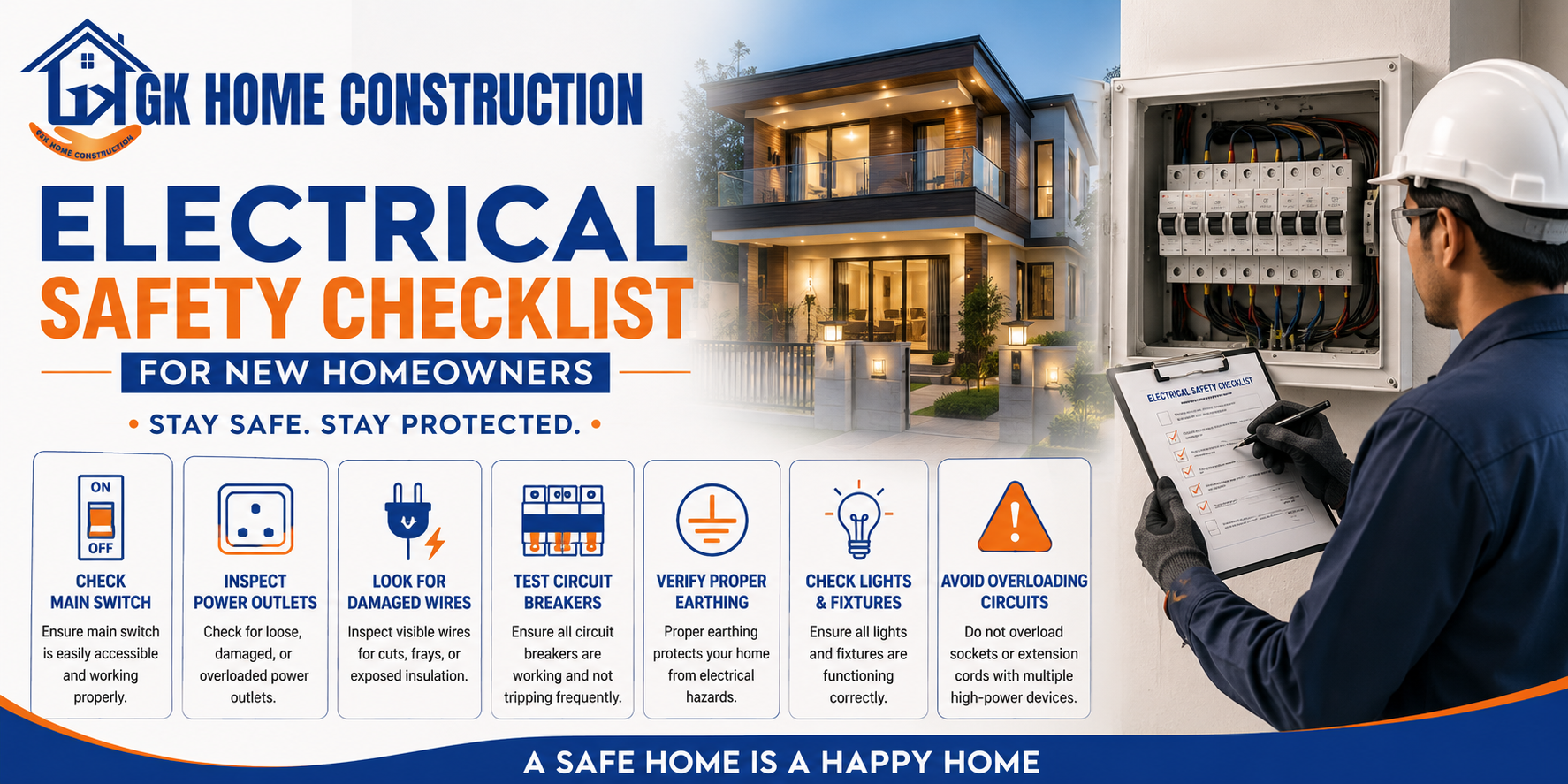
Your main distribution board — commonly called the breaker box or fuse box — is the command center of your home's electrical system. Every new homeowner should locate it, understand its layout, and confirm that every breaker is clearly labeled. Unlabeled breakers are a common problem in older homes and create serious confusion during emergencies. Open the panel and check for any signs of rust, burn marks, or melted plastic, all of which indicate past overheating events. Modern homes in 2026 should have RCCB (Residual Current Circuit Breaker) protection installed, which automatically disconnects power when it detects leakage currents that could cause electrocution. If your home lacks this protection, consult an electrician about upgrading immediately.

Inspect Every Outlet and Switch in the Home

Walk through your entire home and test every electrical outlet and switch. Outlets should be firm in the wall and not loose or wobbly. A loose outlet can cause arcing — small electrical sparks that, over time, lead to fires inside the wall cavity where no one can see them. Replace any cracked outlet covers or switch plates without delay. In bathrooms, kitchens, balconies, and any area near water sources, your outlets must be ELCB (Earth Leakage Circuit Breaker) protected, which provides an additional safety layer against electric shock. Plug an outlet tester — an inexpensive device available at any hardware store — into each outlet to confirm proper wiring polarity and grounding. Any outlet that fails this test must be serviced before use.

Check for Overloaded Circuits and Extension Cord Abuse

One of the most underestimated electrical hazards in Indian homes today is circuit overloading — the practice of drawing more electrical load than a circuit is designed to handle. This commonly happens when too many high-wattage appliances such as air conditioners, geysers, refrigerators, and washing machines are connected to the same circuit. In 2026, with homes consuming significantly more power than previous decades due to smart devices and EV charging, a proper load audit by your electrician is strongly recommended. Similarly, extension cords are meant to be temporary solutions, not permanent fixtures. If you find yourself relying on extension cords in multiple rooms, that is a clear sign your home needs additional dedicated circuits installed.

Examine All Wiring Visible in Your Home

In older homes or even some newly completed constructions, exposed or improperly protected wiring can be a serious concern. Inspect visible wiring in utility areas, behind appliances, in the garage, and on the terrace. Look for wires with cracked insulation, discoloration, or wires that have been spliced with tape rather than properly connected through junction boxes. Rodent damage to wiring is another common issue in Indian homes — if you spot any gnawed cables, arrange for repairs immediately. All wiring should be properly secured, run through conduits where required, and show no signs of overheating. If your home has aluminium wiring — common in constructions from the 1980s and 1990s — discuss upgrading to copper wiring with your electrician, as aluminium is more prone to connection issues over time.

Install Smoke Alarms and Keep Earthing in Check

Smoke alarms and carbon monoxide detectors are simple, affordable devices that can make the difference between a minor incident and a catastrophe. Install smoke alarms in every bedroom, in the living area, and near the kitchen. Test them immediately after installation and establish a habit of testing monthly. Replace batteries annually or choose hardwired models with battery backup for greater reliability. Equally critical is your home's earthing system. Proper earthing ensures that stray electrical currents are safely redirected to the ground rather than passing through your body or appliances. Ask your electrician to test earth continuity and resistance during their inspection. In many Indian homes, earthing connections deteriorate due to soil conditions and require refreshing every few years.

Set Safety Habits From Day One

Beyond inspections and installations, everyday habits form your strongest defence against electrical accidents. Never handle electrical appliances with wet hands, and never use appliances with damaged plugs or frayed cords. Teach every member of your household — especially children — about electrical safety basics. Keep flammable materials away from fuse boxes, electrical panels, and switchboards. If a circuit breaker trips repeatedly, do not simply reset it and move on — a repeatedly tripping breaker is your home's way of warning you that something is wrong. Call an electrician to diagnose the cause before resetting.

Owning a home in 2026 comes with a level of electrical responsibility that previous generations did not face at the same scale. Our dependency on electricity has deepened, and so the consequences of neglecting its safety systems have grown accordingly. This checklist is your starting point — not your finish line. At GK Home Construction, we are committed to building homes that are not just beautiful and functional, but safe at every level. Use this guide, schedule your inspection, and build the habit of regular electrical reviews every two to three years. Your home is your greatest investment — protect it from the inside out.

Enquire Form