
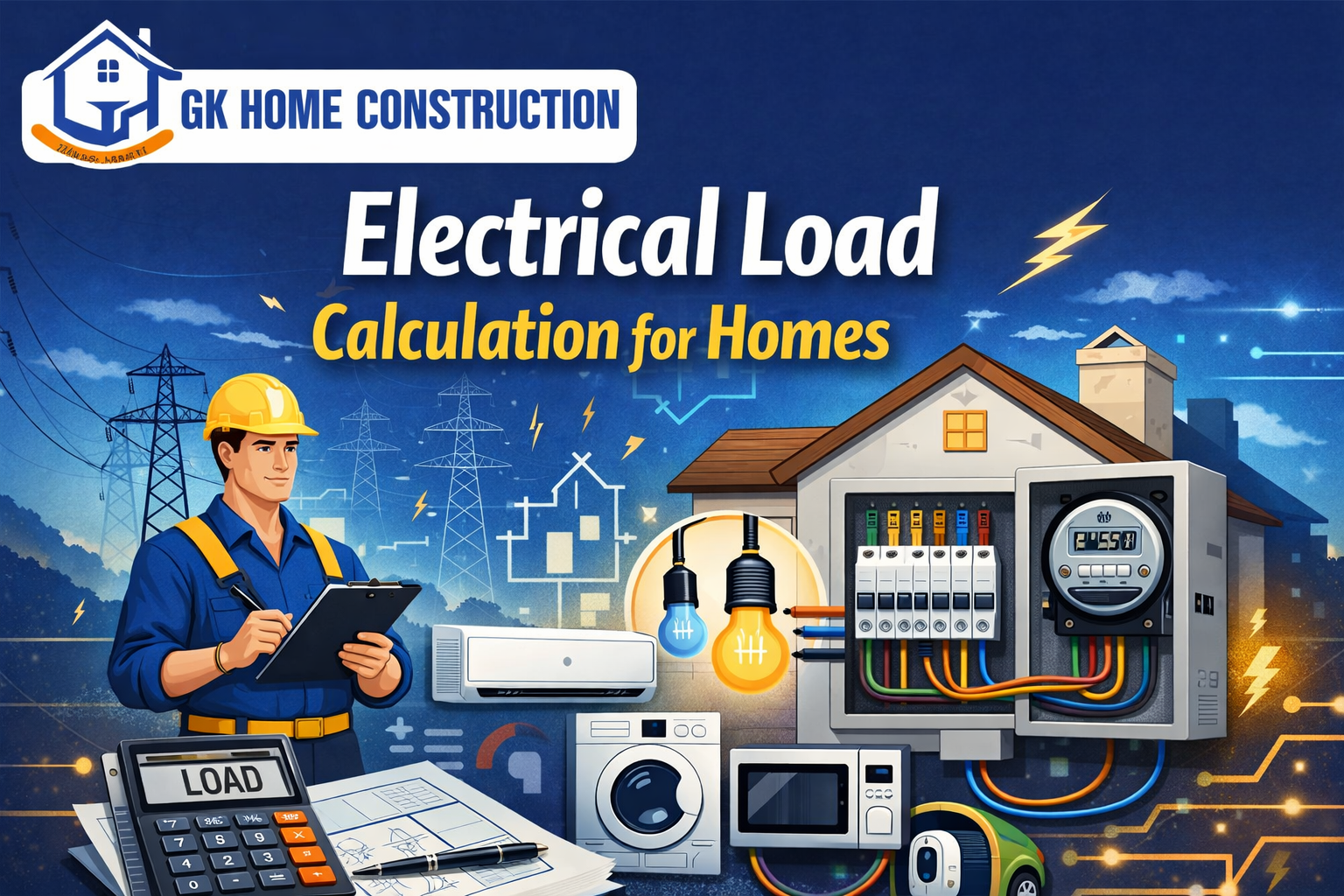
When building a new house or renovating an existing one, electrical planning is one of the most critical aspects that should never be overlooked. Proper electrical load calculation ensures that the electrical system of your home is safe, efficient, and capable of handling all appliances without overloading the circuits. Many homeowners focus mainly on the design and aesthetics of the house but forget that improper electrical planning can lead to frequent power trips, overheating wires, or even serious fire hazards. Understanding how electrical load calculation works helps homeowners, builders, and electricians design an electrical system that supports both current and future needs.
What is Electrical Load Calculation?
Electrical load calculation is the process of determining the total electrical power required to safely operate all electrical appliances, lighting fixtures, and equipment in a house. This calculation helps electricians decide the appropriate size of wires, circuit breakers, distribution boards, and electrical panels needed for the home.
Every appliance in a home consumes a specific amount of electricity measured in watts or kilowatts. When multiple appliances operate at the same time, the total demand increases. Electrical load calculation ensures that the wiring system and main electrical panel can safely carry the required load without causing overheating or tripping issues.
For residential buildings, electrical load calculation is especially important because modern homes use a large number of electrical devices such as air conditioners, refrigerators, washing machines, water heaters, microwave ovens, induction stoves, and smart home devices. Without proper planning, these appliances can exceed the electrical capacity of the house.
Why Electrical Load Calculation is Important in Home Construction
Electrical load calculation plays a crucial role in ensuring the safety and efficiency of the electrical system. If the electrical load is underestimated, it can cause frequent circuit breaker trips and damage to appliances. On the other hand, if the system is overdesigned without proper calculation, it can unnecessarily increase the construction cost.
One of the biggest advantages of proper load calculation is safety. Electrical overload is one of the common reasons for residential electrical fires. By accurately calculating the expected load, electricians can install the correct wiring size and protective devices that prevent overheating.
Another important benefit is energy efficiency. A well-planned electrical system distributes the load evenly across different circuits, preventing excessive power consumption and ensuring stable performance of electrical appliances.
Proper load calculation also allows homeowners to plan for future electrical requirements. As technology evolves, homes tend to add more electrical devices such as electric vehicle chargers, home automation systems, security equipment, and additional air conditioning units. Planning the electrical load in advance ensures that the system can accommodate these upgrades without major modifications.
Basic Components Considered in Electrical Load Calculation
When calculating the electrical load of a house, electricians consider several components that contribute to the total power demand. The first component is lighting load. Lighting fixtures include LED lights, tube lights, decorative lights, and outdoor lighting systems. Although modern LED lights consume less power, they still contribute to the total electrical load.
The second component is power outlets or plug points. These outlets supply electricity to small appliances such as televisions, computers, mobile chargers, mixers, and kitchen appliances. The number of outlets in a home significantly affects the total load calculation.
The third major component is heavy electrical appliances. These include air conditioners, refrigerators, water heaters, washing machines, dishwashers, ovens, and induction cooktops. These appliances consume much higher electricity compared to lighting or small devices and must be carefully considered during electrical planning.
Another important factor is motor loads. In some homes, electrical motors are used for water pumps, sump pumps, and borewell pumps. These motors require higher starting current and therefore must be included in the load calculation.
Step-by-Step Method to Calculate Electrical Load for Homes
Electrical load calculation typically begins by listing all electrical appliances and fixtures in the house. Each appliance has a power rating mentioned in watts on its label. The electrician notes down the wattage of each device and estimates how many such devices will be used in the home.
The next step is to calculate the total wattage for each category of appliances. For example, lighting loads are added together, kitchen appliances are grouped separately, and heavy equipment such as air conditioners are calculated individually.
After calculating the total wattage, electricians convert the total power requirement into kilowatts. This value helps determine the size of the electrical service connection required for the home.
Once the total load is determined, the electrician divides the load into multiple circuits. For example, lighting circuits, socket circuits, kitchen circuits, and air conditioner circuits are separated to ensure proper load distribution.
Finally, based on the calculated load, the appropriate circuit breakers, distribution board capacity, and wiring sizes are selected to handle the expected electrical demand safely.
Typical Electrical Load for Different Rooms in a House
Different areas of a home consume different amounts of electricity. Living rooms usually have lighting fixtures, televisions, fans, and charging points. Bedrooms include lights, ceiling fans, air conditioners, and plug points for personal devices.
Kitchens generally have the highest electrical load in modern homes because they include appliances such as refrigerators, microwaves, induction stoves, chimneys, mixers, and dishwashers. Bathrooms also require electrical load planning for geysers, exhaust fans, and lighting fixtures.
Utility areas may include washing machines, dryers, and water pumps. Outdoor spaces such as gardens, balconies, and terraces may also have lighting systems and security equipment that contribute to the total electrical load.
Common Mistakes in Electrical Load Planning
Many homeowners make the mistake of underestimating the electrical load during the construction stage. They focus only on current appliances and forget to consider future additions. As a result, the electrical panel becomes overloaded after a few years.
Another common mistake is installing too many appliances on a single circuit. This can cause circuit breakers to trip frequently and may damage electrical wiring over time. Proper circuit distribution helps avoid such problems.
Using incorrect wire sizes is another issue that can lead to overheating and voltage drops. Electrical wires must be selected according to the expected load and distance from the distribution board.
Some homeowners also ignore the importance of proper earthing and protective devices such as residual current circuit breakers. These components play a vital role in protecting both electrical equipment and human safety.
Professional Electrical Planning for Modern Homes
Modern homes are becoming increasingly dependent on electricity due to the growing use of technology and smart appliances. Therefore, electrical planning should always be done by experienced professionals who understand electrical standards and safety regulations.
Professional electrical engineers and electricians perform detailed load calculations, plan efficient circuit layouts, and ensure that the electrical system complies with safety codes. They also recommend energy-efficient solutions such as LED lighting, smart switches, and automated power management systems.
When electrical load calculation is done correctly during the construction stage, it prevents costly repairs and upgrades in the future. A properly designed electrical system ensures that homeowners enjoy uninterrupted power supply, improved safety, and long-term reliability.
Conclusion
Electrical load calculation is an essential step in residential construction that ensures the electrical system of a home is safe, efficient, and future-ready. By calculating the total power requirement of lighting, appliances, and equipment, electricians can design an electrical system that prevents overloads and ensures smooth operation of all devices.
For homeowners planning to build a new house, investing time in proper electrical planning is just as important as structural design and interior layout. A well-calculated electrical system not only improves safety but also enhances the overall functionality and convenience of modern living spaces.
Proper electrical load calculation ultimately leads to a smarter, safer, and more energy-efficient home.