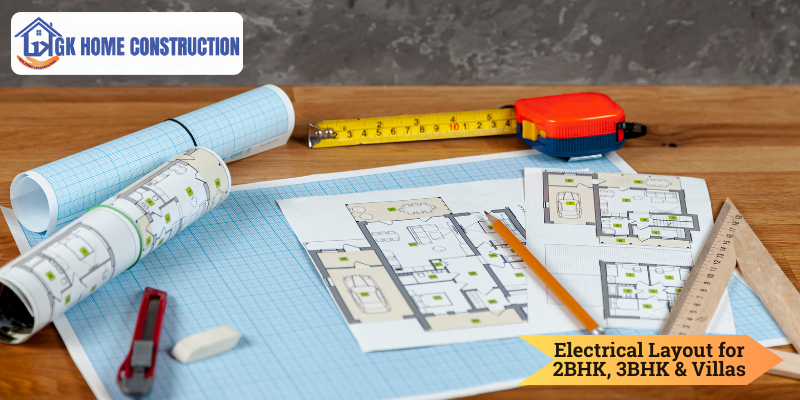
Introduction to Electrical Layout Planning
An electrical layout is one of the most important components of any residential construction project. Whether it is a compact 2BHK apartment, a spacious 3BHK home, or a luxury villa, a well-designed electrical system ensures safety, convenience, and long-term efficiency. Proper planning helps homeowners avoid frequent repairs, overloaded circuits, and unsafe wiring conditions. At GK Home Construction, we believe that electrical planning should be done at the early stage of construction to match modern lifestyle requirements and future needs.
A professionally designed electrical layout provides balanced power distribution, easy access to switches and sockets, energy efficiency, and compatibility with advanced appliances. It also supports smart home integration, security systems, and renewable energy options. Investing time in electrical planning saves money, reduces risks, and improves overall living comfort.
Importance of a Proper Electrical Layout
A proper electrical layout ensures that power is distributed evenly throughout the house without overloading any circuit. It protects residents from electrical hazards such as short circuits, voltage fluctuations, and fire risks. When the layout is planned correctly, appliances function smoothly, and maintenance becomes easier.
Another key benefit is convenience. Well-placed switches, charging points, and power outlets reduce the need for extension cords and adapters. It also improves aesthetics by hiding unnecessary wiring and keeping interiors neat. A structured electrical plan also allows future upgrades without disturbing walls and ceilings.
Key Components of Residential Electrical Layouts
Every residential electrical system consists of essential components that work together. These include the main distribution board, circuit breakers, wiring systems, switchboards, earthing systems, and backup power connections. The distribution board controls power flow and protects circuits from overload. Circuit breakers automatically disconnect supply during faults.
Wiring materials must be of high quality and suitable for the load capacity. Switchboards should be installed at comfortable heights and accessible locations. Earthing systems ensure safety by preventing electric shocks. In villas and large homes, additional components such as solar panels, inverters, and smart controllers may be included.
Electrical Layout for 2BHK Homes
In a 2BHK apartment, space utilization and cost efficiency are major considerations. The electrical layout should focus on essential areas such as the living room, bedrooms, kitchen, bathrooms, and balcony. Each room should have sufficient lighting points, fan points, and power sockets.
The living room usually requires multiple power points for television, internet routers, air conditioners, and decorative lighting. Bedrooms need charging points near beds, study table outlets, and wardrobe lighting. The kitchen requires special attention due to heavy appliances like refrigerators, microwaves, mixers, and exhaust fans.
Bathrooms should have waterproof switches and geyser connections with proper earthing. In smaller homes, separate circuits for high-load appliances are recommended to prevent overload. A compact but efficient layout ensures comfort without unnecessary wiring.
Electrical Layout for 3BHK Homes
A 3BHK home typically has more rooms and higher power consumption. The electrical layout must be more detailed and organized to handle additional appliances and usage patterns. Separate circuits for each bedroom, kitchen, and living area are advisable for better load management.
In 3BHK homes, provision for multiple air conditioners, washing machines, dishwashers, and home entertainment systems is common. Each bedroom should have independent switchboards and power sockets. The living and dining areas often require decorative lighting, dimmers, and accent lights.
Study rooms and home offices need stable power supply for computers and printers. Storage rooms and balconies may require minimal lighting. Planning separate circuits improves safety and allows partial power availability during maintenance or repairs.
Electrical Layout for Villas and Independent Houses
Villas and independent houses demand advanced electrical planning due to larger spaces and premium features. These homes often include multiple floors, private gardens, parking areas, home theaters, gyms, and swimming pools. The electrical layout must support higher loads and future expansion.
Each floor should have a separate distribution board for better control. Outdoor lighting, landscape lights, security cameras, and gate automation systems need dedicated wiring. Villas often include centralized air conditioning, elevators, and water pumps, which require high-capacity circuits.
Backup power systems such as inverters, generators, and solar panels are common in villas. Proper planning ensures seamless switching between power sources. Smart home systems for lighting, climate control, and security can also be integrated during construction.
Room-Wise Electrical Planning Strategy
Room-wise planning improves functionality and user comfort. The living room should have layered lighting including ceiling lights, wall lights, and accent lighting. Bedrooms need task lighting, night lamps, and charging points. The kitchen should have multiple sockets above countertops and dedicated lines for heavy appliances.
Bathrooms require moisture-resistant fittings and proper ventilation. Staircases and corridors should have adequate lighting with two-way switches. Balconies and outdoor areas need weatherproof fixtures. Storage areas should have basic lighting for visibility.
Planning each room individually ensures balanced usage and eliminates dark spots or overloaded circuits.
Safety Standards and Compliance
Electrical safety is a top priority in residential construction. All wiring must follow national safety standards and local regulations. High-quality cables, branded switches, and certified components should be used. Proper earthing is essential to protect residents from electric shocks.
Installation should be carried out by licensed electricians. Regular inspections and testing should be conducted before handover. Surge protectors and voltage stabilizers can protect sensitive appliances. Fire-resistant cables and concealed wiring systems enhance overall safety.
Adhering to safety standards not only protects life and property but also increases the long-term value of the home.
Energy Efficiency and Smart Electrical Planning
Modern electrical layouts focus on energy efficiency and sustainability. LED lighting, energy-efficient appliances, and smart switches reduce power consumption. Motion sensors and timers help control unnecessary usage in common areas.
Smart home systems allow homeowners to control lighting and appliances remotely. Solar power integration reduces dependency on grid electricity. Energy-efficient planning lowers electricity bills and supports environmental responsibility.
Planning for future upgrades such as electric vehicle charging points and battery storage systems is also recommended for long-term benefits.
Common Mistakes to Avoid in Electrical Layouts
One common mistake is installing insufficient power sockets, which leads to overuse of extension boards. Another mistake is ignoring future requirements, resulting in frequent modifications. Poor placement of switches and panels reduces convenience.
Using low-quality materials to reduce costs can cause safety risks and frequent breakdowns. Lack of proper earthing and overloading circuits are serious technical errors. Avoiding professional consultation often leads to inefficient layouts and higher maintenance expenses.
Proper planning, expert supervision, and quality materials help avoid these mistakes.
Role of Professional Electrical Planning
Professional electrical planning ensures that every aspect of power distribution is optimized. Experts analyze load requirements, usage patterns, and safety needs before designing the layout. They coordinate with architects, plumbers, and interior designers to avoid conflicts.
A professional approach ensures proper documentation, clear wiring diagrams, and smooth execution. It also helps in obtaining approvals and completing inspections without delays. Choosing an experienced construction partner simplifies the entire process.
Conclusion
A well-designed electrical layout is the backbone of a safe, comfortable, and modern home. Whether it is a 2BHK, 3BHK, or luxury villa, proper planning ensures efficient power usage, enhanced safety, and long-term reliability. From room-wise wiring to energy-efficient systems and smart home integration, every detail matters.
At GK Home Construction, we prioritize quality electrical planning to deliver homes that meet current standards and future needs. Investing in a structured electrical layout not only improves daily living but also adds lasting value to your property. With expert guidance and thoughtful execution, homeowners can enjoy a hassle-free and secure living environment for years to come.