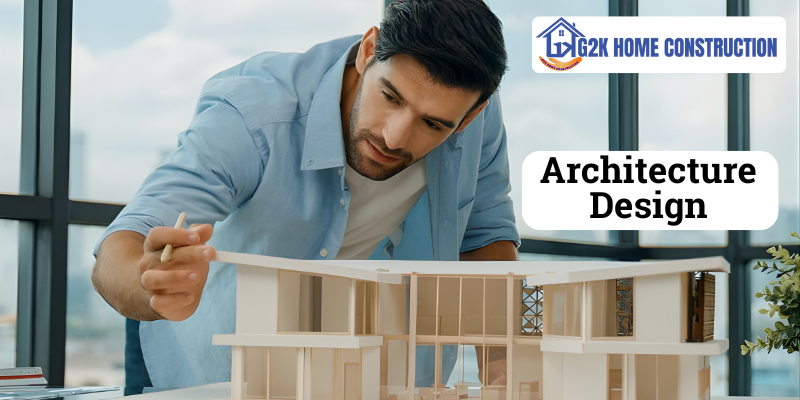
Every family's dream endeavour is to build a house. However, there are hundreds of choices, technical issues, financial concerns, and planning difficulties between the idea and the finished product. This is the point at which an architect's role becomes essential. Many homeowners think that hiring a builder or engineer is sufficient, but an architect is considerably more involved in creating a home that is safe, practical, and visually beautiful.
The full role of an architect in home construction will be covered in this blog, including duties, advantages, project phases, coordination, cost advantages, and the reasons that hiring a trained architect can ultimately save time and money.
These designs aid in the clear execution of construction, reducing delays and errors.
The full role of an architect in home construction will be covered in this blog, including duties, advantages, project phases, coordination, cost advantages, and the reasons that hiring a trained architect can ultimately save time and money.
What exactly defines an architect?
A licensed professional with training in construction project planning, design, and supervision is known as an architect. Their training and expertise aid in ensuring that buildings are long-lasting, secure, practical, and aesthetically pleasing. In contrast to draughtsmen or contractors, architects adhere to architectural codes, sustainability standards, systematic design concepts, and meticulous aesthetic planning.
Why Building a Home Requires the Use of an Architect ?
A house represents lifestyle, comfort, future demands, and budget; it is more than just walls and a roof. Your home's design is guaranteed to be in line with:
- Vastu specifications (if necessary)
- code of safety
- Optimising space
- Natural lighting and ventilation.
- integrity of structure
- Long-term maintenance planning.
- Effective material utilisation
- Durability and appearance
Homeowners may experience structural flaws, squandered space, moisture problems, and increased building and maintenance costs in the absence of expert planning.
Key Functions of Architects in Residential Building Construction
1. Understanding the Client's Needs
The procedure starts with a detailed discussion of:
- Family lifestyle
- Number of floors or rooms
- Future expansion.
- Budget and Timelines
- Material preferences.
- Parking needs
- Storage needs
- Natural ventilation expectations
Architects turn this verbal request into a clear conceptual blueprint.
2. Site analysis and feasibility study
Before designing, architects evaluate the site and consider:
- Soil conditions
- Site orientation
- Road Access
- Wind Direction
- Sunlight Patterns
- Topographic Levels
- Government Regulations
This contributes to building placement, foundation requirements, and zoning restrictions.
3. Conceptual and Schematic Design
Architects create initial layouts, which include:
- 2D Floor Plans
- Circulation paths
- Room Dimensions
- Orientation of sunlight and air
- Furniture positioning
These sketches develop into comprehensive drawings depending on feedback.
4. Design development and final drawings.
This is a critical stage where architects improve designs and prepare.
- Structured planning guidelines
- Plumbing Layouts
- Electrical planning
- Elevation Designs
- façade concepts
- Material Specifications
These designs aid in the clear execution of construction, reducing delays and errors.5. Creating Construction Documents
Architects provide working drawings that contractors and engineers use during construction. These include the following:
- Foundation Sketches
- Sections and Elevation
- Reinforcing Details
- Staircase Details
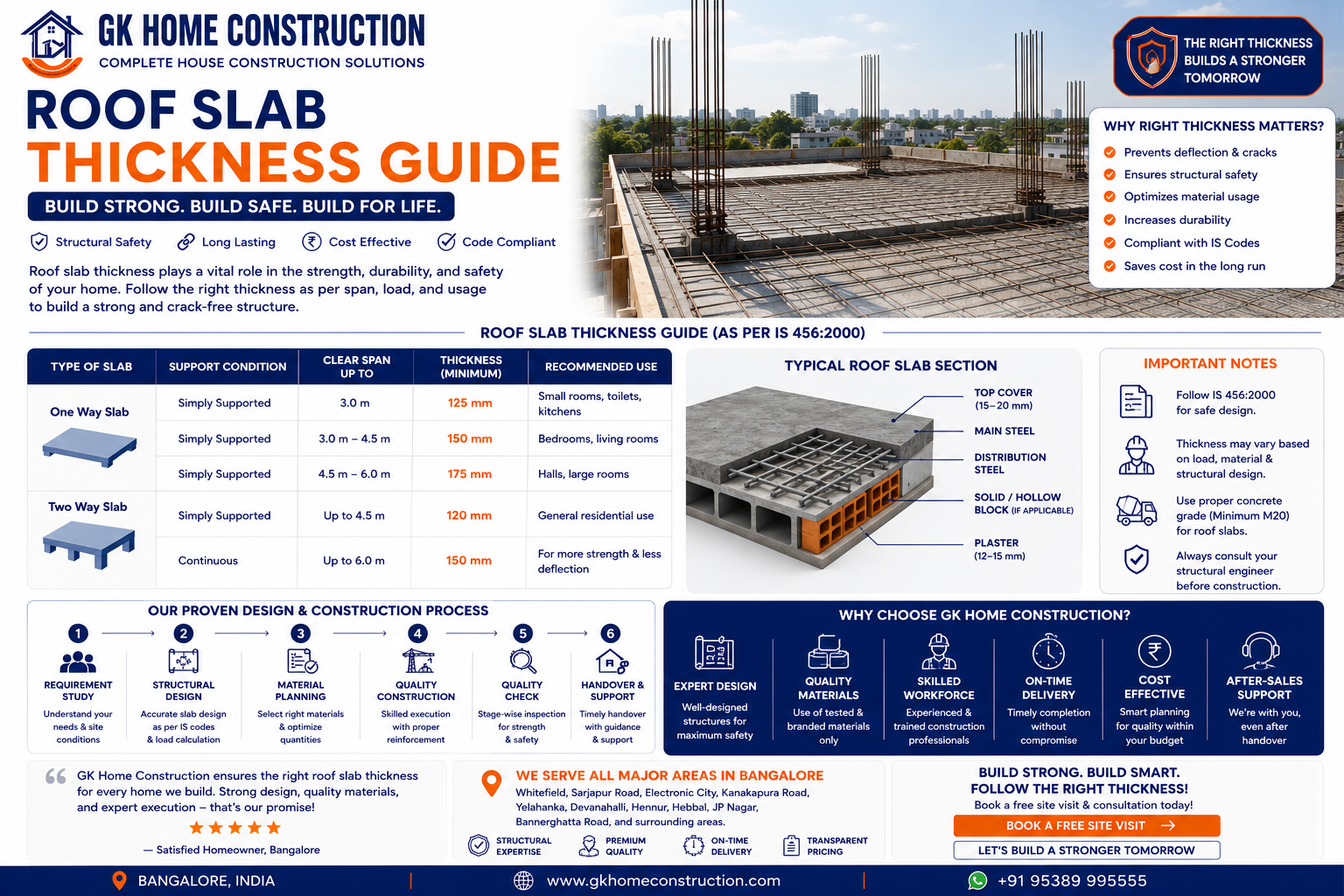
- Roof Slab Drawings
6. Support for approvals and permissions
Architects collaborate with local government on:
- BBMP, BDA, and BMRDA approvals (for Bangalore)
- Approval of building plans
- Submission of working drawings.
- Environmental clearance (If applicable)
7. Cost estimation and budgetary guidance
Architects provide fundamental cost estimation and aid to optimise spending through:
- Material Alternatives
- Cost-Effective Design Alternatives
- Labour scheduling
- Avoiding Rework
- Reducing Waste
A prepared drawing considerably reduces construction expenses when compared to uncontrolled projects.
8. Contractor and Engineer Coordination
Architects cooperate with:- Structural Engineers
- Contractors
- Plumbers
- Electricians
- Carpenters
- Interior Designers
9. Site supervision and quality control
Architects visit construction sites on a regular basis to ensure that:
- Work Progresses as per the Drawing
- Quality of Material is Maintained
- Deviations are Avoided
- The necessary adjustments are performed immediately.
This avoids costly repairs later.
10. Interior and Landscape Planning
Architects ensure that interior plans are consistent with structure and aesthetics. They plan:
- Lighting Strategy
- Modular kitchen layout
- Wardrobe placements
- Furniture circulation
- Garden and Outdoor Spaces
Holistic planning increases comfort and usability.
The Importance of Architecture for Sustainability and Energy Efficiency
Modern architects prioritise eco-friendly alternatives, such as:
- Natural Ventilation to Reduce air-Conditioning Usage
- Energy-Saving Lighting
- Materials Made from Sustainable Sources
- Rainwater Harvesting Integration.
- Water Saving Fixtures
- Solar Panel Planning
This lowers long-term maintenance expenses while also preparing homes for the future.
How Architects Can Help Cut Costs
Many homeowners are hesitant to hire architects owing to fees, yet in reality, they save money through
- Preventing Structural and Planning Faults
- Decreasing Material Wastage
- Developing Compact and Efficient Environments.
- Preventing Demolition and Reworking
- Optimal Plumbing and Electrical Layouts
Overall Project Savings Frequently Exceed Architect Fees.
Common Mistakes When Building a House without an Architect
Common concerns arise when dwellings are built solely on the advice of contractors:
- Insufficient Ventilation
- Inconvenient Space Arrangements
- Room Sizes are Uneven
- Poor Waterproofing Planning
- Plumbing Problems
- Moisture and Leakage Concerns
- Errors with Staircase Positioning
- Insufficient Lighting Design
- Maintenance Charges are Frequent.
Professional planning helps to avoid long-term issues.
Conclusion
An architect's responsibility in home construction extends beyond creating house plans and elevations. They serve as planners, coordinators, designers, cost consultants, and quality and safety guardians. Hiring a trained architect ensures peace of mind, long-term durability, and a home adapted to your lifestyle for anyone thinking about building a house.
Working with professional architects early on ensures easier execution, faster approvals, better material selection, and increased property value at GK Home Construction. A home is a lifetime investment, and competent architectural guidance may help you turn your vision into a workable reality.
Contact GK Home Construction
Website: https://gkhomeconstruction.com/ Email : care@gkhomeconstruction.com Call us at : +91 9538999535
(For complete planning, professional guidance, and smooth execution of your home construction project,Contact now)