Introduction
When planning a new home, one of the most important decisions is choosing the right structural system. Most homeowners hear two common terms during construction discussions: RCC structure and load bearing structure. Although both methods are widely used in residential construction, they differ significantly in design, cost, flexibility, durability, and long-term performance. Understanding these differences helps homeowners make informed decisions based on their budget, soil condition, design expectations, and future expansion plans. Let us explore both systems in detail and understand which one suits your home construction project better.
What is a Load Bearing Structure?
A load bearing structure is a traditional method of construction where the walls themselves carry the weight of the building. In this system, the load from the roof and upper floors is transferred directly to the foundation through thick masonry walls. These walls are usually built using bricks, concrete blocks, or stone masonry. Since the walls support the entire structural load, they must be constructed thicker and stronger compared to partition walls.
Load bearing structures are commonly used for small residential buildings, especially single-floor or double-floor houses. This method has been in practice for many decades and is still preferred in rural areas and small towns where construction budgets are limited. However, the design flexibility is limited because removing or altering any wall may affect the building’s stability.
What is an RCC Structure?
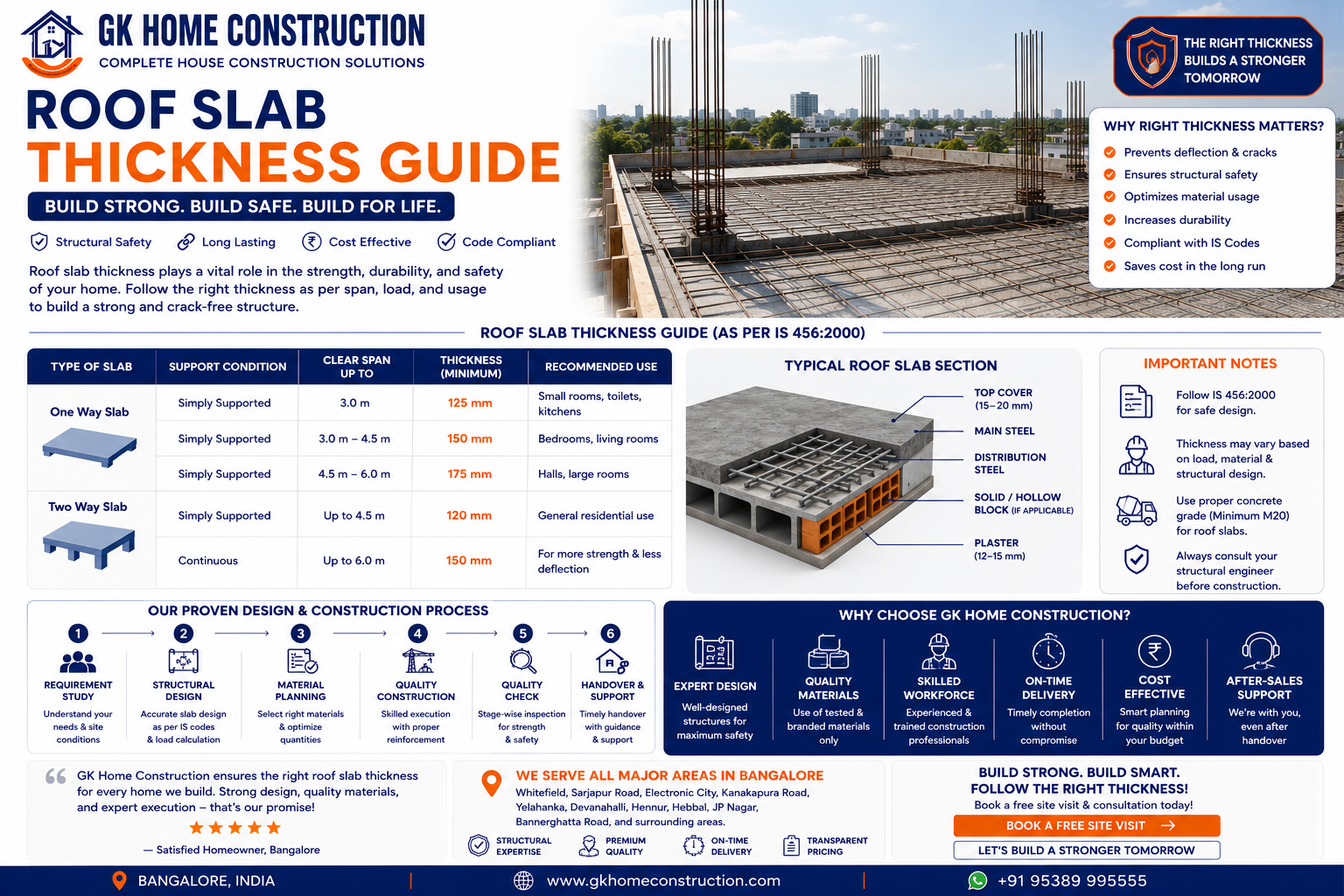
RCC stands for Reinforced Cement Concrete. In an RCC structure, the load of the building is carried by a framework of columns, beams, and slabs made of concrete reinforced with steel bars. The walls in this system do not carry the structural load; instead, they function only as partitions or enclosures.
The load from the slabs is transferred to beams, then to columns, and finally to the foundation. Because the walls are non-load-bearing, they can be constructed thinner and modified easily during renovations. RCC structures are widely used in modern residential, commercial, and high-rise buildings due to their strength, flexibility, and durability.
Structural Strength and Stability
One of the major differences between RCC and load bearing structures is strength and stability. RCC structures are generally stronger because they use reinforced steel within concrete, which enhances load-bearing capacity and resistance to tension forces. This makes RCC buildings more suitable for multi-storey construction and earthquake-prone regions.
Load bearing structures, on the other hand, depend entirely on masonry walls for strength. While they are stable for low-rise buildings, they are not ideal for high-rise structures. As the number of floors increases, wall thickness must increase significantly, which becomes impractical and expensive.
Cost Comparison
Cost plays a crucial role in choosing a construction method. Load bearing structures are usually more economical for small, single-floor houses. Since they do not require complex formwork, steel reinforcement, and heavy concrete work, the initial construction cost may be lower.
However, RCC structures, though slightly costlier initially due to steel and shuttering work, provide better long-term value. They allow vertical expansion, easier renovation, and better resale value. For homeowners planning future additional floors, RCC becomes a more cost-effective option in the long run.
Design Flexibility
Modern homeowners prefer open layouts, larger living spaces, and flexible interior designs. RCC structures offer greater design freedom because the load is carried by columns and beams, not walls. This allows architects to create spacious halls, large windows, and customized room layouts.
In contrast, load bearing structures limit design possibilities. Since walls carry structural loads, removing or shifting them can weaken the building. Large open spaces are difficult to achieve without adding additional support elements.
Foundation Requirements
Foundation design differs significantly between the two systems. Load bearing structures require continuous wall foundations to support masonry walls. The foundation must be strong enough to carry the distributed wall load.
RCC structures typically use isolated footings, combined footings, or raft foundations based on soil conditions. Because the load is transferred through columns, the foundation design is more systematic and suitable for varying soil strengths. In cities with mixed soil conditions, RCC foundations are generally more adaptable.
Speed of Construction
RCC construction involves multiple stages such as column casting, beam work, slab concreting, curing, and shuttering removal. This may take slightly longer due to curing time requirements.
Load bearing construction can sometimes be faster for small houses because it mainly involves masonry work. However, for larger projects or multi-floor buildings, RCC construction becomes more efficient and structured with proper planning.
Durability and Maintenance
RCC structures are known for long-term durability when constructed with proper quality control. They perform better against natural forces such as earthquakes, wind loads, and heavy rainfall. With proper waterproofing and maintenance, RCC buildings can last for decades without major structural issues.
Load bearing buildings are also durable but may develop cracks over time due to uneven settlement or moisture penetration. Repairing structural cracks in load bearing walls can be more complicated compared to minor repairs in RCC partition walls.
Suitability for Future Expansion
Future expansion is an important factor for growing families. RCC structures are ideal for vertical extensions. Additional floors can be added if the foundation and columns are designed accordingly during initial construction.
Load bearing structures are not very flexible for vertical expansion. Adding extra floors may require strengthening existing walls and foundations, which can be technically challenging and expensive.
Space Utilization
Because load bearing walls are thicker, they occupy more floor area. This slightly reduces usable carpet area, especially in smaller plots.
RCC structures use thinner partition walls, allowing better space utilization. In compact urban plots, this difference can significantly impact interior planning.
Which One Should You Choose?
The choice between RCC and load bearing structure depends on several factors such as budget, plot size, soil condition, number of floors planned, and future expansion needs. For small, budget-friendly, single-floor homes, load bearing construction may be suitable. However, for modern homes, duplex houses, villas, or buildings with future expansion plans, RCC structure is generally the better choice.
In urban areas like Bangalore, where property values are high and expansion needs are common, RCC structures are widely preferred for residential construction.
Conclusion
Both RCC and load bearing structures have their advantages and limitations. Load bearing construction is economical and suitable for low-rise buildings, while RCC construction offers strength, flexibility, and long-term durability. Choosing the right structural system requires careful evaluation of present needs and future goals. Consulting experienced construction professionals ensures that the selected method aligns with safety standards and budget expectations.
At GK Home Construction, educating homeowners about structural choices is part of responsible building practice. Understanding these differences empowers you to make informed decisions and build a home that is safe, durable, and future-ready.