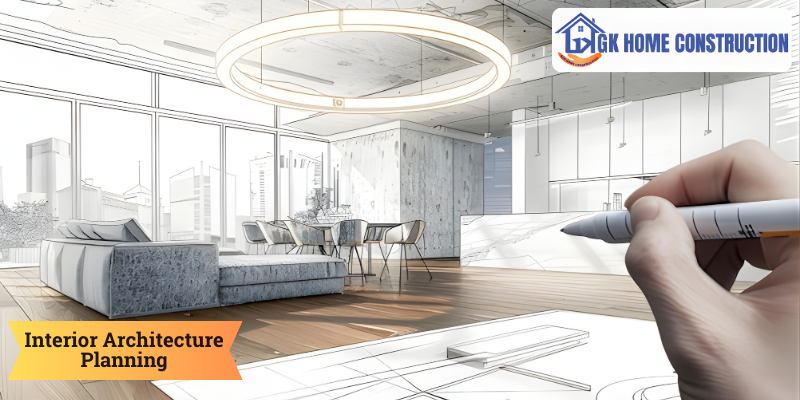
Most Important Interior Architecture Planning Steps Before House Construction
1. Understand Your Lifestyle and Requirements
Before planning, understand how the family will use the space. Initially, note the number of family members, daily requirements, work areas, storage needs, furniture arrangements, and future requirements. Finalize the number and sizes of rooms, work areas, storage areas, and other interior design requirements. Before planning, consider the family lifestyle and make it comfortable and suitable.
2. Coordinate Interior Design With the Floor Plan
Proper coordination of the interior plan and architectural floor plan is required. The factors that affect the interior design include room size, doors, windows, columns, beams, staircases, wall positions, and circulation. Finalizing the floor plan requirements will help to avoid expensive changes during or after the construction.
3. Plan the Furniture Layout
Furniture layout is the next important step for the interior architecture after the floor plan. Furniture layout decides the bed position, sofa, dining table, T.V unit, wardrobes, and other furniture items. This will help to understand the walkable area, room space, door clearance, electrical points, lighting points, and storage requirements.
4. Plan Electrical Points
Electrical points should be planned according to the use of each space. Plan the points for switches, sockets, T.V unit, wifi point, AC points, and other home appliance connections. All the kitchen appliances, light points beside the bed, near the study table area, entertainment units, and workspaces require a specific number of electrical points before wiring begins.
5. Plan Plumbing and Bathroom Requirements
Relocating plumbing lines after construction is difficult and expensive, so plan plumbing before construction. All the points: toilets, wash basins, showers, geysers, floor traps, kitchen sinks, and washing machines should be planned and required.
6. Plan the Kitchen Interior
Before electrical, plumbing, flooring, and cabinetry work, kitchen interior planning should be completed. Decide whether the kitchen should be L-shaped, U-shaped, parallel, straight, or island model. Also locate the points for sink, hob, chimney, refrigerator, oven, microwave, dishwasher, and other storage cabinets for effective cooking and storage.
7. Plan Lighting and False Ceiling
The plan for the lighting and the false ceiling should be finalized before starting electrical and ceiling work. It is necessary to identify the positions of fans, lights, spotlights, LED strips, and AC points. Early identification of these will help to maintain the ceiling height.
8. Plan Wardrobes and Storage
Storage requirements should be planned before walls and finishes are finalized. Decide the locations and dimensions of wardrobes, lofts, shoe cabinets, crockery units, utility cabinets, and other built-in storage. Proper storage planning makes better use of available space and prevents the need for bulky furniture later.
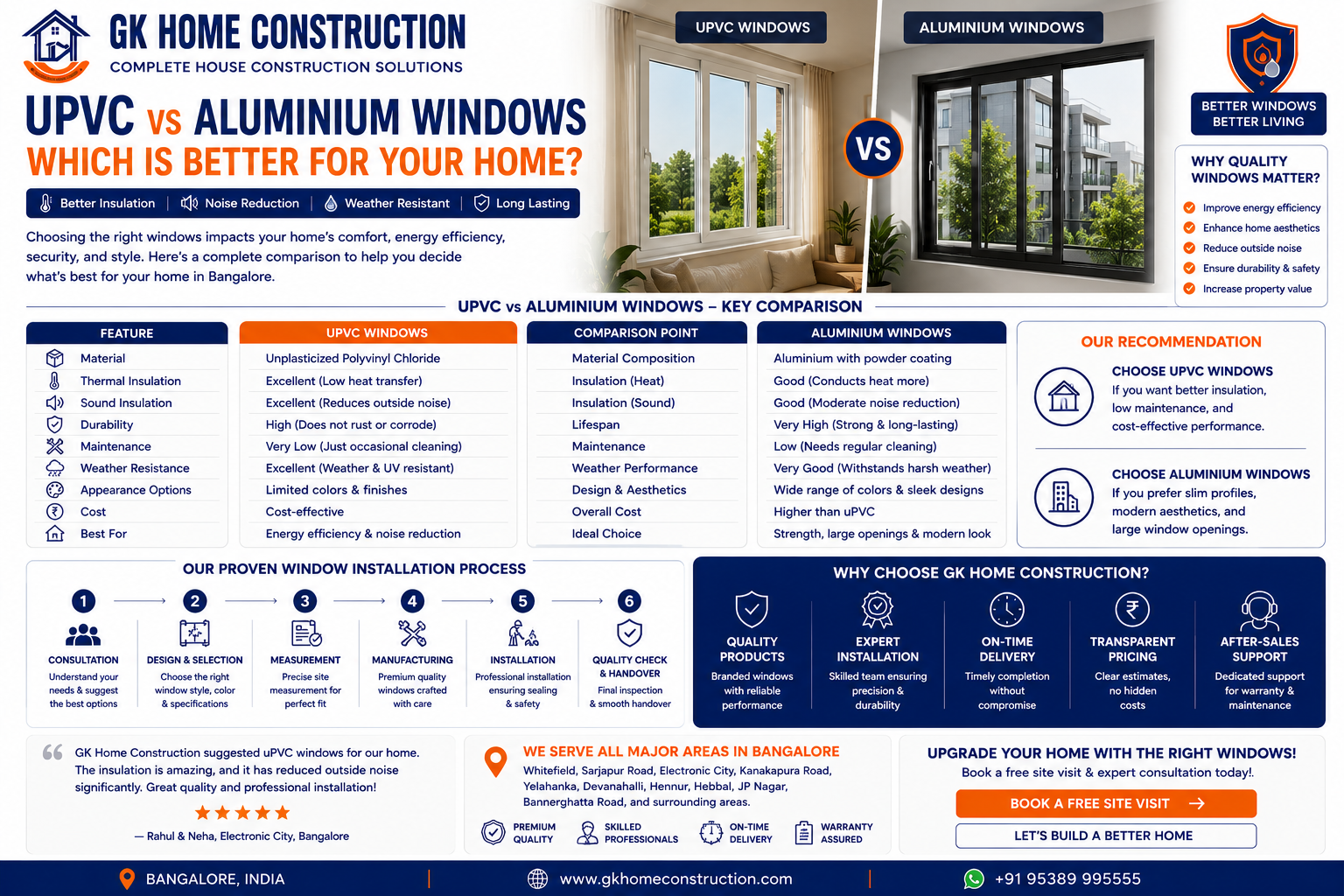
9. Plan Doors, Windows and Natural Light
Doors and windows should be reviewed in the interior layout to ensure proper natural light, ventilation, privacy, and furniture clearance. Check door-opening directions, window sizes, sill heights, curtain provisions, and furniture placement. Proper planning prevents wardrobes and other furniture from blocking windows or restricting movement.
10. Finalize Materials, Budget and Detailed Drawings
Before construction moves into the finishing stage, finalize the interior budget, materials, and detailed drawings. Flooring, wall finishes, kitchen materials, countertops, sanitaryware, doors, lighting fixtures, paint, and carpentry materials should be selected according to the design and budget. Detailed furniture, electrical, lighting, ceiling, flooring, kitchen, wardrobe, and bathroom drawings should be prepared for accurate execution.
Conclusion
Interior architecture planning before house construction is not a luxury but a necessity for building a functional, comfortable, and cost-efficient home. Early planning ensures better space utilization, smooth coordination between structure and interiors, controlled budgets, and superior living quality. By integrating interior architecture at the construction planning stage, homeowners avoid common mistakes and achieve a well-balanced home that meets both aesthetic and practical needs. For construction companies like GK Home Construction, emphasizing interior architecture planning strengthens project outcomes and delivers long-term value to clients.
Plan Your Interiors Before Construction Starts
Ready to create a home that is beautiful, functional, and planned around your lifestyle? GK Home Construction provides professional interior design and planning services in Bangalore, helping you plan wardrobes, storage, lighting, doors, windows, materials, furniture layouts, and detailed interior requirements before construction begins.
Plan your interiors early and build with confidence.
???? Explore GK Home Construction Interior Design Services:
Interior Design Services – GK Home Construction
Contact GK Home Construction today to plan your dream home from the inside out. Contact number: +91 9538999535