When building or renovating a home, electrical wiring is one of the most important aspects that directly affects safety, durability, and comfort. Many homeowners focus on design, flooring, and interiors but often overlook the wiring system hidden behind walls and ceilings. Choosing the right wiring method is crucial because it influences not only the appearance of your home but also long-term maintenance and safety. Among the available options, concealed wiring and open wiring are the two most commonly used systems in residential construction. Understanding their differences can help you make a smart and informed decision.
This blog explains concealed and open electrical wiring in detail, comparing their advantages, disadvantages, costs, and suitability for different types of homes.
Understanding Electrical Wiring Systems
Electrical wiring is the network that distributes power to lights, fans, appliances, and sockets throughout your home. It includes cables, conduits, switches, and distribution boards that work together to ensure safe electricity flow. A well-designed wiring system prevents electrical accidents, reduces power loss, and supports modern appliances.
There are two main installation methods used in homes. Concealed wiring is hidden inside walls, ceilings, and floors, while open wiring remains visible on wall surfaces using clips, conduits, or casing systems. Each method serves different purposes and suits different construction needs.
What Is Concealed Electrical Wiring?
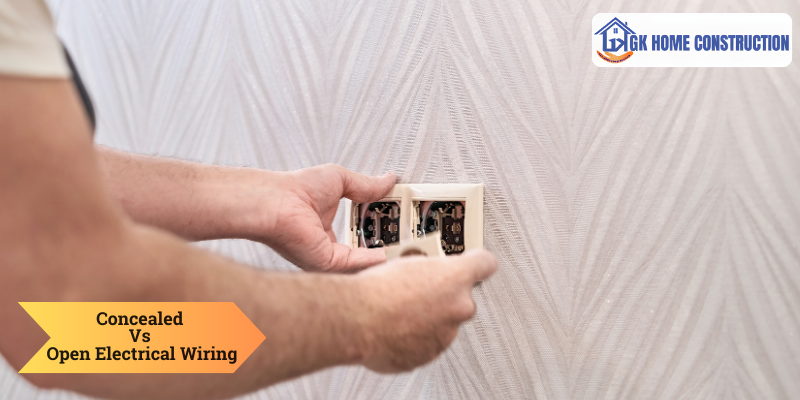
Concealed wiring is a system where electrical cables are placed inside PVC conduits and embedded within walls, ceilings, or floors. Once the wiring is installed, plastering and finishing are done over it, making the wires completely invisible. Only switches, sockets, and electrical outlets remain visible on the surface.
This type of wiring is commonly used in modern homes, apartments, villas, and commercial buildings. It is preferred for its clean appearance, high safety standards, and long-term durability. Concealed wiring is usually done during the construction stage, as it requires wall cutting and plaster work.
Because the wires are protected inside conduits, they are less exposed to moisture, dust, physical damage, and external disturbances. This makes concealed wiring a reliable choice for permanent residential structures.
Advantages of Concealed Wiring
One of the biggest benefits of concealed wiring is its aesthetic appeal. Since the wires are hidden, walls look neat, clean, and elegant. This enhances the overall interior design and allows homeowners to decorate freely without visible cables.
Safety is another major advantage. The wires are enclosed inside conduits and covered by walls, reducing the risk of electric shocks, short circuits, and fire hazards. This makes concealed wiring especially suitable for homes with children and elderly residents.
Concealed wiring also offers long-term durability. The cables are well protected from environmental factors such as humidity, heat, and accidental damage. With proper installation, this system can last for decades with minimal issues.
Additionally, concealed wiring increases property value. Homes with modern concealed wiring systems are more attractive to buyers and tenants, making them a smart investment for the future.
Limitations of Concealed Wiring
Despite its benefits, concealed wiring has some drawbacks. The main disadvantage is higher installation cost. It requires skilled electricians, quality materials, wall cutting, and plastering work, which increases overall expenses.
Maintenance and repairs can also be challenging. If a wire gets damaged inside the wall, locating the exact problem area is difficult. Repairs often involve breaking walls and repainting, which can be inconvenient and costly.
Another limitation is limited flexibility. Once concealed wiring is installed, making changes or adding new electrical points becomes complicated. Any modification requires structural work, making it less suitable for frequent layout changes.
What Is Open Electrical Wiring?
Open wiring, also known as surface wiring, is a system where electrical cables are installed on the surface of walls or ceilings using clips, casings, or PVC conduits. The wires remain visible and accessible, making installation and maintenance simpler.
This method is commonly used in older buildings, temporary structures, workshops, warehouses, and budget homes. It is also preferred in situations where concealed wiring is not possible due to structural limitations.
Open wiring can be installed quickly without damaging walls, making it a practical choice for renovations and temporary setups.
Advantages of Open Wiring
The biggest advantage of open wiring is low installation cost. It requires fewer materials, less labor, and no wall cutting, making it an economical option for budget-conscious homeowners.
Easy maintenance is another major benefit. Since wires are visible, faults can be detected quickly, and repairs can be done without breaking walls. This reduces downtime and maintenance expenses.
Open wiring also offers high flexibility. New electrical points, switches, or appliances can be added easily without major construction work. This makes it ideal for homes that frequently undergo layout changes.
Installation time is shorter for open wiring. Electricians can complete the work quickly, making it suitable for urgent projects and temporary buildings.
Limitations of Open Wiring
The most noticeable drawback of open wiring is poor aesthetics. Visible wires and conduits can make interiors look cluttered and outdated. This affects the overall appearance of modern homes.
Safety concerns are also higher with open wiring. Exposed cables are more vulnerable to physical damage, moisture, and pests. This increases the risk of electric shocks and short circuits, especially in kitchens and bathrooms.
Durability is another issue. Since wires are exposed to environmental conditions, they may wear out faster compared to concealed wiring. Over time, clips and conduits may loosen, requiring frequent repairs.
Open wiring can also reduce property value, as buyers usually prefer homes with concealed electrical systems.
Cost Comparison: Concealed vs Open Wiring
Cost plays a major role in choosing a wiring system. Concealed wiring is more expensive due to higher material quality, labor charges, and finishing work. It is a long-term investment that offers better safety and aesthetics.
Open wiring is comparatively cheaper and suitable for limited budgets. It saves money on construction and can be installed quickly. However, long-term maintenance costs may be higher due to frequent repairs and replacements.
While concealed wiring has a higher initial cost, it provides better value over time. Open wiring may be economical initially but may not be cost-effective in the long run.
Which Wiring System Is Best for Your Home?
The choice between concealed and open wiring depends on your budget, construction stage, usage requirements, and long-term plans. If you are building a new home or planning a major renovation, concealed wiring is the best option. It offers safety, durability, and a premium look that matches modern living standards.
If you have a limited budget, need temporary wiring, or are renovating without breaking walls, open wiring can be a practical solution. It works well for workshops, rental properties, and utility spaces.
For most residential homes, concealed wiring is recommended due to its long-term benefits and enhanced safety.
Importance of Professional Electrical Installation
No matter which wiring system you choose, professional installation is essential. Poor wiring work can lead to power failures, fire hazards, and costly repairs. Certified electricians ensure proper cable selection, load distribution, earthing, and safety compliance.
Using quality materials and following electrical standards increases the lifespan of your wiring system. Regular inspection and timely maintenance also help prevent major electrical issues.
Investing in expert electrical work protects your home and your family.
Final Thoughts
Choosing between concealed and open electrical wiring is an important decision that affects your home’s safety, appearance, and functionality. Concealed wiring offers a clean look, high safety, and long-term reliability, making it ideal for modern homes. Open wiring, on the other hand, is budget-friendly, flexible, and easy to maintain, making it suitable for temporary or low-cost projects.
Understanding the advantages and limitations of both systems helps you make the right choice based on your needs and budget. For homeowners planning long-term comfort and value, concealed wiring remains the preferred option.
If you are planning a new home or renovation, consulting experienced professionals can ensure that your electrical system is safe, efficient, and future-ready.