Introduction to Cementitious Waterproofing
Cementitious waterproofing is one of the most commonly used waterproofing methods in residential and commercial construction, especially for bathrooms and water tanks. It is a cement-based coating that forms a rigid, water-resistant barrier when applied to concrete or masonry surfaces. Due to its strong bonding ability and ease of application, cementitious waterproofing is widely preferred in areas that are constantly exposed to moisture and water pressure.
Cementitious Waterproofing Is Ideal for Bathrooms
Bathrooms are high-moisture zones where water seepage can damage slabs, walls, and adjacent rooms if not treated properly. Cementitious waterproofing works effectively in bathrooms because it bonds seamlessly with concrete and plastered surfaces. Once applied, it prevents water from penetrating floors and walls, reducing the risk of dampness, tile loosening, and fungal growth. It is especially useful beneath tiles in shower areas, washbasins, and wet zones.
Application of Cementitious Waterproofing in Water Tanks
Water tanks require a waterproofing solution that is durable, non-toxic, and capable of withstanding constant water pressure. Cementitious waterproofing is suitable for both overhead and underground water tanks due to its strong adhesion and resistance to hydrostatic pressure. When applied correctly, it creates a leak-proof layer that protects the tank structure from cracks, seepage, and long-term deterioration. Many cementitious waterproofing products are used for potable water storage, making them ideal for domestic tanks.
Types of Cementitious Waterproofing Systems
Cementitious waterproofing systems are generally available in two types: rigid and flexible. Rigid cementitious coatings are suitable for areas with minimal structural movement, such as internal bathrooms and water tanks. Flexible cementitious waterproofing may include polymer-modified compounds that offer better crack-bridging properties and are preferred in areas prone to minor movement or thermal expansion. Selecting the right type depends on the application area and structural conditions.
Surface Preparation and Application Process
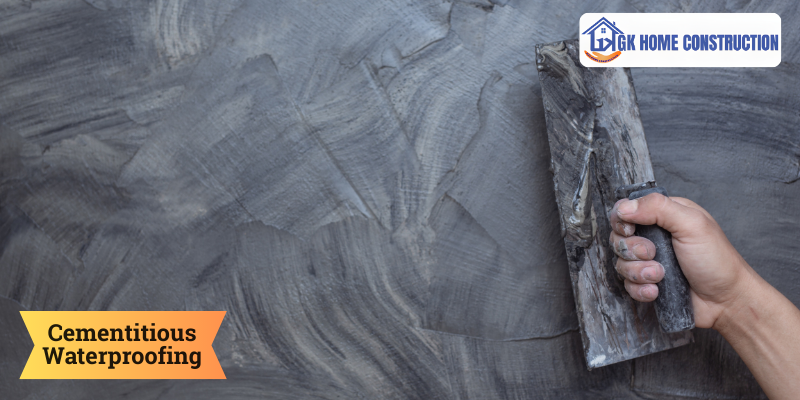
Proper surface preparation is crucial for the effectiveness of cementitious waterproofing. The surface must be clean, free from dust, oil, and loose particles before application. Cracks and honeycombs should be repaired using suitable repair mortar. The waterproofing compound is mixed with water or a polymer additive and applied using a brush or trowel in multiple coats. Adequate curing after application ensures maximum strength and durability of the waterproof layer.
Advantages of Cementitious Waterproofing
One of the key advantages of cementitious waterproofing is its ease of application, as it does not require specialized tools or highly skilled labor. It offers excellent adhesion to concrete and masonry surfaces and is cost-effective compared to many other waterproofing systems. Its durability and resistance to water pressure make it highly reliable for bathrooms and water tanks.
Limitations of Cementitious Waterproofing
Despite its effectiveness, cementitious waterproofing has certain limitations. Being a rigid system, it has limited flexibility and may crack if there is significant structural movement. Therefore, it is not suitable for areas with high vibration or expansion without polymer modification. Proper design and application are essential to avoid long-term performance issues.
Conclusion
Cementitious waterproofing is a proven and widely used solution for protecting bathrooms and water tanks from water leakage and moisture damage. Its strong bonding properties, affordability, and compatibility with concrete structures make it a preferred choice in residential construction. When applied correctly with proper surface preparation and curing, cementitious waterproofing ensures long-lasting protection and enhances the durability of the structure.