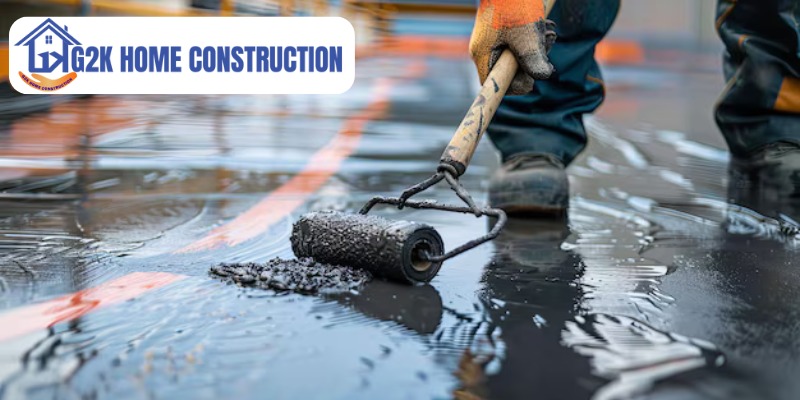
Waterproofing is a crucial construction step. It protects a building from water leaks, moisture, and dampness, maintaining the structure’s strength and preventing damage from cracks, mold, rusting steel, and potential long-term failure.
In simple words:
➡️ Waterproofing keeps your building dry, healthy, and durable.
Importance of waterproofing
✔ Prevents water leakage and damp patches
✔ Protects reinforcement steel from corrosion
✔ Increases the life of the building
✔ Stops mold growth (better indoor air quality)
✔ Reduces long-term repair costs
✔ Protects reinforcement steel from corrosion
✔ Increases the life of the building
✔ Stops mold growth (better indoor air quality)
✔ Reduces long-term repair costs
Popular Waterproofing Methods
1. Cementitious Waterproofing

A cement-based coating commonly used in bathrooms, kitchens, water tanks, and basements.
- Easy to apply
- Economical
- Best for inner moist areas
Use: Bathrooms, toilets, kitchens, water tanks, basements, internal wet areas, good for internal areas
Lifespan: 5–7 years
Features: Easy to apply, rigid (not suitable for movement cracks), cost-effective
Lifespan: 5–7 years
Features: Easy to apply, rigid (not suitable for movement cracks), cost-effective
2. Layer for Waterproofing Liquids

A liquid that forms a seamless, flexible, rubber-like layer once dry.
- Suitable for roofs, outdoor spaces, and balconies
- Can cope with enlargement and contraction
- assure dependability safeguarding
Use: Terraces, balconies, sunshades, parapets, external walls
Lifespan: Acrylic: 5–7 years, PU: 8–12 years
Features: PU gives better elongation & weather protection, highly flexible & UV resistant (PU is superior)
Lifespan: Acrylic: 5–7 years, PU: 8–12 years
Features: PU gives better elongation & weather protection, highly flexible & UV resistant (PU is superior)
3. Bituminous Coating

Asphalt coating is another name for it.
- Used on underground structures and foundations;
- Extremely moisture-resistant;
- Durable and long-lasting
Use: Underground spaces, retaining walls, and foundations.
Lifespan: 5–8 years of life
Notes: Adaptable, although it should be covered and kept out of direct sunlight. Excellent but not UV resistant
Lifespan: 5–8 years of life
Notes: Adaptable, although it should be covered and kept out of direct sunlight. Excellent but not UV resistant
4. Bituminous Membrane

A pre-made sheet rolled and applied with heat or adhesive.
- Suitable for flat roofs
- Excellent waterproofing performance
- Uniform thickness
Use: Flat roofs, podiums, basements, industrial roofs, water-retaining areas.
Lifespan: 12–15 years
Features: Thick (3–4 mm), excellent for large roof slabs, requires skilled installation, and provides very strong protection.
Lifespan: 12–15 years
Features: Thick (3–4 mm), excellent for large roof slabs, requires skilled installation, and provides very strong protection.
5. Polyurethane Waterproofing

A premium waterproofing solution.
- Very flexible
- Great for exposed and uneven surfaces
- Highly durable and UV-resistant
Use: Terraces, balconies, parapets, podiums, wet areas.
Lifespan: 8–15 years
Features: depending on grade and application, highly effective, flexible, and durable.
6. Crystalline Waterproofing

A chemical that reacts with concrete to form crystals inside the pores.
- Becomes part of the concrete itself
- Self-sealing properties
- Ideal for basements and water-retaining structures
Use: RCC slabs, basements, water tanks, foundations, and underground structures.
Lifespan: Lifetime of structure (20+ years)
Features: Reacts with moisture in concrete to form crystals and seal pores, Permanent internal protection
Lifespan: Lifetime of structure (20+ years)
Features: Reacts with moisture in concrete to form crystals and seal pores, Permanent internal protection
Major details regarding waterproofing
Waterproofing Used areas
- Bathrooms & kitchens: Cementitious Waterproofing
- Roofs & terraces: Polyurethane (PU) Liquid Membrane
- Basements: Crystalline Waterproofing
- Crystalline waterproofing and cementitious topcoat for water tanks and swimming pools
- Podiums & balconies: Polyurethane (PU) Liquid Membrane
- Foundations & retaining walls: Bituminous Coating
The consequences of not waterproofing a building
- Water seepage
- Damp walls and ceilings
- Mold and fungus
- Rusting of steel reinforcement
- Concrete deterioration
- Increased maintenance costs
- Structural instability over time
Before selecting a waterproofing method, keep several factors in mind.
- Type of structure (residential, commercial, industrial)
- Exposure conditions (UV, water pressure, temperature)
- Surface material (concrete, metal, masonry)
- Budget and lifespan requirements
- Movement or expansion in the structure
- Ease of application and maintenance
The difference between waterproofing and damp-proofing
- Waterproofing prevents water under pressure from penetrating.
- Damp-proofing only stops moisture or vapor, but cannot resist water pressure.
The tests that are used to check the quality of waterproofing on-site
- Ponding test (largest used: fill water for 24–72 hrs)
- Adhesion test
- Dry film thickness test
- Crack-bridging test
- Core-cut inspection
The method to apply waterproofing in bathrooms and wet areas
- Clean and prime the surface
- Apply cementitious or liquid membrane coating.
- Waterproof up to 1 meter on walls
- Seal all joints, drains, and pipe entries.
- Protect the membrane before tile fixing.
The process of waterproofing on the terrace or the roof
- Surface cleaning and repairing cracks
- Application of primer
- Applying liquid membrane or bitumen sheets
- Reinforcement at joints and corners
- Final protective screed if required
A primer is used before applying waterproofing coatings.
- Improves adhesion
- Reduces surface absorption
- Ensures uniform application
- Extends membrane life
The common mistakes made during waterproofing installation
- Insufficient surface preparation
- Inadequate membrane thickness
- Improper curing time
- Neglecting joints, corners, and penetrations
- Applying to wet or dusty surfaces
Signs of waterproofing failure
- Damp patches or wet stains
- Peeling paint or plaster
- Efflorescence (white powdery deposits)
- Musty smell
- Visible cracks
- Leakage during rain
How can waterproofing coatings be maintained to extend their lifespan?
- Regular inspection
- Cleaning and removing debris
- Re-coating every 5–7 years (for acrylic/PU)
- Repairing cracks immediately
- Keeping drainage systems clear
The best waterproofing method for old buildings
- Crack injection
- Liquid membrane for roofs
- Cementitious coating for wet areas
- Bituminous coating for foundations
- PU coatings for repairing leakages
Cost of Doing Waterproofing
Waterproofing costs depend on:
- Type of waterproofing method
- Area (sq ft or sq m.)
- Surface condition
- Material brand
- Labor charges
- Exposure conditions (roof, basement, bathroom, etc.)
Cost varies based on the method, time, area, and the amount of area we are covering.
The certifications or warranties that homeowners ask for
- Manufacturer warranty (5–10 years, depending on product)
- Applicator workmanship warranty
- Product test reports (ASTM/IS standards)
- On-site inspection reports
Conclusion
Waterproofing is not just another construction step—it’s a necessity.
It ensures safety, strength, and peace of mind for years to come. Whether you’re building a new structure or renovating an old one, proper waterproofing is the smartest way to protect your investment.
It ensures safety, strength, and peace of mind for years to come. Whether you’re building a new structure or renovating an old one, proper waterproofing is the smartest way to protect your investment.
For complete architectural planning, drawings, and quality construction, contact GK Home Construction — one of the top home builders in Bangalore.
We offer end-to-end services to ensure your dream home is built the right way from day one.