• 14 Jan, 2026

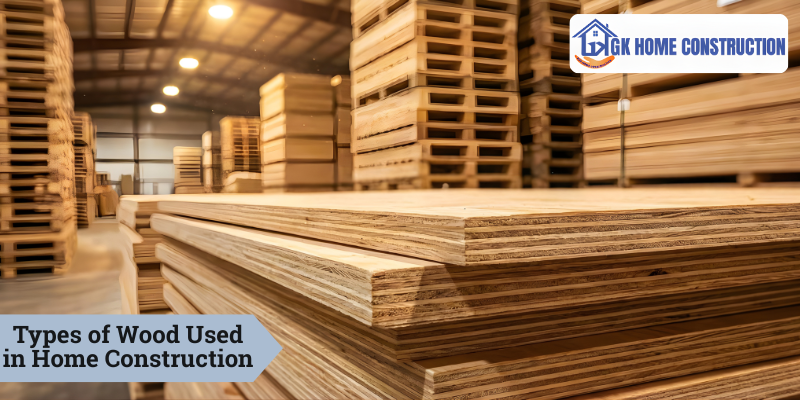
Wood has been one of the most important and versatile materials in home construction for centuries. With the rise of concrete, steel, and engineered materials, wood continues to be crucial in residential buildings because of its natural strength, durability, aesthetic appeal, and adaptability. Different types of wood are selected for various uses in home construction, ranging from structural frameworks to doors, windows, furniture, and decorative elements, depending on the properties, performance, and suitability for the particular application. Knowledge of the types of wood used in home construction significantly aids homeowners in making informed decisions that balance durability, cost, and design.

Significance of Selecting the Correct Wood during Construction Work

The choice of wood type is very important in assuring that a house lasts as long as it should and serves its desired function properly. This is because each wood type has distinct properties that may range from its hardness and ability to withstand moisture, susceptibility to attacks from wood-eating insects, and how it looks. If it is mishandled, a house made from that wood may end up with problems of warping, cracking, termite attacks, and faster deterioration.

Teak Wood

Teak wood is amongst the costliest and most durable wood that can be used for residential purposes. As it has high oil content, teak wood remains resistant to moisture, termites, and decay. Due to this property, it is considered ideal for making doors, window frames, staircases, and furniture. Teak wood remains strong and needs less maintenance even when it is humid, and it is more costly than other wood, but it's long-lasting and classic look makes it an ideal choice for residential purposes.

Sal Wood

Sal wood is extensively employed for structural purposes owing to its high strength properties. It is a dense wood with a hardness level that makes it suitable for the production of frames, door frames, and pieces that are associated with the foundation level. Sal wood is robust when subjected to heavy loads; its durability is quite strong against wear and tear as well. However, it has to be seasoned properly; otherwise, termite attack can cause damage to such wood.

Sheesham Wood

Sheesham, also known as Indian rosewood, is a favorite wood type that can be used in making furniture and interior woodwork. Sheesham wood has a beautiful grain pattern, moderate hardness, and is also resistant to decay. Sheesham wood is often used in making cabinets, wardrobes, doors, and interior panels. The natural beauty of this wood type enhances interior decor and also has enough strength that can withstand everyday reactions. Sheesham wood can last for many decades with proper polishing and maintenance.

Pine Wood

Pine is a softwood that is commonly applied in building domestic houses because of cost-effectiveness and ease of availability. Softwood is lightweight, easy to work with, and can be applied in the design of wall panels, ceilings, doors, and temporary wooden structures. Pine wood can readily absorb any form of paint or stain, which can be applied depending on the design needed, as it can either be painted or stained. Its weaknesses include low resistance to moisture and insects compared to hardwood wood.

Cedar Wood

The properties of cedar wood make it immune to insect and decay attacks, and this enhances its usability both outside and inside a house. Cedar wood is scented and has a straight grain, which is an added advantage. Cedar wood is used to make wardrobes, panels, ceilings, and other external fittings such as pergolas. The wood does not warp or shrink, no matter the climatic changes.

Engineered Wood

Over the years, engineered wood has been gaining popularity in modern home building. This is because products such as plywood, blockboard, medium-density fiberboard, and oriented strand board have been produced by binding wood fibers or veneers. This method helps in gaining standardized quality, improved stability, as well as efficiency. Engineered wood finds application in building modular kitchens, closets, partitions, and false ceilings. Additionally, it assists in decreasing dependence on solid wood. This makes it the most environmentally progressive option.

Rubberwood

It is an eco-friendly material obtained from rubber plants which have exhausted their production of rubber. It is of average hardness and is durable. It can be used for the creation of furniture and doors. It is resistant to shrinkage and warping and has a light coloration which is easy to work with for various furniture designs. It is ideal for modern homes.

Bamboo as an Alternative Wood Material

Even though bamboo is considered a type of grass, it is sometimes classified along with wood because of the high frequency of its usages in building and other architectural works. Bamboo is quite malleable, strong, and eco-friendly because it can be reused and recycled many times. It can be used for the construction of flooring, walls, ceilings, and other decorative items.

Factors to Consider When Selecting Wood for Home Construction

When choosing wood for a house, factors such as climate conditions, exposure to moisture, load requirements, maintenance needs, and budget must be considered. Treated wood is essential for areas prone to termites or humidity. Additionally, the purpose of use—structural, functional, or decorative—plays a key role in selection. Consulting experienced construction professionals ensures that the right wood type is used in the right application.

Conclusion

Wood is and will continue to be a constantly needed and usable home-building material because of its optimal combination of durability, attractiveness, and versatility. For instance, teak wood and mahogany wood are very costly, as are pine wood and engine wood, each of which has a distinct role to play in housing a safe and attractive home because of their properties and uses that help any homebuyer take optimal advantage of them when selected and utilized properly in appropriate ways that maximize their optimal use in increasing home comfort and value and reducing home costs and loss due to lack of durability over time because of their relative weaknesses when compared with wood despite being less costly and attractive and less durable compared with wood.

Enquire Form