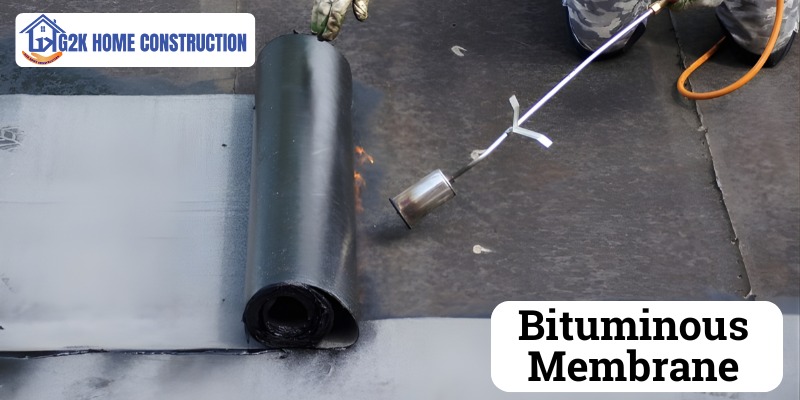
Bitumen mixed with polymers is used to create bituminous membrane waterproofing, a sheet-based waterproofing technology. The membrane is delivered in rolls and creates a continuous, waterproof coating by heat-bonding or self-adhering to the surface.
It is among the most used techniques for waterproofing basements and roofs.
2. Bituminous Membrane Types
1. Atactic Polypropylene (APP) Membrane
- Bitumen mixed with plastic.
- Strong resistance to heat and UV rays
- Ideal for roofs that are exposed
- Utilising the torch-on technique
2. Styrene-Butadiene-Styrene, or SBS Membrane
- Bitumen that has been changed with rubber
- Excellent flexibility and resilience to cracking
- Suitable for regions that are prone to movement and colder climates
- Cold-applied or torch-on
3. Bituminous Membrane with Self-Adhesion
- Peel-and-stick style
- No need for a flame
- Safer in small areas
3. Application Areas
- Flat roofs, terraces
- podiums
- exterior basements
- retaining walls
- restrooms and wet areas
- foundations
- parking decks
4. Method of Stage-by-Stage Application
1. Preparing the Surface
- Dust, laitance, and loose particles must be removed.
- concrete surface must be dry and smooth.
- Fix uneven sections, honeycombs, and fissures.
2. Initial Application
- Use bituminous priming to increase adhesion.
- Let it cure for four to six hours.
3. Laying Membranes
- Properly position and roll out the membrane.
- Use a gas torch to warm the underside.
- To adhere to the surface, firmly press.
- Keep the end overlap at 100 mm and the side overlap at 75 mm.
4. Sealing joints
- Carefully heat and seal overlaps
- no air pockets or gaps permitted
5. Layer of Protection
- Use tile or paver blocks or protective screed (40–50 mm).
- If the membrane is exposed use a UV protection coat.
5. Advantages
- High tensile strength
- outstanding water resistance
- uniform thickness that is ready-made
- good crack-bridging ability
- suitability for high water pressure locations
- Durable (8–15 years)
6. Drawbacks
- Needs professional personnel
- The torch-on approach poses a fire danger.
- It is not breathable
- Joints need to be precisely sealed.
- Once covered, repair work becomes challenging.
7. Ideal For:
- Concrete roofs that are flat
- Basements that are externally waterproofed
- Regularly exposed areas to water
- Large, level surfaces
With a structured process and experienced team, GK Home Construction helps homeowners build well-planned homes efficiently.
Contact GK Home Construction
Website: https://gkhomeconstruction.com/Email : care@gkhomeconstruction.com
Call us at : +91 9538999535
(For complete planning, professional guidance, and smooth execution of your home construction project,Contact now)