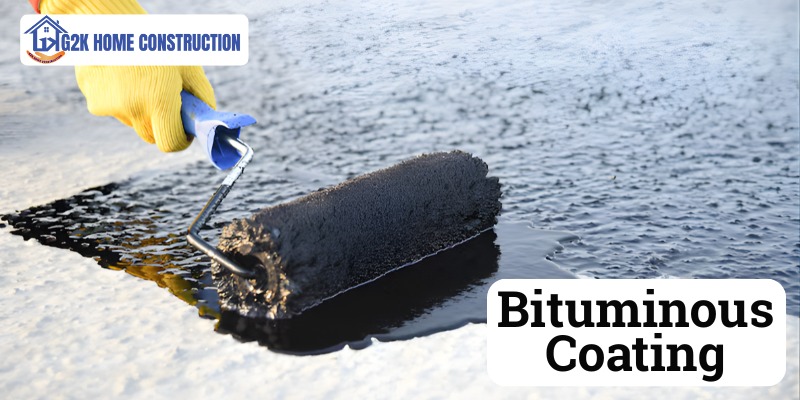
Bitumen (asphalt), a black, sticky, viscous substance, is used to create the protective layer known as bituminous coating waterproofing.
Applying it to a surface (such as concrete, metal, or masonry) creates a protective, moisture-resistant, and waterproof layer.
This coating avoids:
- Water seepage,
- dampness,
- corrosion, and
- (to some extent) chemical attack
It is frequently utilised in basements, foundations, subterranean buildings, and places that are not in direct sunshine.
Bitumen sticks firmly to concrete and has good water resistance.
It is easily accessible and at an affordable price.
Polymer-modified bitumen is now frequently utilised since bitumen becomes soft in high heat and hard or brittle in cold.
Bitumen sticks firmly to concrete and has good water resistance.
It is easily accessible and at an affordable price.
Polymer-modified bitumen is now frequently utilised since bitumen becomes soft in high heat and hard or brittle in cold.
2. Bituminous Coating Waterproofing Types
1. Water-based Bitumen Emulsion
2. Bitumen Coating Based on Solvents
3. Bitumen Coating Modified by Polymers (PMBC-SBS/APP)
4. Hot-Applied Bitumen and Bituminous Mastic
5. Bituminous Paint
6. Bitumen Emulsion Polymer
7. Roll-shaped bituminous membrane (related but not a coating)
2. Bitumen Coating Based on Solvents
3. Bitumen Coating Modified by Polymers (PMBC-SBS/APP)
4. Hot-Applied Bitumen and Bituminous Mastic
5. Bituminous Paint
6. Bitumen Emulsion Polymer
7. Roll-shaped bituminous membrane (related but not a coating)
3. Areas Used with Bituminous Coating
✔ Foundations
✔ Basements (external walls)
✔ Plinth areas
✔ Retaining walls
✔ Underground tanks (outside coating)
✔ Pipelines & metal structures
✔ RCC roofs (below protective screed)
✔ exterior walls of bathrooms and kitchens,
✔ Bridge decks (mastic asphalt)
✔ Basements (external walls)
✔ Plinth areas
✔ Retaining walls
✔ Underground tanks (outside coating)
✔ Pipelines & metal structures
✔ RCC roofs (below protective screed)
✔ exterior walls of bathrooms and kitchens,
✔ Bridge decks (mastic asphalt)
4. Methodical Approach to Application
Preparing the Surface
- Clean loose particles, oil, and dust
- Fix honeycombs and cracks.
- Make sure the surface is smooth and dry.
Use Primer
- Allow it to dry for one to two hours.
- Bitumen primer enhances bonding.
The initial layer of bituminous coating
- Use a brush or roller.
- Make sure the thickness is consistent.
Strengthening (Optional)
- At joints or cracks, place fibreglass mesh over the wet initial coat.
The Second Coat
- Apply after the first coat has dried.
- Cross-direction application guarantees complete coverage.
Layer of Protection
- Before backfilling in basements, use protection boards.
- Use cement screed on roofs to protect them from sunlight and damage.
Duration of Curing
- Allow 24-48 hours for complete curing.
5. Pros
- Cost-effective
The most economical choice for waterproofing.
- Strong Adhesion
Adheres nicely to stone, metal, and concrete.
- Water & Damp Resistant.
outstanding moisture barrier.
- Simple Application
Spray, brush, or roller.
- Suitable for Subterranean Structures
Ideal for areas that are not under direct sunlight.
6. Cons
- Inadequate UV Resistance
In sunshine, bitumen fades, fractures, or becomes brittle.
(Requires a protective membrane or screed.)
- Not Very Adaptable
Unlike PU coats, it cannot withstand structural movement.
- Gets brittle with time
particularly in cold climates
- Smells strongly of solvents
Requires protection prior to backfilling
- Needs Protection Before Backfilling
The coating could be harmed by direct dirt contact.
Contact GK Home Construction
Website: https://gkhomeconstruction.com/Email : care@gkhomeconstruction.com
Call us at : +91 9538999535
(For complete planning, professional guidance, and smooth execution of your home construction project,Contact now)