Wardrobe Design & Carpentry Guide for Modern Homes
Designing a wardrobe is not just about storage—it’s about creating a functional, aesthetic, and long-lasting solution that enhances your everyday living experience. In modern homes, especially in urban spaces where every square foot matters, wardrobes play a crucial role in organizing belongings while complementing interior design. A well-planned wardrobe combines smart design, quality carpentry, and efficient space utilization. Whether you are constructing a new home or renovating an existing one, understanding wardrobe design and carpentry fundamentals will help you make better decisions.
Understanding Your Storage Needs
Before diving into materials or styles, the first step in wardrobe design is understanding your storage requirements. Every household has different needs based on lifestyle, clothing habits, and available space. For instance, a working professional may need more hanging space for formal wear, while a family setup might require additional shelves and compartments for folded clothes, accessories, and seasonal storage.
It is essential to evaluate what you own and how you use it. Segregating items such as daily wear, occasion wear, footwear, accessories, and valuables allows for better planning. A thoughtfully designed wardrobe ensures that everything has a designated place, reducing clutter and improving accessibility.
Types of Wardrobe Designs
Wardrobe designs vary depending on room size, layout, and user preferences. The most common types include hinged door wardrobes, sliding door wardrobes, walk-in wardrobes, and modular wardrobes. Hinged wardrobes are traditional and provide full access to storage, but require more space for door clearance. Sliding wardrobes, on the other hand, are ideal for compact rooms as they save space and offer a sleek, modern look.
Walk-in wardrobes are considered a luxury feature, offering extensive storage and dressing space. These are ideal for larger homes where space is not a constraint. Modular wardrobes have gained popularity due to their flexibility, quick installation, and customizable features. They are factory-made and designed to fit perfectly into modern homes.
Choosing the right type depends on your room dimensions, budget, and aesthetic preference. A professional carpentry team can guide you in selecting the most suitable design based on your requirements.
Importance of Material Selection
Material selection is one of the most critical aspects of wardrobe carpentry. The durability, appearance, and maintenance of your wardrobe largely depend on the materials used. Common materials include plywood, MDF (Medium Density Fiberboard), HDF (High Density Fiberboard), and particle board.
Plywood is widely preferred due to its strength, durability, and resistance to moisture. It is ideal for long-term use and can withstand heavy loads. MDF and HDF offer smooth finishes and are suitable for painted surfaces, but they may not be as strong as plywood. Particle board is a budget-friendly option, but it is less durable and more prone to damage in humid conditions.
Finishes also play a significant role in enhancing the look of the wardrobe. Laminates, veneers, acrylic finishes, and PU coatings are popular choices. Each finish has its own aesthetic appeal and maintenance requirements. For instance, laminates are cost-effective and easy to maintain, while acrylic finishes provide a high-gloss, premium look.
Internal Layout and Functionality
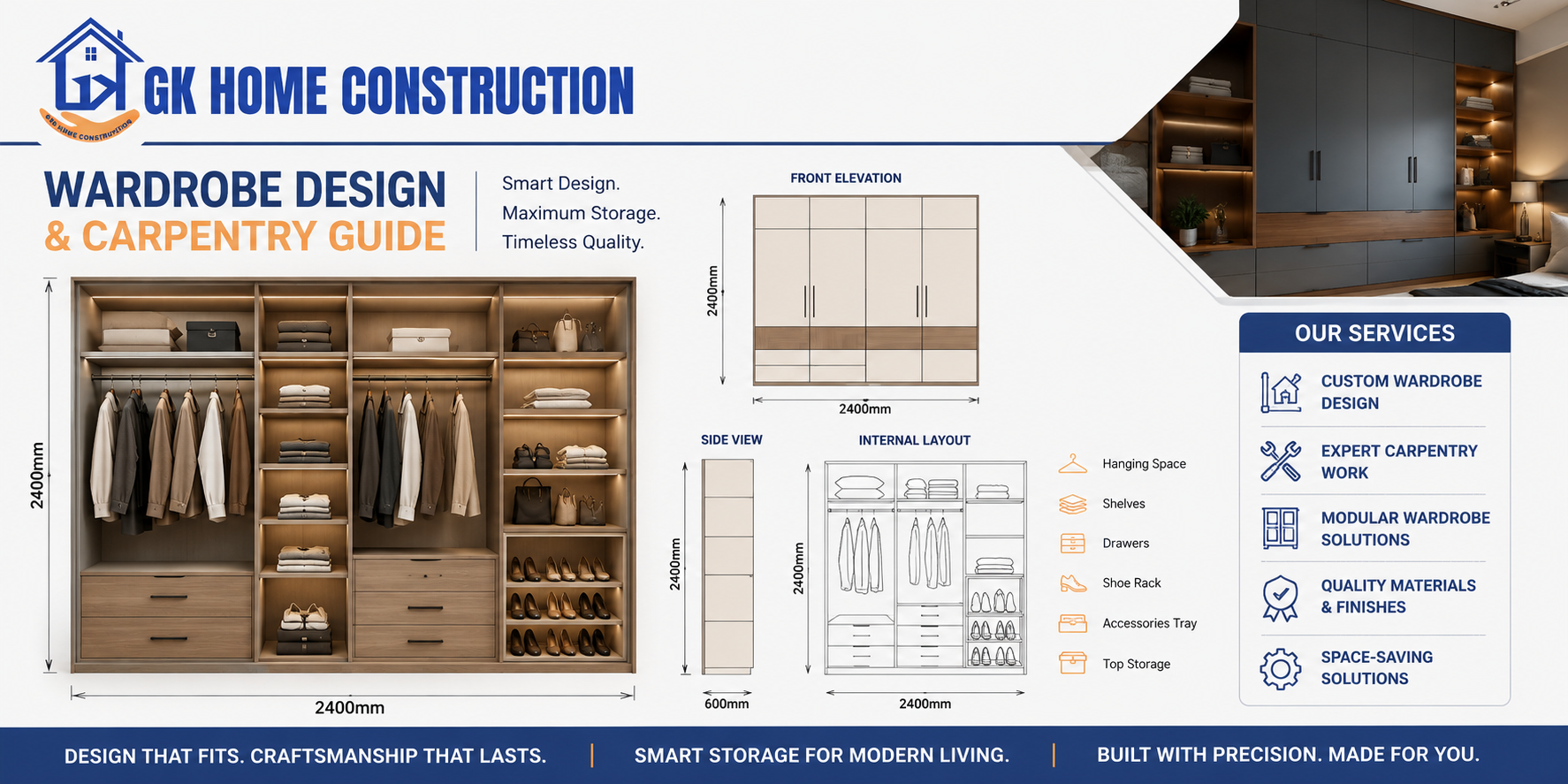
A well-designed wardrobe is not just about external appearance; internal layout is equally important. Efficient space planning ensures maximum utilization and convenience. The internal structure should include a combination of hanging rods, shelves, drawers, and compartments.
Long hanging sections are ideal for dresses and coats, while shorter sections are used for shirts and trousers. Drawers are useful for storing accessories, undergarments, and smaller items. Adjustable shelves add flexibility, allowing you to modify the storage as your needs change over time.
Incorporating modern accessories such as pull-out trays, tie racks, shoe racks, and soft-close drawers enhances functionality. These features not only improve organization but also add a touch of luxury to your wardrobe.
Role of Carpentry in Wardrobe Design
Carpentry is the backbone of any custom wardrobe. Skilled carpentry ensures precision, durability, and a flawless finish. Unlike modular solutions, custom carpentry allows complete personalization, enabling you to design a wardrobe that perfectly fits your space and style.
Professional carpenters focus on accurate measurements, proper alignment, and sturdy construction. They ensure that joints are strong, surfaces are smooth, and fittings are secure. Good carpentry also involves selecting the right hardware, such as hinges, handles, and channels, which contribute to the overall performance and longevity of the wardrobe.
Investing in experienced carpentry services is crucial to avoid issues such as misalignment, poor finishing, and structural weaknesses. Quality workmanship ensures that your wardrobe remains functional and visually appealing for years.
Space Optimization Techniques
In modern homes where space is often limited, optimizing every inch becomes essential. Wardrobe design should focus on making the most of available space without compromising on usability. Floor-to-ceiling wardrobes are a way to maximize vertical space, providing additional storage for rarely used items.
Corner wardrobes can effectively utilize otherwise unused spaces. Sliding doors help save room space, while mirrored shutters create an illusion of a larger area. Loft storage above the wardrobe is another practical solution for storing seasonal items.
Smart design techniques ensure that even small bedrooms can have efficient and stylish wardrobes. A well-optimized wardrobe not only improves storage but also enhances the overall look and feel of the room.
Aesthetic Considerations
A wardrobe should seamlessly blend with the overall interior design of your home. The choice of colors, finishes, and textures should complement the room’s theme. Neutral shades such as white, beige, and grey are timeless and versatile, while bold colors can create a statement look.
Glass panels, mirrors, and decorative laminates can add visual interest and elegance. Lighting is another important aspect that is often overlooked. Internal LED lighting improves visibility and adds a premium touch to the wardrobe.
Consistency in design elements ensures a cohesive look, making the wardrobe an integral part of the room rather than just a storage unit.
Maintenance and Durability
Proper maintenance is essential to ensure the longevity of your wardrobe. Regular cleaning, avoiding excessive moisture, and handling doors and drawers carefully can significantly extend its lifespan. Choosing high-quality materials and hardware reduces the need for frequent repairs.
Periodic inspection of hinges, channels, and fittings helps to identify and fix minor issues before they become a major problems. A well-maintained wardrobe not only lasts longer but also continues to look as good as new.
Conclusion
Wardrobe design and carpentry are crucial elements of home interiors that require careful planning and execution. From understanding storage needs to selecting materials, designing layouts, and ensuring quality carpentry, every step plays a vital role in creating a functional and stylish wardrobe.