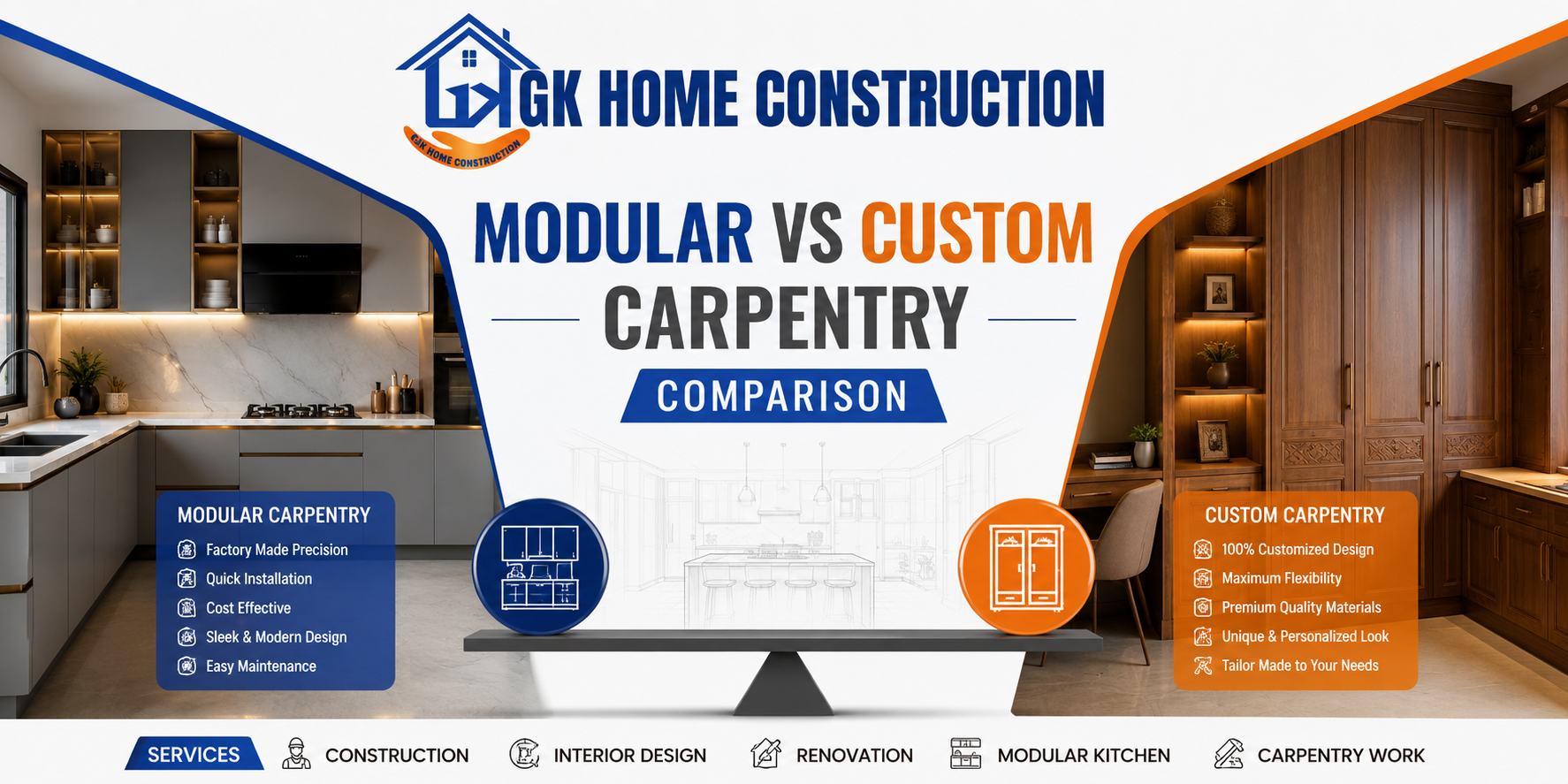
Modular vs Custom Carpentry – A Complete Comparison for Modern Homes
When planning interiors for a home, one of the most important decisions revolves around carpentry. From wardrobes and kitchen cabinets to TV units and storage solutions, carpentry defines both functionality and aesthetics. Today, homeowners are often facing a key choice: modular carpentry or custom carpentry. While both approaches serve the same purpose, they differ significantly in design flexibility, cost, durability, and execution.
Understanding the difference between modular and custom carpentry is essential before making a decision, especially if you are planning a balance between budget, quality, and long-term usability.
What is Modular Carpentry?
Modular carpentry refers to factory-made furniture or components that are manufactured in standardized sizes and then assembled on-site. These units are designed using pre-engineered modules, making them quicker to install and easier to manage.
Modular solutions are commonly used in kitchens, wardrobes, office furniture, and storage systems. They come in pre-designed formats, where customers can choose from a catalog of finishes, layouts, and configurations. Since most of the work is completed in a controlled factory environment, the final product maintains uniformity in quality and finish.
One of the biggest advantages of modular carpentry is speed. Installation is typically fast, with minimal on-site labor required. Additionally, the finishes are usually machine-applied, resulting in a sleek and modern look that appeals to contemporary homeowners.
What is Custom Carpentry?
Custom carpentry, on the other hand, is completely tailor-made according to the client’s requirements. Everything is built from scratch on-site or in a local workshop, based on the available space, design preferences, and functional needs.
This approach allows for maximum flexibility. Whether it’s an unusual corner, a specific design idea, or a unique storage requirement, custom carpentry can accommodate it all. Skilled carpenters work closely with designers or homeowners to create personalized solutions that perfectly fit the space.
Custom carpentry is often preferred for traditional homes, luxury interiors, or projects where uniqueness and detailing are a priority. It allows for intricate designs, customized finishes, and the use of specific materials chosen by the client.
Design Flexibility and Creativity
When it comes to design freedom, custom carpentry clearly stands out. Since everything is built from scratch, there are no limitations in terms of size, shape, or style. You can experiment with intricate carvings, unique layouts, and unconventional designs.
Modular carpentry, while versatile, operates within a predefined system. The designs are limited to available modules and standard sizes. Although many brands offer a wide range of options, there is still a boundary when compared to the limitless possibilities of custom work.
For homeowners seeking a highly personalized interior, custom carpentry provides unmatched creative freedom. However, for those who prefer modern, clean, and functional designs, modular solutions are more than sufficient.
Cost Considerations
Cost is a major factor in any construction or interior project. Modular carpentry is generally more cost-effective because it is produced in bulk. The manufacturing process is optimized by reducing labor costs and material wastage.
Custom carpentry, however, can be more expensive due to the involvement of skilled labor, longer execution time, and the use of customized materials. The price can vary significantly depending on the design and the quality of materials used.
That said, modular carpentry may involve additional costs for transportation, installation, and after-sales services. Custom carpentry, while initially expensive, may offer better long-term value if executed with high-quality materials.
Time and Execution
Time is another critical factor, especially in fast-paced urban projects. Modular carpentry is known for its quick turnaround time. Since the components are pre-manufactured, installation can be completed within days.
Custom carpentry takes considerably longer. The process involves design discussions, material procurement, fabrication, and finishing, which will happen sequentially. This can extend the project timeline accordingly.
If you are working on a tight schedule, modular carpentry is the more practical choice. However, if time is not a constraint and quality craftsmanship is a priority, custom carpentry is worth the wait.
Quality and Durability
The quality of modular carpentry is consistent because it is produced in a controlled environment using advanced machinery. However, the materials used are often standardized, which may not always match premium-grade custom materials.
Custom carpentry allows you to choose the exact materials, whether it’s high-quality plywood, hardwood, or specialized finishes. This gives you better control over durability and longevity.
That said, the durability of custom carpentry will depend on the skill of the carpenter. Poor workmanship can lead to issues over time, whereas modular units generally maintain consistent quality due to factory precision.
Maintenance and Repairs
Modular carpentry has an advantage in maintenance. Since it is built using modules, individual parts can be replaced or repaired without affecting the entire structure. Many modular providers also offer warranties and after-sales services.
Custom carpentry can be more challenging to repair. Since it is built as a single unit, fixing a damaged section may require extensive work. Additionally, finding the same materials or finishes later can be difficult.
For homeowners looking for convenience and easy maintenance, modular carpentry is a more practical option.
Aesthetic Appeal
Both modular and custom carpentry can deliver excellent aesthetics, but in different ways. Modular carpentry is known for its sleek, modern, and minimalist look. It is ideal for contemporary homes and urban apartments.
Custom carpentry offers a more personalized and often richer appearance. It is perfect for those who appreciate craftsmanship, detailing, and unique designs. Traditional and luxury interiors often rely on custom carpentry to achieve a distinctive look.
Which One Should You Choose?
Choosing between modular and custom carpentry ultimately depends on your priorities. If you value speed, affordability, and modern aesthetics, modular carpentry is the better choice. It is especially suitable for apartments, rental properties, and projects with tight timelines.
On the other hand, if you are looking for uniqueness, flexibility, and high-end finishes, custom carpentry is the way to go. It is ideal for independent houses, villas, and projects where personalization is key.
In many cases, a hybrid approach will be best. For example, you can opt for modular kitchens and wardrobes while choosing custom carpentry for living room units or decorative elements. This helps you to balance cost, design, and functionality effectively.
Final Thoughts
Both modular and custom carpentry have their own strengths and limitations. There is no one-size-fits-all solution, and the right choice depends on your budget, design vision, and project timeline.
As the construction and interior industry continues to evolve, homeowners now have more options than ever before. By understanding the differences between modular and custom carpentry, you can make an informed decision that enhances both the beauty and functionality of your space.