Types of Electrical Planning Before House Construction
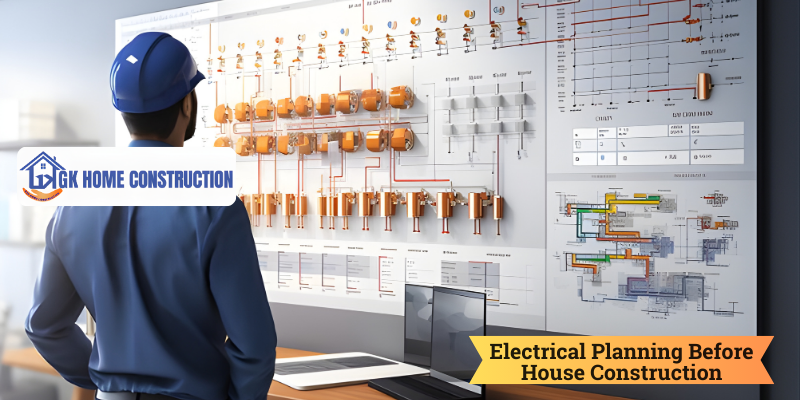
One of the most important—yet frequently overlooked—aspects of building a home is electrical planning. A home's safety, comfort, energy efficiency, and future readiness are all guaranteed by careful electrical design completed prior to construction. Pre-construction electrical planning incorporates electrical systems into the house's structural design, in contrast to surface-level wiring choices made during finishing stages. This strategy prevents future safety hazards, needless costs, and repeated adjustments. Understanding the many forms of electrical planning required before construction is crucial for homeowners designing a contemporary, practical, and future-proof home.
Basic Electrical Layout Planning
The foundation of a home's whole electrical system is basic electrical layout planning. This step entails mapping the locations of switches, plug points, light fixtures, and distribution boards, as well as determining the total power requirements. Each room is examined according to its size, purpose, and usage trends. To support daily activities, diverse electrical configurations are needed in living rooms, kitchens, baths, bedrooms, and outdoor areas. In order to guarantee correct placement without compromising structural components like beams and columns, the electrical plan is currently linked with the architectural plans. A well-thought-out basic layout guarantees easy access to electrical outlets while preserving safety and aesthetic harmony.
The foundation of a home's whole electrical system is basic electrical layout planning. This step entails mapping the locations of switches, plug points, light fixtures, and distribution boards, as well as determining the total power requirements. Each room is examined according to its size, purpose, and usage trends. To support daily activities, diverse electrical configurations are needed in living rooms, kitchens, baths, bedrooms, and outdoor areas. In order to guarantee correct placement without compromising structural components like beams and columns, the electrical plan is currently linked with the architectural plans. A well-thought-out basic layout guarantees easy access to electrical outlets while preserving safety and aesthetic harmony.
Lighting Planning for Residential Spaces
A specific area of electrical design called lighting planning aims to improve both usability and aesthetic appeal. Different types and intensities of lighting are needed in different parts of a house, such as task lighting for study rooms and kitchens, ambient lighting for living areas, and soft lighting for beds. Concealed wiring for wall-mounted fixtures, outdoor lighting, cove lighting, and ceiling lights is made possible by electrical design prior to construction. In order to lessen reliance on artificial lighting during the day, proper lighting design also takes into account the availability of natural light. Early lighting planning helps avoid surface conduits and enhances the interior's overall quality.
A specific area of electrical design called lighting planning aims to improve both usability and aesthetic appeal. Different types and intensities of lighting are needed in different parts of a house, such as task lighting for study rooms and kitchens, ambient lighting for living areas, and soft lighting for beds. Concealed wiring for wall-mounted fixtures, outdoor lighting, cove lighting, and ceiling lights is made possible by electrical design prior to construction. In order to lessen reliance on artificial lighting during the day, proper lighting design also takes into account the availability of natural light. Early lighting planning helps avoid surface conduits and enhances the interior's overall quality.
Power Socket and Appliance Load Planning
Planning for power outlets is crucial for modern homes, which rely significantly on a variety of electrical gadgets. Electrical experts determine the electrical load needed for products like air conditioners, refrigerators, washing machines, ovens, geysers, and induction cooktops prior to installation. For heavy-load appliances, dedicated power outlets are designed to avoid overload and frequent tripping. Extension cords and dangerous wiring techniques can be prevented with proper socket location. This kind of planning also takes future appliance additions into account, guaranteeing that the house will continue to be flexible as lifestyle demands change.
Planning for power outlets is crucial for modern homes, which rely significantly on a variety of electrical gadgets. Electrical experts determine the electrical load needed for products like air conditioners, refrigerators, washing machines, ovens, geysers, and induction cooktops prior to installation. For heavy-load appliances, dedicated power outlets are designed to avoid overload and frequent tripping. Extension cords and dangerous wiring techniques can be prevented with proper socket location. This kind of planning also takes future appliance additions into account, guaranteeing that the house will continue to be flexible as lifestyle demands change.
Electrical Safety and Circuit Planning
Planning for electrical safety is an essential part of electrical design before construction. This entails breaking up the electrical system into several circuits in order to spread the load uniformly and avoid overheating. Heavy electrical equipment, kitchen appliances, power outlets, and lighting all have their own circuits. The design incorporates appropriate earthing systems, residual current devices (RCDs), and tiny circuit breakers (MCBs). In addition to ensuring adherence to electrical safety regulations, planning these safety precautions during the building process lowers the possibility of electrical fires, shocks, and equipment damage over time.
Energy-Efficient Electrical Planning
The goal of energy-efficient electrical planning is to use less electricity while yet being comfortable. This includes making plans for energy-efficient appliances, LED lights, and wiring paths that reduce power loss. Prior to construction, electrical planning enables the appropriate placement of switches and controls to prevent wasteful energy use. Power usage in various parts of the house can be managed with the use of smart electrical circuit zoning. Early implementation of energy-efficient planning lowers monthly electricity costs and promotes environmental responsibility and long-term sustainability.
Smart Home and Automation Planning
Electrical planning prior to construction is crucial for incorporating automation systems in light of the increasing demand for smart houses. Structured wiring and specialized power sources are needed for smart lighting, automated curtains, security systems, video door phones, and centralized control panels. Redesign, surface wiring, and drilling are not necessary if these systems are planned for during construction. Future updates can be planned for even if complete automation is not implemented right away. This innovative strategy improves homeowners' convenience and raises the property's worth.
Electrical planning prior to construction is crucial for incorporating automation systems in light of the increasing demand for smart houses. Structured wiring and specialized power sources are needed for smart lighting, automated curtains, security systems, video door phones, and centralized control panels. Redesign, surface wiring, and drilling are not necessary if these systems are planned for during construction. Future updates can be planned for even if complete automation is not implemented right away. This innovative strategy improves homeowners' convenience and raises the property's worth.
Backup Power and Inverter Planning
In residential construction, where a steady power supply is crucial for both comfort and safety, power backup planning is particularly crucial. Allocating space and wiring for inverters, UPS systems, or generators is part of electrical planning prior to construction. Essential appliances like lights, fans, and refrigerators will be connected to backup power sources via dedicated circuits. Appliance damage is avoided, and a safe switchover during power outages is ensured by proper inverter wiring. If homeowners decide to use renewable energy sources in the future, early planning enables the smooth integration of solar power systems.
In residential construction, where a steady power supply is crucial for both comfort and safety, power backup planning is particularly crucial. Allocating space and wiring for inverters, UPS systems, or generators is part of electrical planning prior to construction. Essential appliances like lights, fans, and refrigerators will be connected to backup power sources via dedicated circuits. Appliance damage is avoided, and a safe switchover during power outages is ensured by proper inverter wiring. If homeowners decide to use renewable energy sources in the future, early planning enables the smooth integration of solar power systems.
Communication and Low-Voltage Wiring Planning
In addition to electrical power, low-voltage systems and communication are essential for modern homes. TV cables, internet wiring, intercom systems, CCTV cameras, and doorbell systems are all included in electrical design prior to building. These cables will be accommodated via concealed pipes that won't interfere with high-voltage cabling. Effective separation of high-voltage and low-voltage systems guarantees smooth operation and avoids interference. This kind of design encourages dependable communication across the home and a tidy interior finish.
In addition to electrical power, low-voltage systems and communication are essential for modern homes. TV cables, internet wiring, intercom systems, CCTV cameras, and doorbell systems are all included in electrical design prior to building. These cables will be accommodated via concealed pipes that won't interfere with high-voltage cabling. Effective separation of high-voltage and low-voltage systems guarantees smooth operation and avoids interference. This kind of design encourages dependable communication across the home and a tidy interior finish.
Outdoor and Landscape Electrical Planning
Although outdoor electrical planning is sometimes disregarded, it is just as crucial for both safety and aesthetics. Garden lighting, driveway lighting, boundary wall lighting, and outdoor power points are all planned electrical plans prior to installation. Subterranean conduits and weatherproof fixtures are designed to endure environmental factors. A well-planned outdoor electrical system increases security, makes outside areas more useful, and improves the home's aesthetic appeal at night. Planning ahead keeps landscaping efforts intact by preventing later excavation and surface wiring.
Although outdoor electrical planning is sometimes disregarded, it is just as crucial for both safety and aesthetics. Garden lighting, driveway lighting, boundary wall lighting, and outdoor power points are all planned electrical plans prior to installation. Subterranean conduits and weatherproof fixtures are designed to endure environmental factors. A well-planned outdoor electrical system increases security, makes outside areas more useful, and improves the home's aesthetic appeal at night. Planning ahead keeps landscaping efforts intact by preventing later excavation and surface wiring.
Future Expansion and Flexibility Planning
Flexibility for future growth is one of the most significant advantages of pre-construction electrical planning. Future plans for home offices, extra rooms, or new electrical equipment may be made by homeowners. By including extra conduits, spare circuits, and enough capacity in distribution boards, electrical planning anticipates these changes. This anticipation avoids future disruption and lowers remodeling expenses. For many years to come, the house will continue to be efficient and functional thanks to a flexible electrical system.
Flexibility for future growth is one of the most significant advantages of pre-construction electrical planning. Future plans for home offices, extra rooms, or new electrical equipment may be made by homeowners. By including extra conduits, spare circuits, and enough capacity in distribution boards, electrical planning anticipates these changes. This anticipation avoids future disruption and lowers remodeling expenses. For many years to come, the house will continue to be efficient and functional thanks to a flexible electrical system.
In conclusion
Prior to building a home, electrical planning is a thorough process that goes beyond simple wiring choices. Architectural design, safety regulations, energy efficiency, contemporary technology, and future requirements must all be carefully coordinated. Homeowners can prevent expensive upgrades, improve safety, and enjoy a comfortable living environment by addressing various forms of electrical planning early on. Professional electrical design is a crucial component of successful residential building since it demonstrates quality, dependability, and long-term value for a construction firm like GK Home Construction.
Prior to building a home, electrical planning is a thorough process that goes beyond simple wiring choices. Architectural design, safety regulations, energy efficiency, contemporary technology, and future requirements must all be carefully coordinated. Homeowners can prevent expensive upgrades, improve safety, and enjoy a comfortable living environment by addressing various forms of electrical planning early on. Professional electrical design is a crucial component of successful residential building since it demonstrates quality, dependability, and long-term value for a construction firm like GK Home Construction.