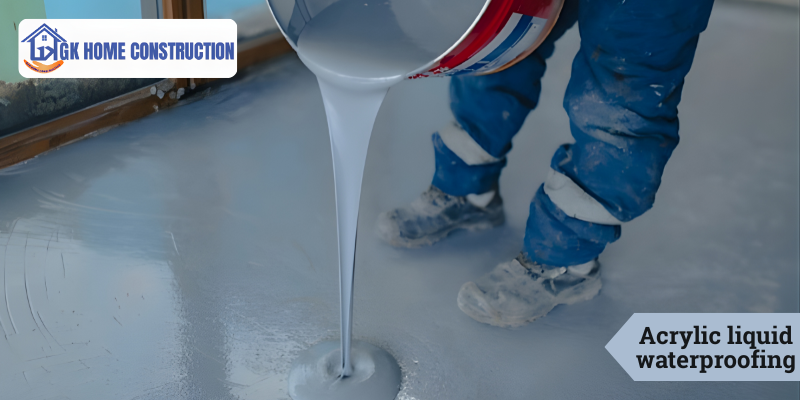
Liquid Waterproofing Acrylic is a water-based, polymer-modified coating system formulated to create a seamless, flexible, and durable waterproof membrane over exposed surfaces. It is commonly used in residential, commercial, and industrial construction projects because of its ease of application, eco-friendliness, and excellent resistance to weathering. When applied and cured, acrylic waterproofing forms an elastic film that provides an effective barrier against water penetration while allowing minor structural movement and thermal expansion, making it ideal for new and existing construction projects.
Composition and Working Principle
The main constituents of liquid acrylic waterproofing are acrylic polymers, fillers, additives, and water. Acrylic polymers are responsible for flexibility and adhesion properties, while fillers increase strength. When applied to a surface, the water evaporates, and the acrylic polymers coalesce to form a joint-free waterproofing membrane. This membrane has strong adhesive properties to concrete, cement plaster, brickwork, metal, and asbestos sheets. The membrane ensures that water does not penetrate the surface.
Key Properties and Performance Characteristics
One of the key benefits of acrylic liquid waterproofing is its high elasticity, which makes it capable of spanning hairline cracks and withstanding slight movements of the structure without cracking or peeling. It also has high resistance to UV rays, which means that it will not degrade, chalk, or change color when exposed to sunlight. The waterproofing material is also breathable, which allows the vapor of trapped moisture to escape while preventing the entry of external water. Acrylic waterproofing systems are also non-toxic and have low VOCs.
Areas of Application
Acrylic liquid waterproofing is normally applied to terraces, roof slabs, balconies, external walls, parapet walls, and sloping roofs. It can also be applied to metal roofs, asbestos cement sheets, and existing waterproofing layers during repair and refurbishment work. However, due to its water-based composition, acrylic liquid waterproofing is not normally recommended for permanently water-submerged areas such as underground basements and water tanks unless additional protective measures are employed.
Acrylic liquid waterproofing is normally applied to terraces, roof slabs, balconies, external walls, parapet walls, and sloping roofs. It can also be applied to metal roofs, asbestos cement sheets, and existing waterproofing layers during repair and refurbishment work. However, due to its water-based composition, acrylic liquid waterproofing is not normally recommended for permanently water-submerged areas such as underground basements and water tanks unless additional protective measures are employed.
Application Method and Surface Preparation
For optimal performance, it is important to ensure proper surface preparation. The surface should be free from dust, oil, algae, or loose particles. Cracks and joints should be repaired using appropriate fillers or sealants before applying the material. Acrylic liquid waterproofing is usually applied using a brush, roller, or spray in two or more layers, with each layer applied at right angles to the previous layer. Reinforcement fabric can be incorporated in corners, joints, and cracks to improve durability and resistance to cracking.
For optimal performance, it is important to ensure proper surface preparation. The surface should be free from dust, oil, algae, or loose particles. Cracks and joints should be repaired using appropriate fillers or sealants before applying the material. Acrylic liquid waterproofing is usually applied using a brush, roller, or spray in two or more layers, with each layer applied at right angles to the previous layer. Reinforcement fabric can be incorporated in corners, joints, and cracks to improve durability and resistance to cracking.
Advantages and Disadvantages
The key benefits of acrylic liquid waterproofing are easy application, fast drying, high flexibility, resistance to UV rays, and economy. It is low on maintenance and can be recoated easily after a few years. The drawbacks of acrylic liquid waterproofing are that it is not suitable for continuously wet or immersed conditions and is not ideal for application in rain or high humidity conditions.
The key benefits of acrylic liquid waterproofing are easy application, fast drying, high flexibility, resistance to UV rays, and economy. It is low on maintenance and can be recoated easily after a few years. The drawbacks of acrylic liquid waterproofing are that it is not suitable for continuously wet or immersed conditions and is not ideal for application in rain or high humidity conditions.
Durability and Maintenance
If properly applied, acrylic liquid waterproofing has a service life of 5 to 10 years, depending on the conditions of exposure, surface preparation, and maintenance. Regular inspections and reapplication of top coats can extend the service life of acrylic liquid waterproofing.
If properly applied, acrylic liquid waterproofing has a service life of 5 to 10 years, depending on the conditions of exposure, surface preparation, and maintenance. Regular inspections and reapplication of top coats can extend the service life of acrylic liquid waterproofing.
Conclusion
Liquid acrylic waterproofing is a trustworthy, flexible, and eco-friendly method for protecting exposed building surfaces from water infiltration. The seamless application, ability to bridge cracks, and resistance to UV and weathering make it an excellent option for terraces, roofs, and exterior walls, particularly in regions with high rainfall and temperature fluctuations. When properly chosen and applied, acrylic waterproofing is an excellent way to improve the durability of building structures.
Liquid acrylic waterproofing is a trustworthy, flexible, and eco-friendly method for protecting exposed building surfaces from water infiltration. The seamless application, ability to bridge cracks, and resistance to UV and weathering make it an excellent option for terraces, roofs, and exterior walls, particularly in regions with high rainfall and temperature fluctuations. When properly chosen and applied, acrylic waterproofing is an excellent way to improve the durability of building structures.