Understanding the Importance of Waterproofing in Aging Structures
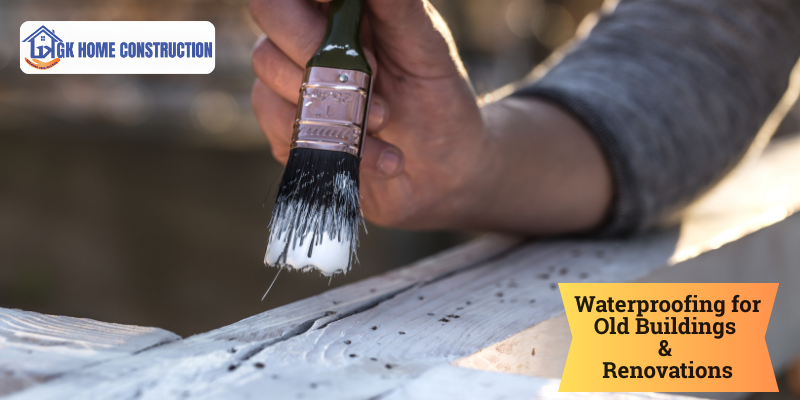
As buildings grow older, they become increasingly exposed to water seepage, dampness, cracks, and moisture-related deterioration. Continuous exposure to rain, humidity, groundwater, and plumbing leaks can gradually affect roofs, walls, bathrooms, foundations, and other structural areas. During renovation, waterproofing should therefore be considered an important part of the restoration process. A properly planned waterproofing system helps protect the building, improve durability, and reduce recurring repair requirements.
Common Waterproofing Problems in Old Buildings

Aging structures can develop several water-related problems, including roof leakage, terrace seepage, rising dampness, wall stains, bathroom leakage, basement moisture, and cracks around joints. Damaged plumbing pipes and blocked drainage systems can also contribute to persistent dampness. In older buildings, existing waterproofing layers may have deteriorated or become ineffective over time. Identifying the actual source of moisture before renovation is essential for selecting the appropriate waterproofing solution.
Inspection Before Starting Waterproofing Work
A detailed inspection should be carried out before applying any waterproofing treatment. Professionals should check roofs, terraces, external walls, bathrooms, foundations, basements, plumbing lines, drainage points, and construction joints. Cracks, loose plaster, damaged concrete, hollow surfaces, and deteriorated sealants should be identified during this stage.
Moisture-affected areas should be cleaned properly, removing dust, algae, loose particles, old coatings, and other contaminants. Cracks and damaged surfaces must be repaired before waterproofing begins. Good surface preparation creates a stronger bond between the substrate and waterproofing material and can significantly improve the performance of the treatment.
Choosing the Right Waterproofing Method
There is no single waterproofing method suitable for every part of an aging building. The treatment should be selected according to the location, source of leakage, surface condition, and severity of water penetration.
For roofs and terraces, liquid-applied membranes, polyurethane coatings, and other flexible waterproofing systems may be considered. Bathrooms and other wet areas commonly require cementitious or suitable chemical waterproofing systems. Basements and foundations may require crystalline waterproofing, injection grouting, or external waterproofing depending on site conditions. Proper diagnosis is important because simply covering visible damp patches may not address the underlying source of water entry.
Benefits of Waterproofing During Renovation

Combining waterproofing with renovation provides several long-term benefits. It helps protect walls, concrete, plaster, finishes, and other building components from moisture damage. It can also reduce problems such as peeling paint, mould growth, musty smells, damp patches, and deterioration of interior finishes.
Addressing waterproofing during renovation can also reduce the need to repeatedly remove tiles, repaint walls, or repair damaged surfaces caused by recurring leakage. A well-planned waterproofing system therefore supports better maintenance and helps extend the useful life of the renovated building.
Importance of Professional Waterproofing Services
Waterproofing an aging structure can be more complex than treating a newly constructed building. Existing cracks, old materials, hidden plumbing problems, structural movement, and previous waterproofing layers may affect the outcome. Experienced waterproofing professionals can inspect these conditions and recommend a treatment based on the building's requirements.
Professional execution also helps ensure correct surface preparation, material application, curing, joint treatment, and drainage arrangements. Where appropriate, documentation and warranty terms can provide homeowners with additional information about the waterproofing work and maintenance requirements.
Maintenance After Waterproofing

Waterproofing should not be treated as a one-time solution that eliminates the need for maintenance. Roofs, terraces, drainage outlets, plumbing connections, bathrooms, and external walls should be inspected periodically. Leaves and debris should be removed from drainage points, while cracks and damaged sealants should be repaired at an early stage.
Regular maintenance helps identify potential problems before they develop into extensive water damage. Timely attention can also help preserve the effectiveness of the waterproofing system for a longer period.
Conclusion
Waterproofing is an important part of renovating aging structures because moisture can gradually affect both the appearance and performance of a building. Proper inspection, surface preparation, suitable waterproofing methods, professional application, and regular maintenance can provide better protection against water-related problems. By addressing waterproofing during renovation rather than after damage becomes severe, property owners can create a healthier, more durable, and better-protected living environment.