Waterproofing During vs After Construction: Key Differences
Waterproofing is an important part of building. Moisture can enter through roofs, terraces, bathrooms, balconies, basements, external walls, and other vulnerable areas. When water penetration occurs, it leads to damp walls, peeling paint, mould growth, damaged plaster, corrosion of reinforcement, and costly repairs.
One important decision for homeowners is whether waterproofing should be carried out during construction or after construction. Although both approaches can protect a building from water-related problems, they differ significantly in preparation, accessibility, application methods, cost control, and long-term maintenance.
Understanding these differences which help homeowners plan the right waterproofing solution for their house.
What Is Waterproofing During Construction?
Waterproofing during construction means incorporating moisture protection into the building at the appropriate construction stages. It is planned before areas such as bathrooms, terraces, basements, roofs, balconies, and foundations are finished.
For example, waterproofing may be installed before floor tiles are laid in bathrooms or before protective layers and finishes are completed on a terrace. Depending on the location and design, contractors may use cementitious coatings, liquid-applied membranes, polyurethane systems, bituminous membranes, protective screeds, or other suitable systems.
The major advantage is that waterproofing becomes part of the building system rather than an afterthought.
Benefits of Waterproofing During Construction
1. Better Surface Preparation
New construction provides direct access to the substrate. Contractors can inspect concrete, masonry, joints, corners, pipe penetrations, and other vulnerable areas before they are covered.
Proper surface preparation improves the performance of the waterproofing system.
2. Easier Treatment of Critical Areas
Bathrooms, balconies, terraces, foundations, and roofs contain several potential leakage points. During construction, these areas will be treated before tiling, plaster, flooring, or other finishes hide them.
This makes it easier to seal junctions, drainage points, construction joints, and service penetrations.
3. Reduced Risk of Future Damage
Preventive waterproofing can reduce the possibility of water entering the building structure. Early protection is particularly important for areas that experience frequent water exposure.
4. Better Integration With Other Building Work
Waterproofing can be coordinated with plumbing, drainage, electrical conduits, flooring, plastering, and other construction activities. This reduces the risk of one trade damaging another completed layer.
5. Easier Quality Inspection
Before the final finishes, contractors can inspect the waterproofed surface and carry out appropriate testing. Make sure all defects are corrected before the area is covered.
What Is Waterproofing After Construction?
Post-construction waterproofing is carried out after a building has already been completed or when an existing property develops signs of water leakage.
Typical problems include:
- Terrace leakage
- Bathroom seepage
- Damp walls
- Balcony leakage
- Basement moisture
- Roof cracks
- External wall dampness
- Leakage around plumbing pipes
- Water entering through construction joints.
Post-construction waterproofing can involve crack repair, surface preparation, injection treatment, cementitious coatings, liquid waterproofing, polyurethane systems, bituminous membranes, protective coatings, or other repair methods.
Benefits of Waterproofing After Construction
1. Suitable for Existing Homes
If a house construction is completed, post-construction waterproofing provides a practical way to address leakage without rebuilding the entire property.
2. Targets Existing Problems
Contractors can inspect visible symptoms and investigate potential leakage sources before selecting a treatment.
3. Useful During Renovation
Waterproofing can be combined with bathroom renovation, terrace repairs, roof maintenance, or other remodeling work. This provides an opportunity to correct moisture-related issues while other surfaces are being renovated.
4. Different Repair Options Are Available
The solution can be selected according to the specific problem. A small crack, for example, may require a different treatment from widespread terrace seepage or basement water penetration.
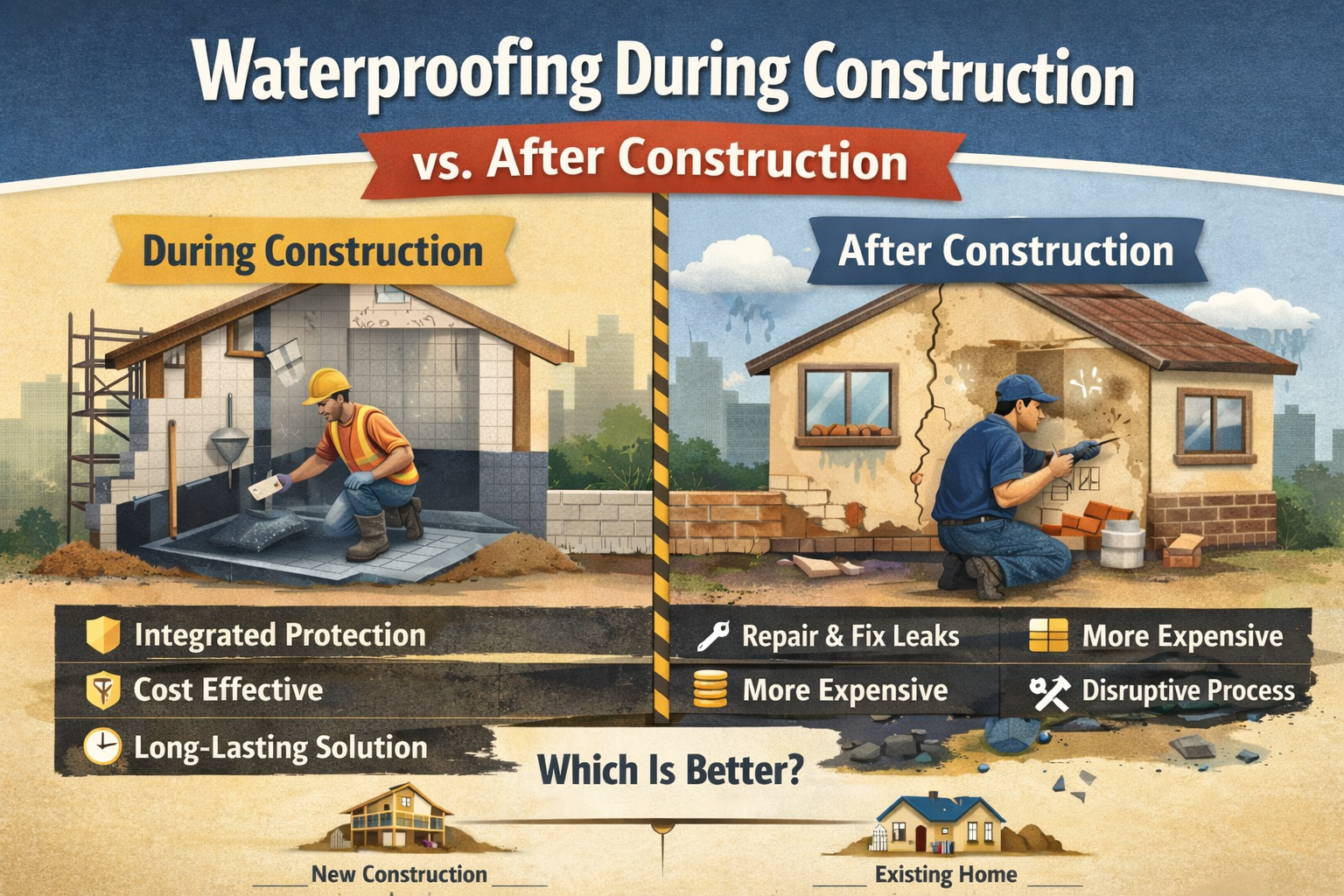
Waterproofing During vs After Construction: Key Differences
The biggest difference is prevention versus correction.
During construction, waterproofing is planned before finishes cover important surfaces. After construction, waterproofing is generally performed to address existing leakage, deterioration, or vulnerable areas.
Another major difference is accessibility. New construction usually provides easier access to structural surfaces, while post-construction work may require removal of tiles, damaged plaster, flooring, or other finishes.
Quality control can also be easier during construction because waterproofing layers can be inspected before they are concealed.
However, post-construction waterproofing remains extremely valuable because many existing buildings require repair or additional protection as they age.
Which Waterproofing Approach Is Better?
For a new home, waterproofing during construction is generally the preferred approach because it allows moisture protection to be integrated into the building process.
For an existing house, post-construction waterproofing may be the practical solution, particularly when leakage has already appeared.
The correct method should not be selected based only on the product name. Contractors should first identify the source of moisture, inspect the substrate, check drainage and plumbing, examine cracks and joints, and understand the area’s exposure to water.
Common Mistakes to Avoid
Homeowners should avoid applying a waterproofing coating over a dirty, loose, or poorly prepared surface. Blocking drainage outlets, ignoring cracks, treating only visible damp patches, and skipping inspection can also reduce the effectiveness of waterproofing.
Another common mistake is choosing a waterproofing system without considering whether the area is a bathroom, terrace, basement, roof, balcony, or external wall.
Final Thoughts
The choice between waterproofing during construction and waterproofing after construction depends largely on the stage of the building and the condition of the affected area. Waterproofing during construction offers better access, planning, integration, and preventive protection, while post-construction waterproofing provides effective repair options for completed homes.
For long-term results, treat waterproofing as an essential part of construction and maintenance rather than a temporary fix for leaks. Proper inspection, surface preparation, drainage planning, material selection, application, and quality checks are all important for achieving durable protection.
For homeowners planning a new house or renovating an existing property, professional waterproofing assessment can help identify vulnerable areas and select a suitable system before moisture problems become more expensive to repair.