Sustainable interior architecture is becoming an important part of modern home design as homeowners look for healthier, energy-efficient, durable, and environmentally responsible living spaces. Choosing the right sustainable interior architecture materials for homes can reduce environmental impact while creating interiors that are attractive, comfortable, and practical. From flooring and furniture to wall finishes and insulation, material selection plays a major role in creating a sustainable home.
For homeowners in Bangalore and other growing cities, sustainable interior design can also improve indoor comfort and reduce long-term maintenance. The key is to select materials based on durability, resource efficiency, recyclability, indoor air quality, and suitability for the local climate.
What Are Sustainable Interior Architecture Materials?
Sustainable materials are products selected and used in ways that reduce environmental impact throughout their life cycle. This includes how raw materials are sourced, manufactured, transported, installed, maintained, and eventually recycled or disposed of.
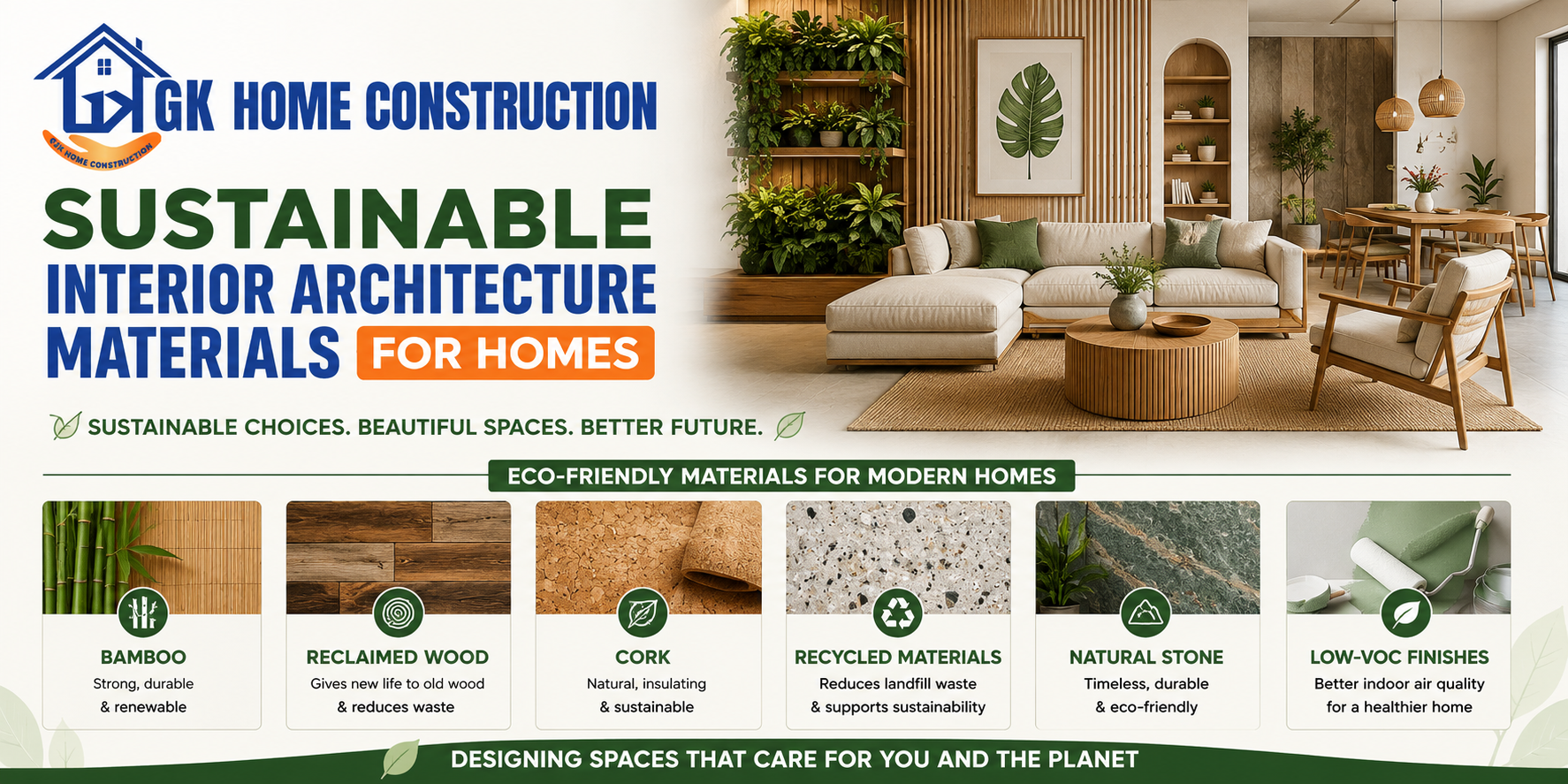
Examples include bamboo, reclaimed wood, recycled materials, natural stone, low-VOC paints, cork, recycled glass, and responsibly sourced timber. However, a material is not automatically sustainable simply because it is natural. Durability, transportation distance, processing methods, maintenance requirements, and end-of-life options should also be considered.
Bamboo for Sustainable Interiors

Bamboo is a popular sustainable material because it grows rapidly and can be used for flooring, wall panels, furniture, partitions, and decorative elements. Properly processed bamboo can provide strength and an attractive natural appearance.
In modern homes, bamboo can complement minimalist, contemporary, and nature-inspired interiors. It can be particularly useful for homeowners looking for alternatives to conventional timber products.
Reclaimed and Responsibly Sourced Wood

Wood brings warmth and character to residential interiors, but responsible sourcing is essential. Reclaimed wood gives old timber a new purpose and can reduce demand for newly harvested resources. It can be used for furniture, feature walls, ceiling details, doors, shelves, and decorative elements.
Where reclaimed wood is unsuitable, homeowners can consider timber from responsibly managed forests and look for credible certification. Proper finishing and maintenance can further extend the useful life of wooden interiors.
Low-VOC Paints and Finishes
Paints, adhesives, sealants, and coatings can influence indoor air quality. Traditional products may release volatile organic compounds (VOCs), which can contribute to indoor air pollution.
Choosing low-VOC or low-emission paints and finishes can be a better option for residential interiors. These products are available in a wide variety of colours and finishes, allowing homeowners to achieve attractive designs without unnecessarily compromising indoor air quality.
Sustainable Flooring Options

Flooring covers a large surface area, making material selection important in sustainable interior architecture. Options such as bamboo, cork, reclaimed timber, natural stone, and selected recycled-content flooring can provide durable alternatives.
Cork is particularly useful because it is lightweight, resilient, and comfortable underfoot. Natural stone can also have a long service life when sourced appropriately and installed correctly. The best choice depends on the room, moisture exposure, maintenance requirements, budget, and overall design concept.
Recycled and Recyclable Materials
Recycled materials can help reduce the demand for virgin resources. Recycled glass, recycled metal, recycled plastic composites, and other reclaimed materials can be incorporated into countertops, furniture, decorative panels, lighting fixtures, and accessories.
Designers can also consider materials that can be separated and recycled at the end of their useful life. This supports a more circular approach to interior design, where products and materials remain useful for as long as possible.
Natural Materials for Healthier Interiors

Materials such as clay, lime-based finishes, natural fibres, stone, and responsibly sourced wood can add texture and visual warmth to interiors. Natural materials can also help create a connection with the surrounding environment.
However, sustainability should always be considered alongside performance. Materials used in kitchens, bathrooms, and other high-moisture areas must be selected according to their resistance to water, staining, mould, and regular cleaning.
Sustainable Furniture and Modular Design
Sustainable interior architecture extends beyond construction materials. Furniture selection also affects the environmental footprint of a home. Durable furniture, repairable products, modular storage, and locally manufactured pieces can support more responsible consumption.
Built-in furniture should be planned carefully so that spaces remain functional as household needs change. Modular kitchens, wardrobes, storage systems, and adaptable furniture can reduce the need for frequent replacement.
Energy Efficiency and Material Selection
Material choices should work together with passive design strategies. Natural light, cross ventilation, shading, insulation, efficient windows, and appropriate space planning can reduce dependence on artificial lighting and mechanical cooling.
For homes in Bangalore, interior planning can be coordinated with the building's orientation, window placement, ventilation, and shading requirements. Sustainable materials are most effective when combined with an energy-efficient overall design approach.
How to Choose Sustainable Materials for Your Home
Homeowners should consider more than appearance and initial price when selecting materials. Evaluate durability, maintenance, recyclability, local availability, indoor air quality, manufacturing impact, and expected lifespan.
Buying durable materials may have a higher upfront cost but can reduce replacement and maintenance expenses over time. Local sourcing can also reduce transportation impacts while supporting regional manufacturers and craftsmen.
Sustainable Interior Design for Modern Homes
Sustainable interior architecture is not about sacrificing style for environmental responsibility. Modern homes can combine aesthetics, functionality, comfort, and resource efficiency through thoughtful material selection and planning.
From eco-friendly flooring and low-VOC paints to reclaimed wood, bamboo, recycled materials, and durable furniture, there are many ways to make residential interiors more sustainable. Working with experienced interior designers in Bangalore can help homeowners select suitable materials while considering climate, lifestyle, budget, maintenance, and long-term performance.
A well-planned sustainable interior can create a healthier and more comfortable home while reducing unnecessary resource consumption. The most successful approach is to consider sustainability from the earliest design stage and integrate material choices with efficient planning, natural light, ventilation, durability, and responsible construction practices.