


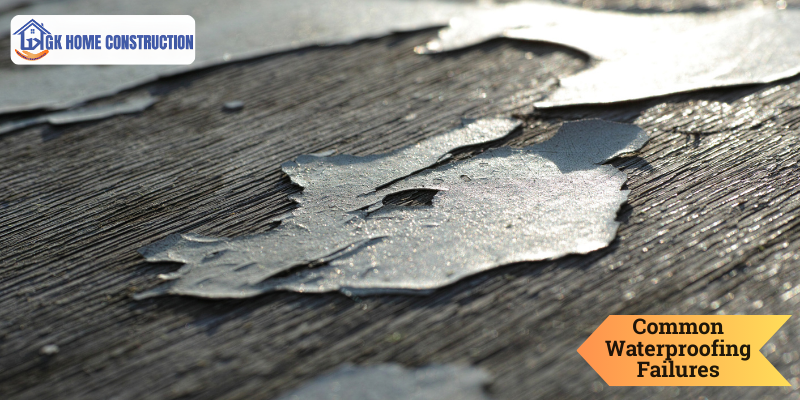
1. Poor Surface Preparation

One of the most common reasons for waterproofing failure is improper surface preparation. Dust, oil, loose particles, cracks, and moisture on the surface prevent waterproofing materials from bonding effectively. When the base surface is not cleaned, leveled, and repaired properly, the coating or membrane may peel off over time. To avoid this issue, surfaces must be thoroughly cleaned, dried, and treated for cracks or uneven areas before applying any waterproofing system.
2. Using Low-Quality or Incorrect Materials
Selecting low-quality or unsuitable waterproofing materials can lead to early deterioration and leakage. Different areas, such as roofs, bathrooms, basements, and terraces, require specific waterproofing solutions. Using the wrong product may result in cracking, blistering, or water seepage. To prevent this, always choose high-quality, certified materials that match the application area and local climate conditions.
3. Improper Application Techniques
Even the best waterproofing products can fail if applied incorrectly. Uneven coating, insufficient thickness, improper mixing, or skipping required layers reduces the effectiveness of the system. Many failures occur due to untrained labor or rushed work. Proper training, following manufacturer guidelines, and allowing adequate curing time are essential to ensure long-lasting protection.