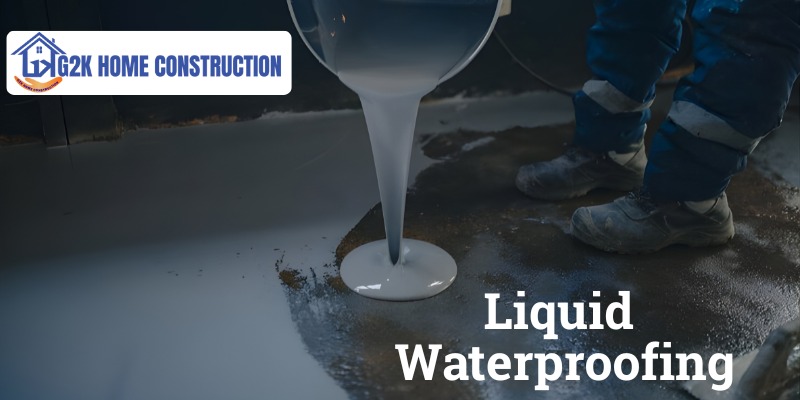
Liquid waterproofing is a widely used method for protecting buildings from water seepage, dampness, and moisture damage. In this method, a liquid waterproofing chemical is applied directly to a prepared surface such as a terrace, roof, bathroom, balcony, basement, or exterior wall. After drying and curing, the coating forms a smooth, seamless, and flexible waterproof membrane.
Unlike traditional sheet membranes, liquid waterproofing can cover irregular surfaces and complex areas without creating multiple joints. Depending on the material used, the membrane can also accommodate minor movement and bridge small cracks.
For residential construction in Bangalore, selecting the right waterproofing system is important because roofs and external surfaces are exposed to seasonal rainfall, moisture, and temperature variations.
What Is Liquid Waterproofing?
Liquid waterproofing involves applying a specially formulated liquid coating to a surface using a brush, roller, or spray equipment. Once cured, it creates a continuous waterproof layer that helps prevent water from penetrating the underlying structure.

Common liquid waterproofing materials include:
- Acrylic liquid membrane
- Polyurethane (PU) liquid membrane
- Bituminous liquid membrane
- Polymer-modified coating
- Hybrid polymer membrane
- Epoxy coating
- Liquid rubber coating
Types of Liquid Waterproofing
1. Acrylic Liquid Waterproofing
Acrylic waterproofing is generally a water-based coating that is easy to apply. It is commonly used for roofs, walls, terraces, and selected wet areas.
Features:
- Water-based
- Easy application
- Good UV resistance
- Moderate flexibility
- Suitable for exposed surfaces
Cost: Low to medium
Acrylic coatings are suitable for many applications, but the product is selected according to the level of water exposure and expected movement.
2. Polyurethane (PU) Liquid Waterproofing
PU waterproofing creates a highly flexible and seamless membrane. It is commonly used on terraces, balconies, roofs, and areas where crack-bridging performance is important.
Features:
- High flexibility
- Excellent crack-bridging capability
- Seamless finish
- Good adhesion
- Suitable for complex surfaces
Cost: High
The exact elasticity and performance depend on the specific PU product, so manufacturer specifications should always be followed.
3. Bituminous Liquid Waterproofing
Bituminous waterproofing is based on bitumen and is generally used where economical moisture protection is required.
It is commonly used for:
- Foundations
- Basements
- Retaining walls
- Below-ground structures
Cost: Low
For exposed applications, a suitable UV-resistant or protective system may be required.
4. Polymer-Modified Waterproofing
Polymer-modified waterproofing combines cementitious materials with polymers to improve flexibility, adhesion, and water resistance.
It is commonly used in:
- Bathrooms
- Toilets
- Balconies
- Wet areas
- Walls
Cost: Low to medium
5. Hybrid Liquid Membranes
Hybrid membranes combine different polymer technologies to provide a balance of flexibility, strength, and adhesion.
They may be suitable for terraces, bathrooms, balconies, and other areas depending on the manufacturer’s specifications.
Typical durability: 8–12 years
Cost: Medium to high
6. Epoxy Waterproofing
Epoxy coatings provide a hard and chemically resistant surface. They are commonly used for selected industrial floors, basements, and other areas where chemical or abrasion resistance is required.
Epoxy is generally less flexible than PU.
Typical durability: 10–12 years
Cost: High
7. Liquid Rubber Coatings
Liquid rubber coatings form a flexible membrane after curing and can accommodate considerable movement depending on the product.
They are commonly used for:
- Roofs
- Metal sheets
- Selected exterior surfaces
Cost: Medium to high
Where Is Liquid Waterproofing Used?
Liquid waterproofing can be used in several areas of residential and commercial buildings, including:

- Bathrooms and toilets
- Terraces and roofs
- Balconies
- Kitchens and wet areas
- Exterior walls
- Basements
- Foundations
- Retaining walls
- Metal roofs
Liquid Waterproofing Process: Step-by-Step
1. Surface Inspection and Preparation
First, inspect the area for water seepage, cracks, damaged joints, loose plaster, ponding water, and pipe penetrations.
Remove dust, dirt, algae, oil, and loose particles. Repair cracks and damaged areas using a suitable repair mortar or crack-filling material.
Proper surface preparation is essential for good adhesion.
2. Apply Primer
Apply a compatible primer where required by the waterproofing system. Primer helps improve adhesion between the substrate and waterproofing coating.
Allow the primer to dry according to the manufacturer’s recommended time.
3. Apply the First Coat
Apply the liquid waterproofing material evenly using a brush, roller, or suitable spray equipment.
Maintain the specified coverage and thickness, paying special attention to corners, joints, drains, and pipe penetrations.
4. Add Reinforcement
For cracks, corners, joints, or areas exposed to movement, reinforcement such as fiberglass mesh or non-woven fabric may be added into the waterproofing system.
5. Apply the Second Coat
After the first coat has reached the required drying or curing stage, apply the second coat uniformly.
Check for gaps, pinholes, bubbles, and uneven areas.
6. Allow Proper Curing
Allow sufficient curing time before exposing the membrane to water or traffic. Depending on the product and weather conditions, this may take 24–48 hours or longer.
Always follow the manufacturer’s technical instructions.
Advantages of Liquid Waterproofing
Liquid waterproofing offers several benefits:
- Seamless waterproof membrane
- Flexible and suitable for minor surface movement
- Good crack-bridging capability for suitable products
- Easy application
- Suitable for complex surfaces
- Good adhesion
- Reduced joint-related leakage risks
- UV-resistant options are available.
- Can be applied around pipes and drains
Disadvantages of Liquid Waterproofing
Despite its advantages, liquid waterproofing also has limitations:
- Requires thorough surface preparation
- Correct coating thickness is important.
- Some systems have high material costs.
- Certain products are sensitive to moisture during curing.
- High-traffic areas may require protective screed.
- Incorrect product selection can lead to premature failure.
Final Thoughts
Liquid waterproofing is an effective solution for protecting roofs, terraces, bathrooms, balconies, basements, and other areas from water penetration. Its seamless, flexible, and adaptable membrane makes it suitable for many residential applications.
However, long-term performance depends on proper surface preparation, correct material selection, application thickness, reinforcement where required, and adequate curing.
For homes in Bangalore, it is important to identify the source of water seepage before selecting a waterproofing system. A professional inspection can help determine whether acrylic, PU, bituminous, polymer-modified, or another liquid waterproofing system is appropriate.
Contact GK Home Construction
GK Home Construction provides home construction and waterproofing-related services in Bangalore.
Website: https://gkhomeconstruction.com/
Email: care@gkhomeconstruction.com
Phone: +91 9538999535
For waterproofing enquiries, consultations, and project discussions, contact GK Home Construction.