Don’t Let Bangalore’s Building Boom Become a Bust: Essential Tips for Homeowners
Bangalore continues to grow rapidly, with new homes, villas, apartments, and independent houses being constructed across areas such as Electronic City, Sarjapur Road, Whitefield, HSR Layout, Kanakapura Road, Hosur Road, Anekal, and surrounding locations. While this building boom creates exciting opportunities for homeowners, it also comes with challenges.
From unclear construction costs and poor-quality materials to delays, inexperienced contractors, and inadequate planning, small mistakes can become expensive problems later. If you are planning to build a house in Bangalore, careful planning and professional supervision can help protect your investment.
Here are essential construction tips every Bangalore homeowner should know.
1. Start With Proper Planning
A successful house construction project begins long before excavation starts. Homeowners should first understand their plot dimensions, road access, soil conditions, local requirements, budget, and future needs.
A properly prepared architectural floor plan should consider the number of bedrooms, bathrooms, kitchen, parking, ventilation, natural lighting, staircase placement, and future expansion.
Avoid making major design changes after construction begins. Changes during construction can increase material wastage, labour costs, and project duration.
2. Conduct Soil Testing Before Foundation Work
The foundation supports the entire building, so it should never be designed on assumptions alone.
A professional soil test helps determine the soil’s bearing capacity and characteristics. This information allows the structural engineer to recommend a suitable foundation system.
Different parts of Bangalore can have different soil conditions. Therefore, copying the foundation design from another property may not be proper for your site.
Spending money on soil testing before construction can help prevent costly structural problems in the future.
3. Set a Realistic Construction Budget
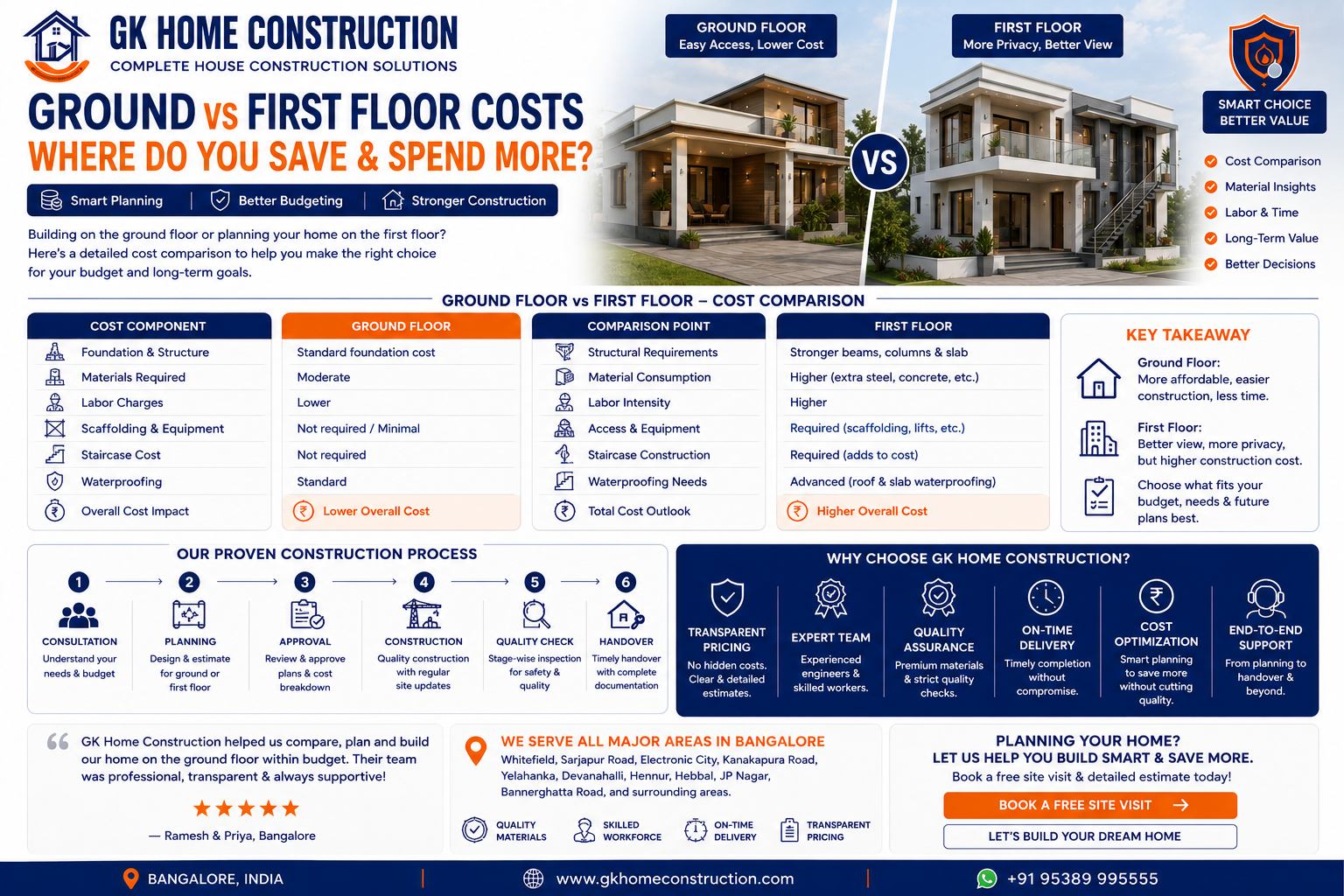
One of the most common mistakes homeowners make is preparing a budget based only on the basic construction rate.
Your overall budget may include:
- Architectural and structural design
- Approvals and documentation
- Foundation and RCC work
- Bricks or blocks
- Electrical and plumbing
- Waterproofing
- Flooring and tiles
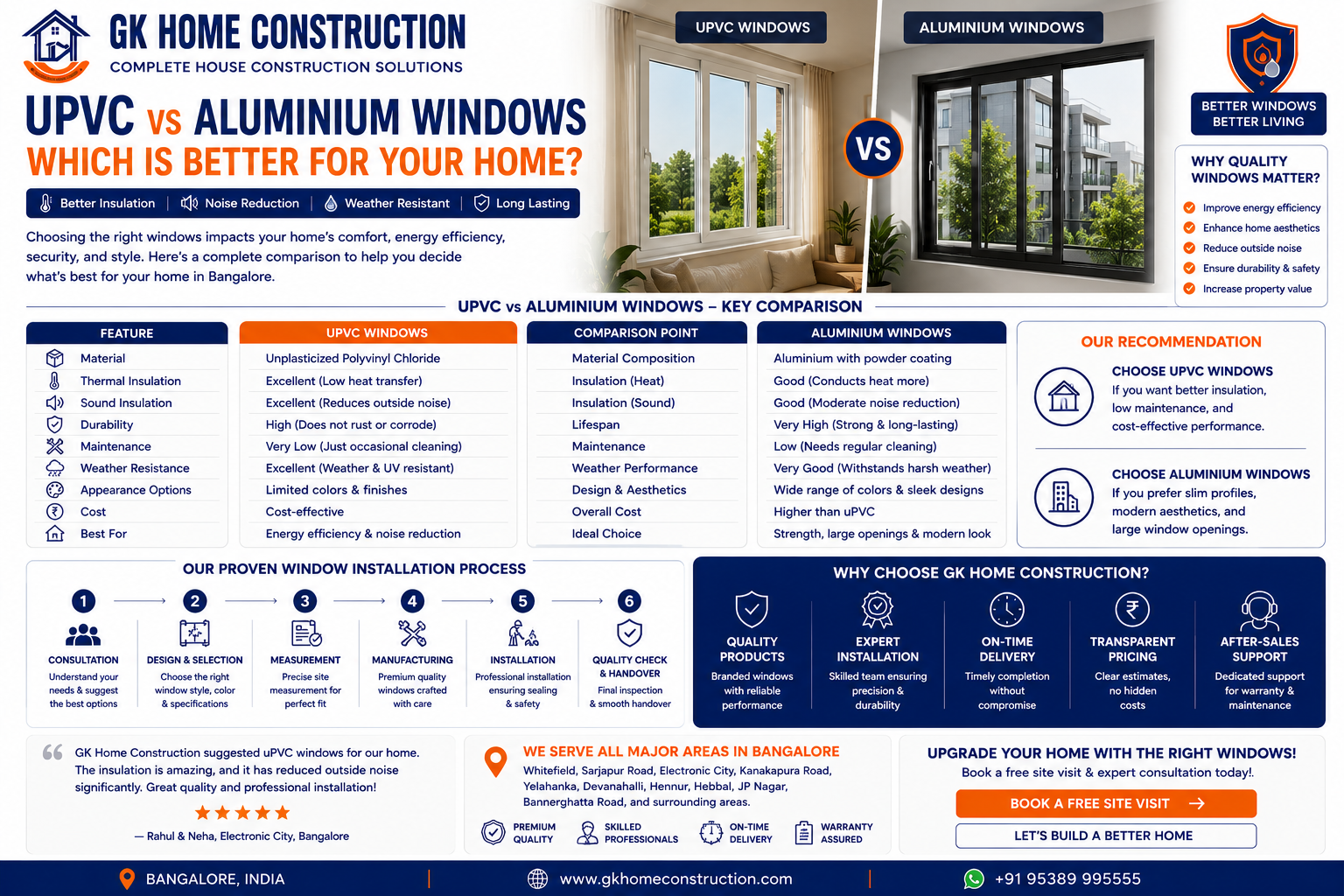
- Doors and windows
- Painting
- Carpentry and interiors
- External development
- Compound wall and gate
- Water tank and drainage systems
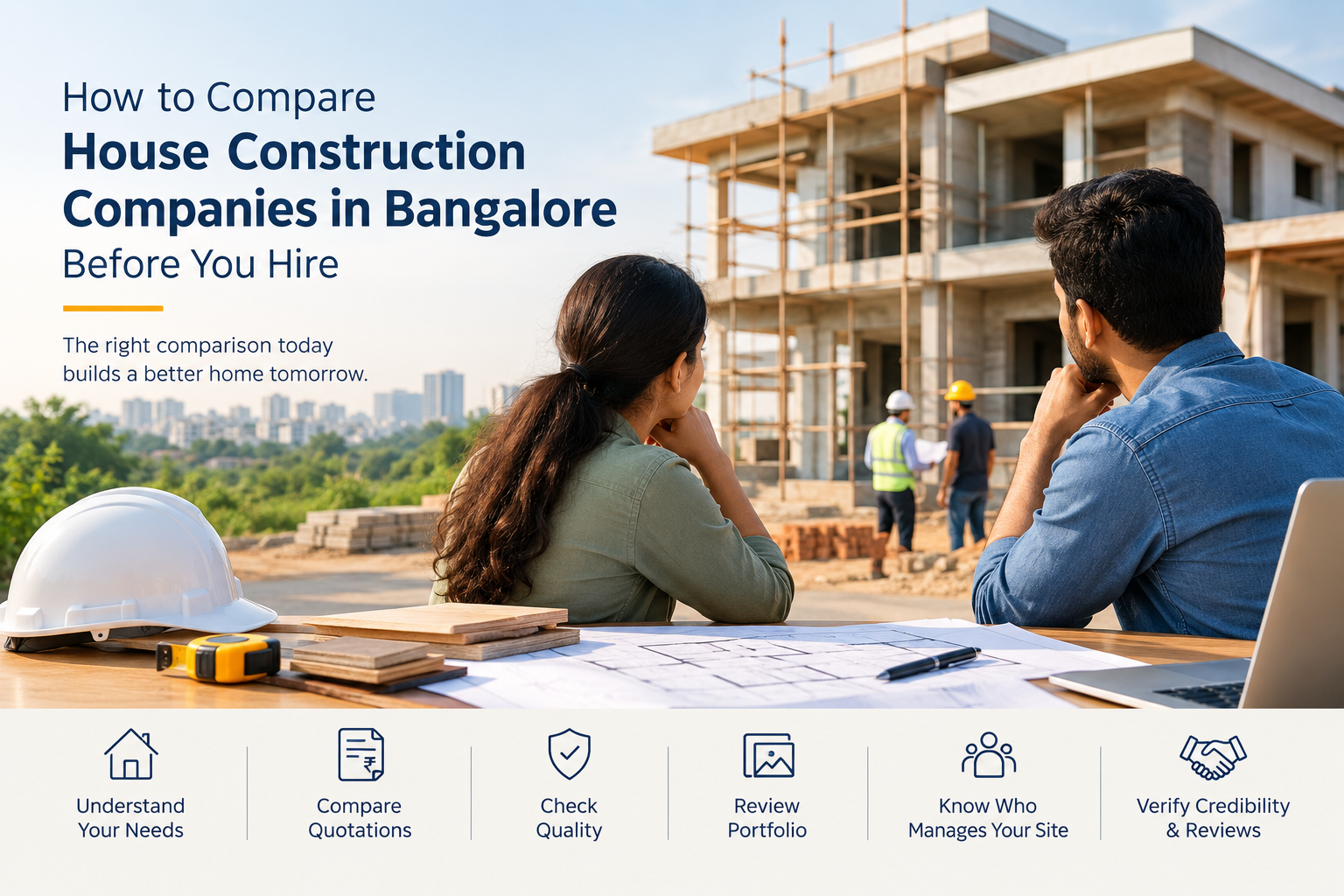
4. Choose the Right Construction Contractor
The contractor you select has a major impact on construction quality, cost, and timeline.
Before hiring a contractor, check their previous projects, construction experience, technical team, material specifications, payment terms, and project management process.
Do not select a contractor only because they provide the lowest quotation. A very low initial estimate can sometimes lead to compromises in materials, workmanship, or project scope.
Choose a contractor who provides clear documentation and explains what is included and excluded from the quotation.
5. Never Compromise on Material Quality
Construction materials directly affect the home's durability.
Cement, steel, concrete, bricks or blocks, waterproofing products, electrical cables, plumbing pipes, tiles, doors, windows, and other materials should meet appropriate quality standards.
Homeowners should ask for material specifications before purchasing or approving products. Using cheaper materials without understanding their quality can result in repairs and replacement costs later.
6. Give Special Attention to Waterproofing
Bangalore receives significant seasonal rainfall, making waterproofing an important part of home construction.
Waterproofing should be considered for areas such as:
- Roof and terrace
- Bathrooms
- Balconies
- Basement areas
- Foundations
- External walls
- Water tanks
Waterproofing should not be an optional finishing activity. It should be planned as per the building’s design and site conditions.
7. Monitor Electrical and Plumbing Work
Electrical and plumbing systems are usually concealed after walls and ceilings are finished. Inspection before concealment is extremely important.
Check the location of electrical points, switches, distribution boards, plumbing lines, drainage pipes, water supply lines, and provisions for appliances before plastering or closing walls.
Plan future requirements such as air conditioners, solar systems, EV charging, internet connections, CCTV, and smart-home devices wherever necessary.
Good planning now can prevent expensive modifications later.
8. Focus on Ventilation and Natural Light
A beautiful house should also be comfortable and practical.
During planning, provide adequate windows, ventilation openings, and natural light wherever possible. Proper orientation and window placement can improve indoor comfort and reduce dependence on artificial lighting during the daytime.
For Bangalore homes, cross ventilation can also help improve indoor air movement.
9. Use a Stage-Wise Quality Inspection
Homeowners should not wait until the final handover to inspect construction quality.
Important inspection stages include:
- Site preparation and excavation
- Foundation and reinforcement
- RCC structure
- Masonry work
- Plumbing and electrical installation
- Waterproofing
- Plastering
- Flooring and tiling
- Doors and windows
- Painting and finishing
10. Keep Payments and Agreements Clear
A written construction agreement should clearly mention the scope of work, materials, specifications, payment schedule, estimated timeline, responsibilities, exclusions, and procedures for additional work.
Avoid making major payments without confirming the completed stage of work.
Clear documentation reduces misunderstandings between homeowners and contractors.
Build Smart, Not Just Fast
Bangalore’s construction growth provides homeowners with many opportunities, but rapid development should not encourage rushed decisions. A well-planned home requires the right combination of design, engineering, materials, workmanship, quality control, and budget management.
Whether you are building an independent house, villa, duplex, or family home, focus on long-term durability rather than simply reducing the initial construction cost.
With proper planning and an experienced construction team, homeowners can avoid many common problems and build a home that remains safe, comfortable, and valuable for years to come.
If you are planning house construction in Bangalore, working with a professional construction company can help you manage design, estimation, construction, quality checks, and finishing under a structured process.