Interior Designer vs Interior Architect: Key Differences for Your Home
Introduction
Planning a new home, renovating an apartment, or designing a commercial space involves many important decisions. One common question homeowners ask is whether to hire an interior designer or an interior architect. Although both professionals work to create beautiful and functional spaces, their responsibilities, technical expertise, and design approaches differ.
Understanding the difference between an interior designer and an interior architect helps homeowners choose the right professional, manage their budget, and achieve better results. At GK Home Construction, thoughtful planning and coordinated execution help transform spaces into comfortable, practical, and visually appealing environments.
Who Is an Interior Designer?
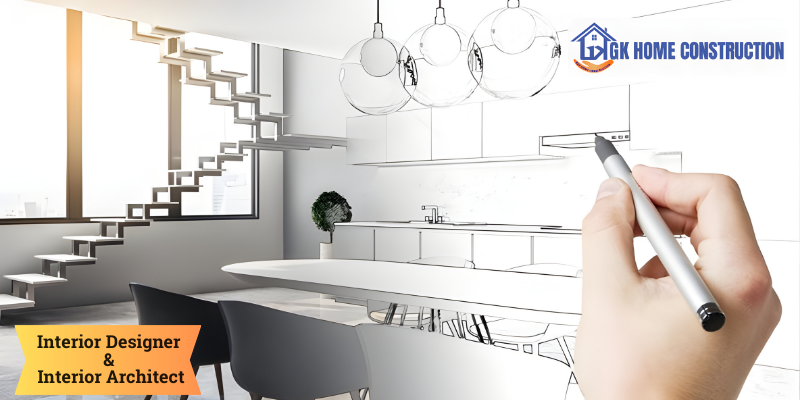
An interior designer focuses on improving the appearance, comfort, and functionality of indoor spaces. Their work involves selecting colours, furniture, lighting, flooring, wall finishes, decorative elements, and suitable materials that complement the client's lifestyle.
Interior designers also plan furniture arrangements, modular kitchens, wardrobes, false ceilings, storage solutions, and lighting layouts. They coordinate with carpenters, electricians, painters, and contractors to bring the approved design to life.
For homeowners seeking interior designers in Bangalore, this professional is often the right choice when the existing building layout is suitable and the primary goal is to improve its appearance, usability, and comfort.
Who Is an Interior Architect?
An interior architect focuses on the spatial planning and technical aspects of interior environments. Their work may involve reconfiguring rooms, planning circulation, modifying non-structural partitions, coordinating building services, and improving ventilation and accessibility.
Interior architects consider factors such as lighting performance, acoustics, fire safety, construction requirements, and the integration of plumbing and electrical systems. Structural modifications require appropriate engineering assessment and approvals where applicable.
For major renovations, commercial spaces, or homes that need significant layout changes, an interior architect can help coordinate design decisions with architects, structural engineers, and other construction professionals.
Interior Designer vs Interior Architect: Key Differences
The main difference lies in the scope of work. Interior designers concentrate on aesthetics, finishes, furniture, and day-to-day usability. Interior architects focus more heavily on spatial organisation, technical coordination, and the relationship between interior design and the building.
Interior designers typically handle:
Colour schemes, furniture, furnishings, and décor.
Modular kitchen and wardrobe design.
Lighting plans, ceiling designs, and material selection.
Interior styling and coordination of finishing work.
Interior architects typically handle:
Detailed space planning and layout reorganisation.
Interior partition changes and circulation planning.
Coordination of electrical, plumbing, ventilation, and other services.
Technical requirements, accessibility, and safety considerations.
- The precise responsibilities depend on each professional's qualifications, experience, project scope, and applicable regulations.
Education and Professional Qualifications
Interior designers commonly complete a degree, diploma, or other recognised training in interior design. Their studies generally cover colour theory, materials, furniture design, spatial planning, lighting, and design visualisation.
Interior architects often have architectural education or specialised training in interior architecture. Their background may include building construction, building services, technical documentation, and regulatory requirements.
Qualifications vary by institution and jurisdiction. Before hiring either professional, check their portfolio, relevant credentials, project experience, and ability to coordinate with qualified technical specialists.
Cost Differences and Project Budget
Interior design costs depend on the size of the property, design complexity, materials, furniture, and level of project supervision. A styling-focused project may require a smaller professional budget than a complete interior renovation.
Interior architecture projects can involve additional planning, technical documentation, consultant coordination, and approvals, which may increase professional fees. However, careful planning can reduce expensive rework, inefficient layouts, and construction mistakes.
Request an itemised quotation that clearly identifies design fees, materials, labour, supervision, and any additional consultant charges.
When Should You Hire an Interior Designer?
Choose an interior designer when the building layout is already suitable and you mainly need

Modern living room and bedroom interiors.
Modular kitchen and wardrobe installations.
Better lighting, furniture arrangements, and storage.
Updated flooring, wall finishes, and decorative features.
- This option is suitable for many apartments, villas, and smaller commercial interiors.
When Should You Hire an Interior Architect?
Consider an interior architect when you need substantial space reorganisation, technical coordination, or a complex renovation. Projects involving office layouts, retail spaces, hospitality interiors, or major residential alterations may benefit from this expertise.
Never remove or modify load-bearing elements without assessment by a qualified structural engineer and the necessary approvals.
Why Collaboration Produces Better Results
Interior designers and interior architects can complement each other's skills. One can develop the visual character and comfort of the space, while the other focuses on spatial planning and technical coordination. Working with construction professionals helps align drawings, materials, budgets, and execution.
At GK Home Construction, coordinated construction and interior planning can help homeowners move from initial concepts to practical, well-finished spaces.
Conclusion
The right choice between an interior designer and an interior architect depends on your property's condition, project complexity, budget, and goals. Choose an interior designer for styling and finishes, or consider an interior architect for more complex spatial and technical requirements.
With the right expertise and careful planning, you can create an interior that combines beauty, comfort, functionality, and long-term value.