Bituminous Membrane Waterproofing
Bituminous membrane waterproofing is a widely used sheet-based system that protects buildings from water leakage and moisture penetration. It is manufactured using bitumen modified with polymers and is commonly reinforced with polyester or glass fibre to improve strength, flexibility and durability.
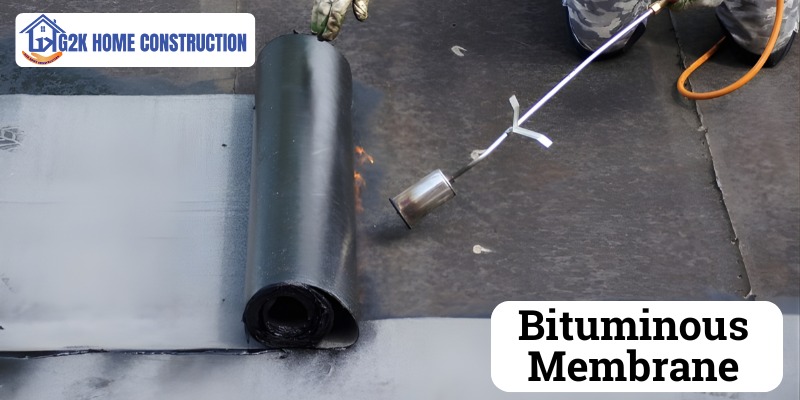
The membrane is supplied in rolls and installed over prepared surfaces using torch-applied, self-adhesive or other approved methods. When properly installed, the sheets create a continuous waterproofing barrier that helps protect roofs, terraces, basements, foundations and other moisture-prone structures.
Types of Bituminous Membrane Waterproofing
1. APP Modified Bituminous Membrane
APP, or Atactic Polypropylene, is a plastomer-modified bituminous membrane. It offers good resistance to heat and weather exposure and is commonly used for roofing and other exposed applications. APP membranes are frequently installed using the torch-on method.
2. SBS Modified Bituminous Membrane
SBS, or Styrene-Butadiene-Styrene, is an elastomeric polymer used to modify bitumen. SBS membranes provide greater flexibility and elasticity, making them suitable for structures where movement and thermal changes need to be accommodated.
3. Self-Adhesive Bituminous Membrane
Self-adhesive membranes have an adhesive backing protected by a release film. The film is removed during installation, and the membrane is firmly pressed onto the prepared surface. Since an open flame is not required for bonding, this method can be useful in areas where torch application is unsuitable.
Applications of Bituminous Membrane Waterproofing
Bituminous membranes can be used in several residential, commercial, and structural applications, including:
- Flat roofs and roof slabs
- Terraces and podiums
- External basement walls
- Foundations
- Retaining walls
- Parking decks
- Underground structures
- Moisture-prone concrete surfaces
Bituminous Membrane Waterproofing Process
1. Surface Preparation
The concrete surface should be clean, sound, smooth, and free from dust, oil, laitance, and loose particles. Cracks, honeycombs, uneven areas, and other defects should be repaired before waterproofing.
2. Primer Application
A compatible bituminous primer is generally applied to improve adhesion between the membrane and substrate. The primer should be allowed to dry according to the manufacturer’s instructions before membrane installation.
3. Membrane Installation
The membrane roll is positioned and aligned carefully. For torch-on systems, controlled heating is used to bond the underside of the membrane to the prepared surface. Self-adhesive membranes are bonded by removing the release film and applying firm pressure.
4. Sealing Joints
Membrane overlaps require careful sealing because poorly bonded joints can become potential leakage points. The required side and end overlaps vary by product, so the manufacturer’s technical data sheet should be followed.
5. Protection
After installation and inspection, the membrane may require a suitable protection layer such as protective screed, boards, or pavers, depending on the application. Protection helps prevent mechanical damage during subsequent construction work.
Advantages of Bituminous Membrane Waterproofing
Bituminous membrane waterproofing offers several benefits:
- Excellent resistance to water penetration
- Consistent factory-controlled thickness
- Good tensile and mechanical strength
- Flexibility and crack-bridging capability
- Suitable for large surface areas
- Available in different polymer-modified formulations
- Suitable for roofs, basements and foundations
- Long service life when correctly selected and installed
Limitations
The system also has certain limitations. Torch-applied membranes require trained workers and appropriate fire-safety precautions. Incorrect surface preparation, inadequate heating, poorly sealed overlaps or damage during construction can reduce waterproofing performance. Repairs may also become more difficult once the membrane is covered by screed, soil or other finishes.
Why Professional Installation Matters
Bituminous membrane waterproofing is a complete system rather than simply a waterproof sheet. Proper surface preparation, compatible primer, correct membrane selection, accurate installation, joint sealing, and protection are all essential for reliable performance.
GK Home Construction provides professional construction and waterproofing solutions for residential projects in Bangalore, with an emphasis on planned execution and quality workmanship.
Contact GK Home Construction
Email: care@gkhomeconstruction.com
Call: +91 9538999535