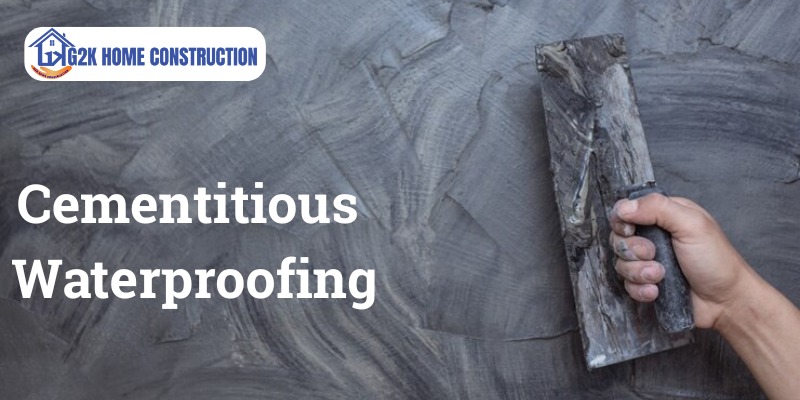
Cementitious Waterproofing: Types, Applications and Benefits
Cementitious waterproofing is a widely used waterproofing system for concrete and masonry surfaces. It helps prevent water seepage and protects building structures from moisture-related damage. The coating is generally made using cement, fine aggregates such as quartz sand or fillers, chemical additives, and polymer modifiers.
When mixed with water or a liquid polymer, the material forms a dense coating that bonds firmly to properly prepared concrete and masonry surfaces. Because it is easy to apply and compatible with mineral substrates, cementitious waterproofing is commonly used in bathrooms, basements, water tanks, balconies, swimming pools, lift pits, and other wet areas.
What Is Cementitious Waterproofing?
Cementitious waterproofing is a cement-based coating applied over concrete, brickwork, masonry, or similar mineral surfaces. Depending on the product formulation, it can provide water resistance, improved adhesion, and varying levels of flexibility.
For residential construction, cementitious waterproofing is particularly useful where the waterproofing layer will be covered by tiles, screed, plaster, or another protective finish.
Types of Cementitious Waterproofing
1. 1K Cementitious Waterproofing
One-component, or 1K cementitious waterproofing, is supplied mainly as a pre-blended powder and is mixed with the specified amount of clean water before application. It is commonly used for internal wet areas and smaller waterproofing requirements.
2. 2K Cementitious Waterproofing
Two-component, or 2K cementitious waterproofing, consists of a cement-based powder component and a liquid polymer component. Compared with conventional cement-based coatings, the polymer component can improve adhesion and flexibility. It is commonly selected for bathrooms, balconies, wet rooms, and other residential applications.
3. Flexible Cementitious Waterproofing
Flexible cementitious systems contain polymer modifiers that provide greater flexibility than basic cementitious coatings. They can accommodate limited substrate movement and micro-cracking when the system is properly specified and applied. They may be used on terraces, external walls, podiums, and other areas where additional flexibility is required.
4. Crystalline Cementitious Waterproofing
Crystalline waterproofing uses active chemicals that react within suitable concrete to form insoluble crystalline structures in pores and capillaries. This can help reduce water penetration through concrete. It is commonly considered for basements, water-retaining structures, retaining walls, sumps, and tanks, subject to the manufacturer’s system requirements.
Where Is Cementitious Waterproofing Used?
Cementitious waterproofing can be used in many residential and commercial construction areas, including:
- Bathrooms and toilets
- Kitchens and utility areas
- Balconies below tiles
- Basement walls and floors
- Water tanks and sumps
- Swimming pools
- Lift pits
- Retaining walls
- Internal wet walls
- Roofs below protective screed
Cementitious Waterproofing Application Process
Step 1: Surface Preparation
Proper surface preparation is essential. Remove dust, dirt, loose concrete, algae, paint, oil, and other contaminants. Repair cracks, honeycombs, and damaged areas with a suitable repair mortar. The surface should be prepared according to the manufacturer’s requirements, often in a damp or saturated-surface-dry condition.
Step 2: Mixing
For 1K products, mix the powder with the recommended quantity of clean water. For 2K products, combine the powder and liquid polymer according to the specified mixing ratio. A low-speed mechanical mixer can help produce a consistent, lump-free mixture.
Step 3: Primer or Bonding Coat
Depending on the product and substrate, a primer or diluted bonding coat may be recommended. This can help improve adhesion and control excessive substrate absorption.
Step 4: Apply Waterproofing Coats
Apply the first coat uniformly using a suitable brush, roller, or approved application method. Allow the recommended interval before applying the second coat, usually in a direction perpendicular to the first. Coating thickness should follow the manufacturer’s technical data sheet, as requirements vary between products.
Step 5: Protection and Curing
After application, protect the waterproofing layer from damage, direct exposure, or premature drying as specified by the product manufacturer. Floors may receive a protective screed or tile finish. Waterproofing in tanks and water-retaining structures should be cured and tested according to the specified system before use.
Benefits of Cementitious Waterproofing
Cementitious waterproofing offers several practical advantages:
- Strong adhesion to concrete and masonry
- Relatively simple application
- Suitable for many internal wet areas
- Compatible with tile and cement-based finishes
- Cost-effective for many applications
- Available in rigid and flexible formulations
- Useful for positive-side water exposure
- Suitable products are available for potable-water applications.
Limitations of Cementitious Waterproofing
Like every waterproofing system, cementitious coatings have limitations. Standard rigid formulations may not accommodate significant structural movement or large cracks. Exposed cementitious coatings may also require protection from weathering and physical damage. Proper surface preparation, application thickness, curing, detailing at joints and corners, and quality control are important for long-term performance.
Cementitious Waterproofing Services in Bangalore
Choosing the appropriate waterproofing system is an important part of durable home construction. GK Home Construction provides construction and waterproofing solutions for residential projects in Bangalore, with attention to surface preparation, material selection, application, and finishing requirements.
If you are planning a new home or renovation and looking for civil construction contractors in Bangalore, you can contact GK Home Construction for project consultation.
Company: GK Home Construction
Website: gkhomeconstruction.com
Email: care@gkhomeconstruction.com
Phone: +91 9538999535
Final Words
Cementitious waterproofing is a practical solution for many concrete and masonry waterproofing applications. Selecting the right formulation and following the correct surface preparation, mixing, coating, curing, and protection procedures can improve the performance of the waterproofing system. For homeowners, waterproofing should be planned during construction rather than treated only as a repair after water seepage occurs.
For cementitious waterproofing, home construction, and civil construction services in Bangalore, GK Home Construction can help homeowners plan and execute construction requirements with a structured approach.